HERA · Human Entity Reference Atlas by Masego Inc

← Tokelau 🌐 3D View
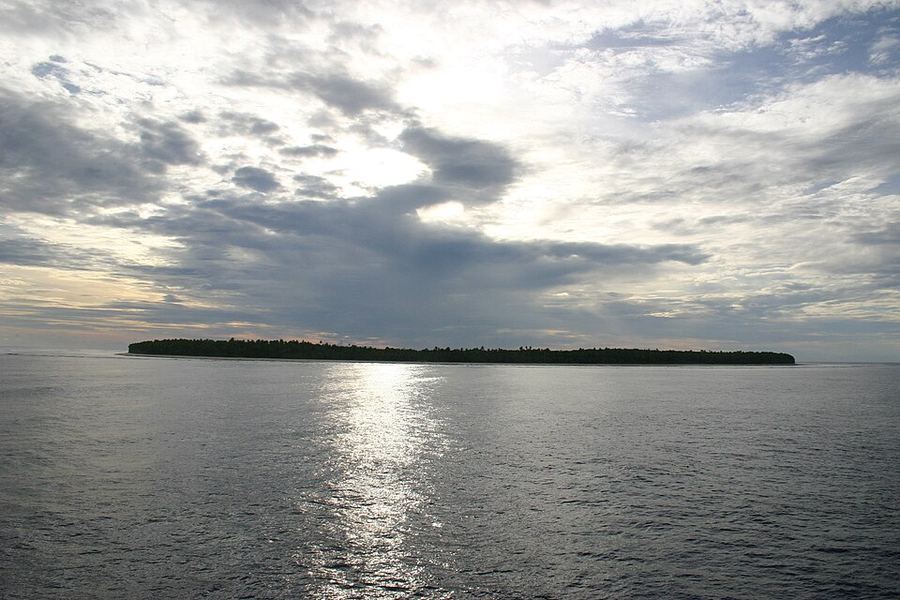
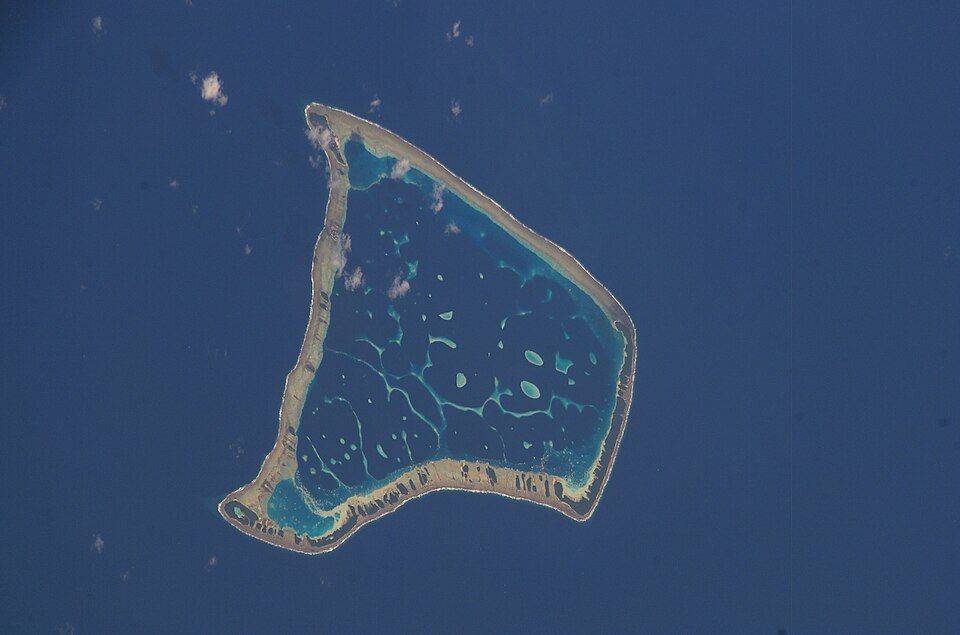
Tokelau atoll, Tokelau
Tokelau TKL
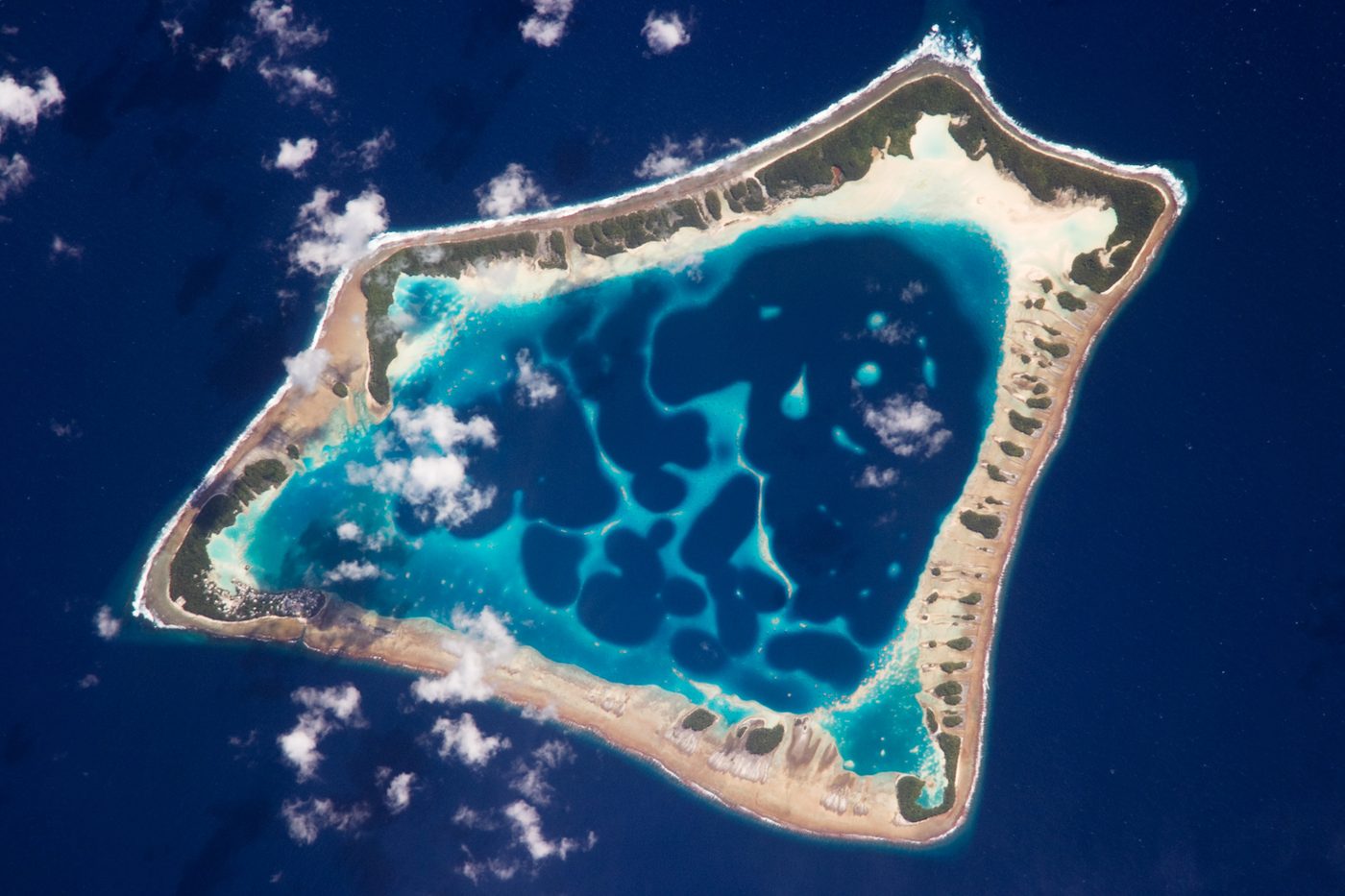
Tokelau atoll — Photo: NASA / Public domain via Wikimedia Commons
Did You Know There is no airport and no deep-water harbour. Reaching Tokelau means a ship from Samoa that takes most of a day and then anchors offshore while passengers transfer to a small boat through the reef passage. — Encyclopaedia Britannica

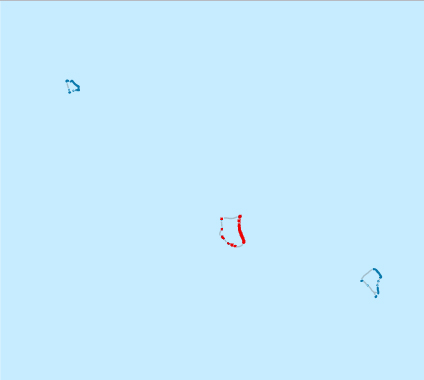
Tokelau is a non-self-governing territory of New Zealand made up of three coral atolls — Atafu, Nukunonu and Fakaofo — scattered across the central Pacific roughly 500 kilometres north of Samoa. Its total land area is about twelve square kilometres, none of it more than a few metres above the sea, and its population is smaller than that of a village in most countries: the CIA World Factbook puts it at under 2,500 people. Against that land area sits an exclusive economic zone of some 290,000 square kilometres, and the licensing of foreign tuna fleets to fish it, together with budget support from New Zealand, funds most public spending. Tokelau has no airport and no deep-water harbour; the only way in is a chartered ship from Apia that takes the better part of a day and then stands offshore while passengers are transferred by aluminium dinghy through a reef passage. There is no capital city, because the administrative seat rotates annually among the atolls along with the office of the head of government. Two United Nations-supervised referendums on self-government in free association with New Zealand, in 2006 and 2007, drew clear majorities but fell short of the required two-thirds, so Tokelau remains on the UN list of territories yet to complete decolonisation.

CIA World FactbookUNEncyclopaedia Britannica
Population
2,453
Capital
Currency
$ NZD
Time zones
Largest city
Human Geography Themes
Loading national figures…
The Country & Its People

History

The atolls were settled by Polynesian voyagers with close links to Samoa, Tuvalu and the Cook Islands, and Tokelauan oral tradition records that Fakaofo — seat of the cult of the god Tui Tokelau — came to dominate Atafu and Nukunonu by conquest, exacting tribute and installing its own authority before European contact. Commodore John Byron sighted Atafu in 1765 and gave it the name Duke of York's Island. The defining catastrophe came in 1863, when Peruvian slaving vessels working the Pacific carried off a large part of the able-bodied male population, and disease introduced in the same period compounded the loss; the communities were rebuilt from those who remained together with incoming settlers, including European traders who married into island families. Missionary work then divided the group along lines that still hold: the London Missionary Society established the Protestant tradition on Atafu, French Marist priests brought Catholicism to Nukunonu, and Fakaofo ended up with both. Britain declared a protectorate in 1889, attached the islands to the Gilbert and Ellice Islands Colony in 1916, and transferred administration to New Zealand in 1925; New Zealand sovereignty was formalised by the Tokelau Islands Act of 1948. The word 'Islands' was dropped from the name in 1976, and the referendums of 2006 and 2007 tested, without settling, the question of self-government.
History, Tokelau
NASA Johnson Space Center / Public domain

Culture

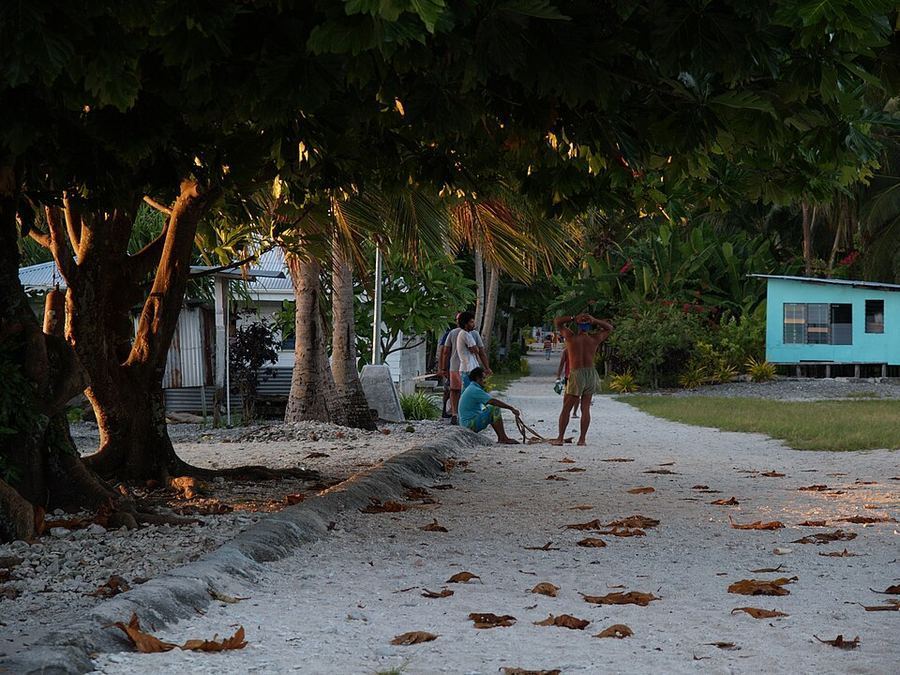
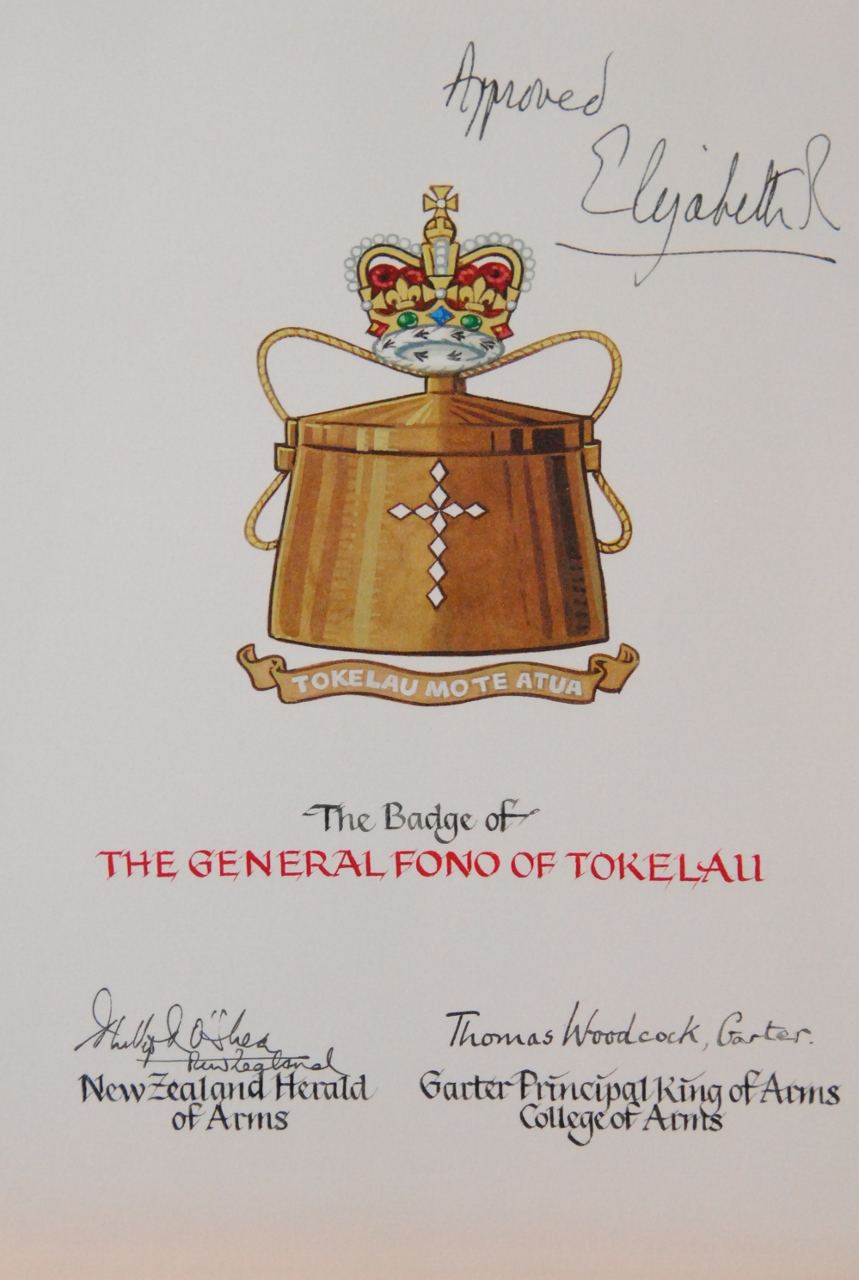
Tokelauan society is built around the village, the kaiga or extended family, and the church, and it is unusually communal even by Pacific standards. The institution outsiders notice first is inati, a distribution system under which the day's catch and other shared resources are divided among households according to their size rather than according to who did the fishing, so that a family with no fit fisherman still eats. Authority on each atoll rests with the Taupulega, a council of elders and family heads that controls land, allocates communal labour and settles disputes; land is held by families and effectively cannot be sold to outsiders. Above the atoll level sits the General Fono, the territory's legislature, whose members are drawn from the three villages, and the office of Ulu-o-Tokelau, the titular head of government, which rotates each year among the three Faipule. Church life sets the rhythm of the week — Congregational Christian on Atafu, Catholic on Nukunonu, both denominations on Fakaofo — and choirs, feasts and fono meetings occupy much of the social calendar. Respect language, seating order at gatherings and the obligation to contribute labour to communal projects remain strongly enforced by social expectation rather than by law.
Culture, Tokelau
CloudSurfer / CC BY 2.5

Points Of Pride

Tokelau's proudest recent achievement is energy: in 2012 the territory switched its three atoll grids over to photovoltaic power with battery storage, becoming one of the first places in the world to meet essentially all of its electricity demand from solar generation, having previously burned imported diesel shipped in by sea. Tokelauans also take pride in the survival of their language and of inati, a food-sharing system that has kept absolute deprivation out of communities with almost no cash economy. The referendums of 2006 and 2007 are a point of pride in themselves — a population of a few thousand conducting a United Nations-observed act of self-determination on its own timetable and declining to be rushed. The territory's voice at climate negotiations carries further than its size suggests, precisely because Tokelau made the renewable transition that far larger countries were still debating. And the diaspora is a source of pride rather than only of loss: far more Tokelauans live in New Zealand than on the atolls, and the language, the fatele and the church networks have been carried into Wellington, Porirua, Hutt Valley and Auckland largely intact.
Points Of Pride, Tokelau
New Zealand Ministry of Foreign Affairs and Trade / CC BY 2.0

Cultural Fusion

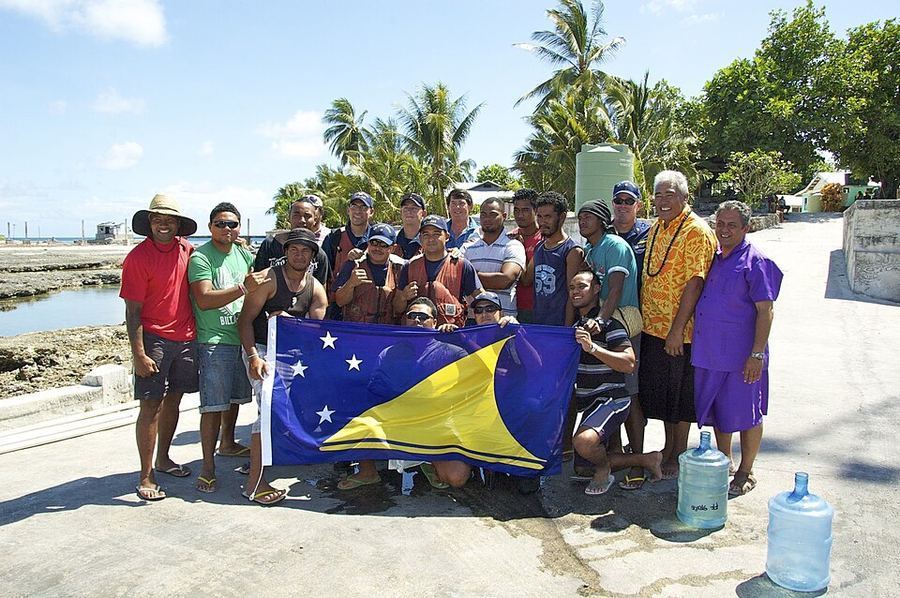
Tokelau sits in a web of Polynesian relationships rather than in isolation. Samoa is the closest and heaviest influence: it is the transit point for every ship and every medical evacuation, Samoan has long been used in church services and was for years a language of schooling, and Samoan hymnody and oratory shaped Tokelauan religious practice. Nukunonu's Catholicism arrived through Samoan-based Marist missionaries, giving that atoll a distinct liturgical culture from its Protestant neighbour. To the west, kinship and cultural ties with Tuvalu are close enough that the fatele dance form is shared between the two, and Tuvaluan and Kiribati families appear in Tokelau's population figures. New Zealand supplies the constitutional framework, the currency, the school curriculum and the passports, and the New Zealand-based diaspora — several times larger than the resident population — now feeds influence back the other way through returning families, remittances, recorded music and church exchanges. The result is a small culture that is neither insular nor absorbed: Tokelauan remains the language of the home and the fono, while English, Samoan and New Zealand institutions occupy the outer layer of daily life.
Cultural Fusion, Tokelau
CloudSurfer / CC BY-SA 2.5

Music & Dance

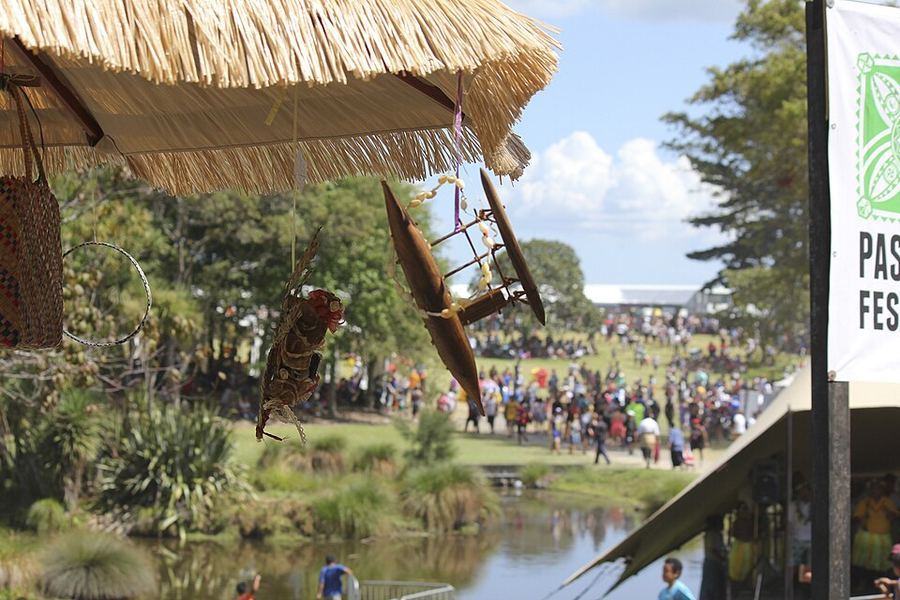
The central performance form is the fatele, a communal song-and-dance shared with Tuvalu in which seated singers and percussionists drive an accelerating repeated verse while dancers standing in front interpret the words with arm and body movement. The percussion is famously improvised from whatever resonates: a wooden box called the pokihi struck with the palms, a rolled pandanus mat, and empty biscuit tins, layered under massed voices. Fatele are composed for occasions — a visiting ship, a wedding, the opening of a building, a departure — and the texts are as much local record-keeping as entertainment, praising individuals and remembering events. Older forms include the hiva or seated song, chant used in oral genealogy, and log-drum accompaniment. Church music is the other great tradition, with dense unaccompanied choral singing in Tokelauan and Samoan filling the village churches on Sundays. Internationally, Tokelauan music reaches the widest audience through Opetaia Foa'i, the founder of the Pacific group Te Vaka, whose father was Tokelauan; Foa'i's writing draws on Tokelauan language and rhythm and reached a global audience through the songs he co-wrote for the animated film Moana.
Music & Dance, Tokelau
Julie Lyn from Washington, DC, USA / CC BY 2.0

Cuisine & Misattributed Foods

Tokelauan cooking is built from the very short list of things three coral atolls with no soil depth and no surface fresh water can produce. Fish is the staple protein and the centre of the diet — skipjack and yellowfin tuna, wahoo, reef fish, octopus, shellfish and coconut crab — eaten grilled, boiled, raw with coconut cream and lime, or dried. Coconut is used at every stage of ripeness, as drinking nut, as flesh, as cream pressed from the grated meat, as oil and as animal feed, and the tree supplies thatch, cordage and timber besides. The principal starches are pulaka, the swamp taro grown in pits dug down to the freshwater lens and manured with leaf litter over years, along with breadfruit, pandanus and bananas. Faikai — food baked in coconut cream in an earth oven or over a fire — describes a family of dishes applied to fish, breadfruit and taro alike. Pigs and chickens are kept for feasts rather than for everyday meals. Imported rice, flour, sugar, tinned fish and corned beef arrive by ship and now make up a substantial share of what people eat, a shift that public health officials link to rising rates of diabetes and obesity across the Pacific.
Cuisine & Misattributed Foods, Tokelau
Adana Dobranis / CC BY 4.0

National Dress

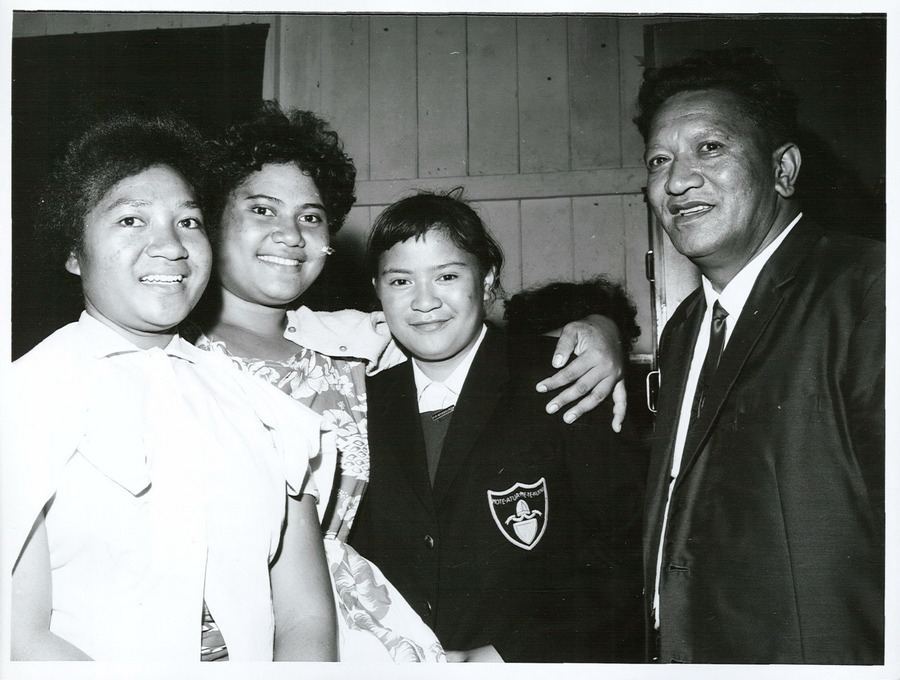
Tokelau has no single codified national costume; everyday dress is the wrapped lavalava worn by men and women, with modest blouses and dresses of the Pacific island-church style for women and short-sleeved shirts for men, all adapted to constant heat and humidity. Church attendance calls for white or pale clothing and, for women, wide-brimmed woven pandanus hats. Dance and ceremonial dress is where distinctly Tokelauan material appears: skirts called titi made from dried and stripped pandanus or hibiscus fibre, fine woven mats, and layered garlands and necklaces of flowers, shells and seeds worn at the neck and on the head. Fine mats themselves function less as clothing than as valuables, exchanged at weddings and funerals and accumulated as family wealth in a pattern common across western Polynesia. Tattooing, once a marker of status in the group as elsewhere in Polynesia, was suppressed by missionaries and has been partially revived among younger Tokelauans, particularly in the New Zealand diaspora, as a deliberate act of cultural reclamation.
National Dress, Tokelau
Archives New Zealand from New Zealand / CC BY-SA 2.0

Sports & Inspiring Athletes

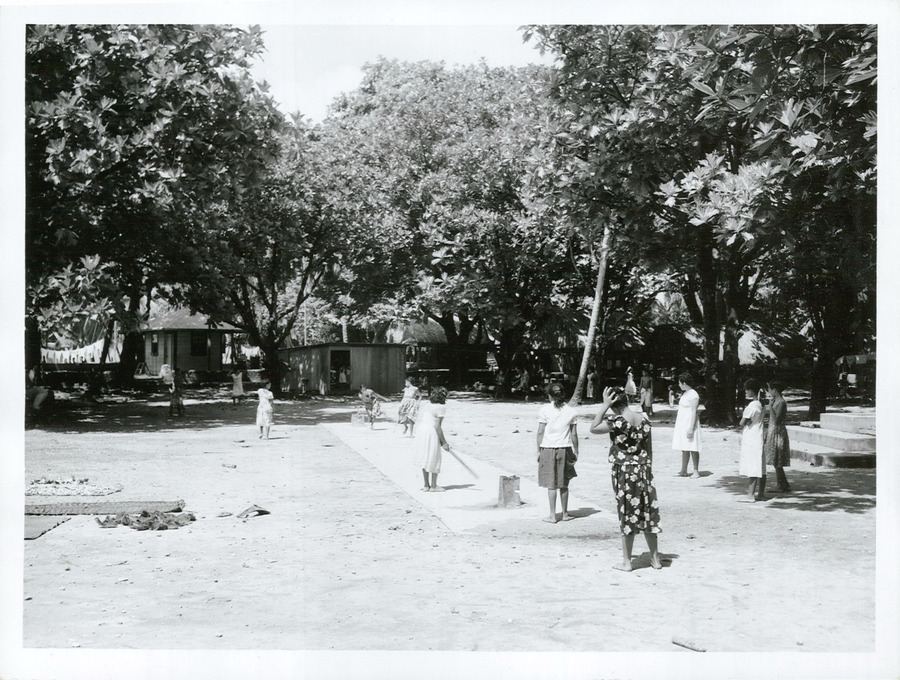
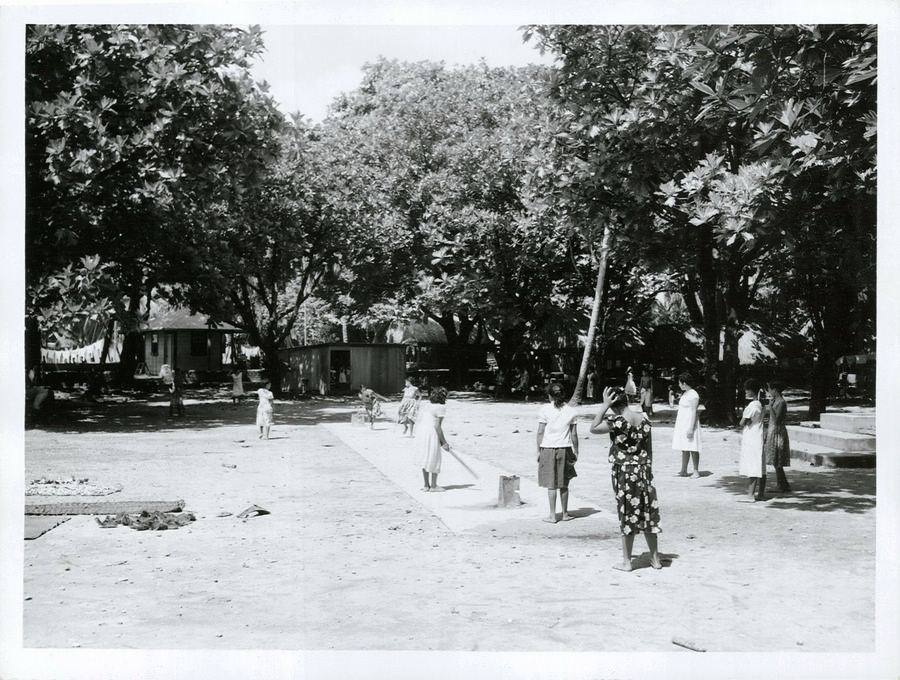
Sport in Tokelau is village-based and played on whatever flat ground the islets allow. Kilikiti, the Polynesian adaptation of cricket played with a three-sided bat and a hard rubber ball and often with very large sides, is the most characteristic game, doubling as a social event with singing and dancing between overs. Volleyball is played in every village, and rugby, both league and union, is followed intensely — largely through New Zealand competitions and through relatives playing there — even though there is no space for a full field on most islets. Netball is the principal women's team sport. Lawn bowls has an outsized place: the surfaces are simple to lay and maintain, and Tokelau has been competitive in the code at regional level well beyond what its population would suggest. Va'a, outrigger canoe paddling, sits between sport and daily transport, and swimming and spear-fishing contests are common at village celebrations. Inter-atoll competitions between Atafu, Nukunonu and Fakaofo, requiring a sea voyage to attend, are the closest thing the territory has to a national sporting calendar.
Sports & Inspiring Athletes, Tokelau
Archives New Zealand from New Zealand / CC BY-SA 2.0

Notable Educational Programs

Each of the three atolls has its own school covering primary and secondary years, run by Tokelau's own education service and teaching a curriculum aligned with New Zealand's, with New Zealand qualifications available at senior level. Instruction begins in Tokelauan and shifts progressively toward English, a bilingual model intended to keep the language secure while giving students access to further study abroad; Samoan also has a historic place in schooling and in church instruction. Because no tertiary institution exists on the atolls, senior secondary students and all tertiary students leave — most commonly to Samoa or to New Zealand — on government and New Zealand-funded scholarships, and this outward movement is one of the main channels of permanent migration. Tokelau is one of the member countries of the University of the South Pacific and uses the university's distance and flexible-learning network to deliver courses locally, which is the only route to tertiary study without leaving. Teacher recruitment and retention, the small size of each cohort, and the difficulty of providing specialist subjects to a handful of students per year group are the persistent structural problems.
Notable Educational Programs, Tokelau
Photographer: Mr. Nicholson / CC BY 2.0

Wars & Conflicts

Tokelau has no armed forces, no police service armed beyond a minimal level, and no history of modern armed conflict; New Zealand is responsible for its defence and external security. The territory's one great historical violence came from outside: the Peruvian slaving raids of 1863, part of a wider Pacific labour trade, removed a large share of the adult male population of the atolls, and the epidemics that followed brought the communities close to collapse. During the Second World War the atolls were peripheral to the Pacific campaign but were affected by shipping disruption and by American activity in the region, and the wider question of who held sovereignty over the group was not fully resolved until decades later. Contemporary security concerns are not military: illegal, unreported and unregulated fishing within the exclusive economic zone, transnational vessel traffic that a territory with no patrol capacity cannot monitor unaided, and the surveillance and enforcement gaps that New Zealand and regional Pacific fisheries bodies fill on Tokelau's behalf. Internal disputes are handled by the Taupulega under customary process rather than through courts.
Current as of 2026-08-07
Wars & Conflicts, Tokelau
HansVZ, NordNordWest / CC0

Land & Border Disputes

Tokelau's one territorial question concerns Swains Island, known in Tokelauan as Olohega, a single atoll lying to the south of the group. Culturally, linguistically and historically Swains belongs with the Tokelau atolls, but it was settled and claimed in the nineteenth century by an American trading family, came under United States authority, and has been administered as part of American Samoa ever since. The matter was formally settled between governments by the treaty concluded between the United States and New Zealand in 1980 — commonly called the Treaty of Tokehega — under which the United States relinquished any claim to Atafu, Nukunonu and Fakaofo, and New Zealand, on Tokelau's behalf, relinquished any claim to Swains. Tokelauans have never entirely accepted that outcome: the draft constitution prepared for the self-government referendums referred to the group's historic extent, and the separation remains a live grievance in local political discussion even though it is legally closed. Beyond this, Tokelau's maritime boundaries with its neighbours are settled, and its outstanding external issue is not a border dispute but the unresolved question of its own political status before the United Nations.
Land & Border Disputes, Tokelau
USGC / Public domain
Land, Life & Legacy

Land & Climate

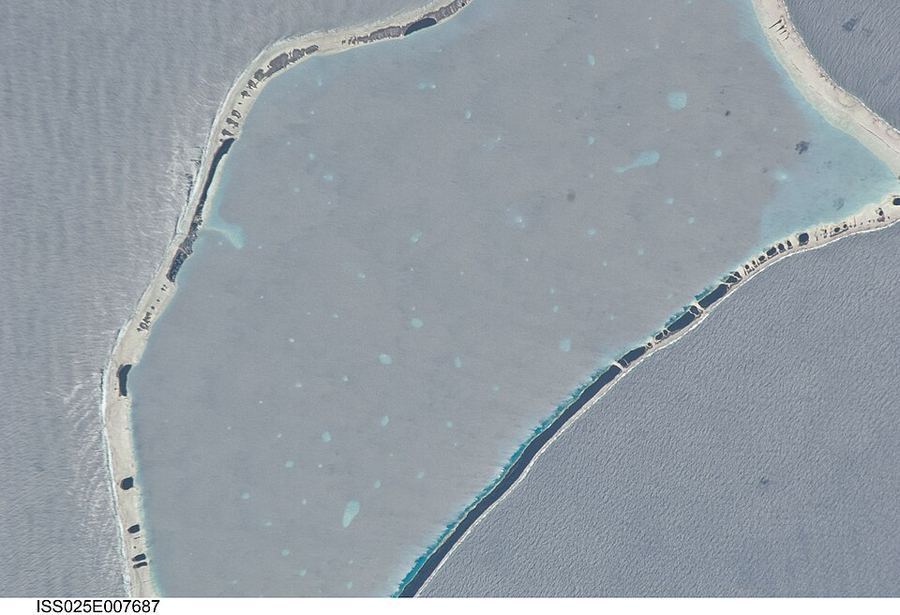
Tokelau consists of three atolls — Atafu, the smallest and most northerly, Nukunonu, which has the largest lagoon, and Fakaofo, the historic seat of power — each a ring of low coral islets around a lagoon, separated from one another by between 60 and 90 kilometres of open ocean. The combined land area is roughly twelve square kilometres and the highest natural point is only a few metres above sea level, while the exclusive economic zone runs to some 290,000 square kilometres. There is no river, stream or spring on any of the atolls; fresh water comes from roof catchment into tanks and from a thin lens sitting beneath the islets, which is where the pits for swamp taro are dug. The climate is tropical, hot and humid year-round, moderated by trade winds, with a cyclone risk concentrated between November and April; Cyclone Percy in 2005 flooded across Fakaofo and Nukunonu and destroyed housing and crops. Sea-level rise, storm surge, coral bleaching and the intrusion of salt water into the freshwater lens and the taro pits are the defining long-term threats, and the Intergovernmental Panel on Climate Change identifies low-lying atolls of exactly this profile as among the most exposed inhabited places on earth.
Land & Climate, Tokelau
CloudSurfer / CC BY 2.5

Entertainment

Leisure in Tokelau is communal, outdoors and closely tied to the lagoon. Fishing is work and recreation at once, and men going out in small aluminium boats or paddled canoes for an afternoon is both provisioning and pastime. Swimming, reef walking and gathering shellfish occupy children and families; volleyball and the Pacific bat-and-ball game kilikiti are played on any open ground between the houses. Village life supplies most organised entertainment: choir practice, church youth groups, weddings and funerals that draw the whole atoll, and the composition and rehearsal of fatele for visiting dignitaries or departing relatives, which can absorb a village for days. Card games, string games and storytelling remain common in the evening, and satellite television and internet access — much improved since the connectivity upgrades of the last two decades — have added film and social media to the mix, particularly for keeping in touch with relatives in New Zealand. The arrival of the ship every few weeks is itself a social event that empties the village onto the shore.
Entertainment, Tokelau
Earth Science and Remote Sensing Unit, Lyndon B. Johnson Space Center / Public domain

Art & Museums

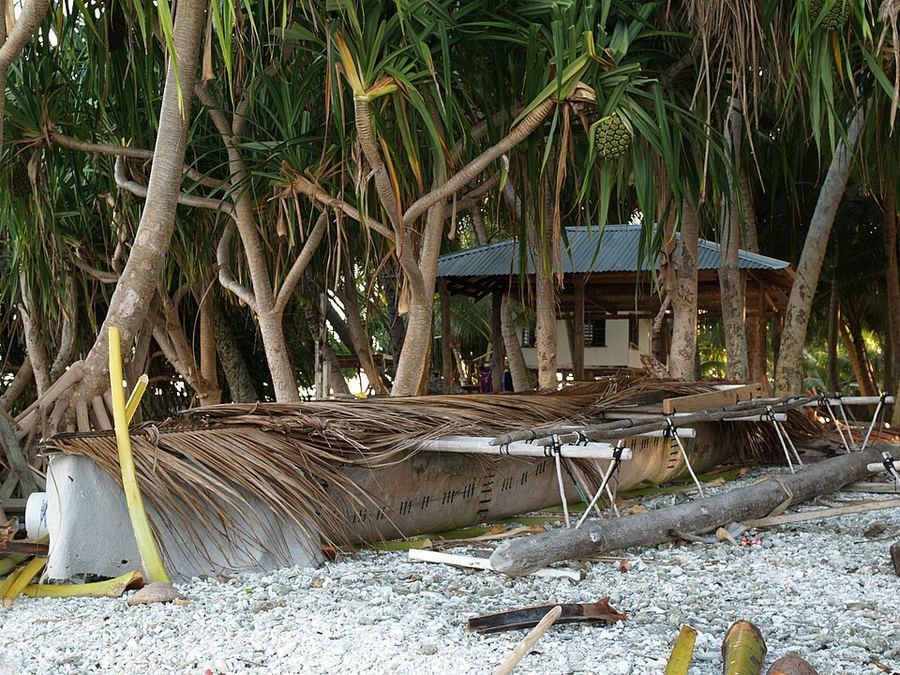
Tokelauan art is functional craft executed to a very high standard rather than art made for display. Women's weaving from pandanus leaf produces sleeping mats, floor mats, fans, baskets and hats, with the finest mats treated as heirloom valuables in ceremonial exchange. The signature men's craft is carving in kanava wood, above all the tuluma — a lidded, round wooden box, hollowed from a single block and fitted so precisely that it keeps a fisherman's tobacco, hooks and lines dry at sea without nails or glue. Canoe building in the same wood, using sewn and lashed construction for the single-outrigger paopao, is the other great applied skill, and knowledge of hull shape and lashing is passed within families. Body ornament — shell and seed necklaces, flower garlands, combs — accompanies dance. Because so little was collected or written down before the twentieth century, much of what is known about older Tokelauan material and oral culture rests on the detailed ethnographic work carried out on the atolls by New Zealand anthropologists from the 1960s onward, whose recordings of genealogies, songs and village histories now function as an archive for Tokelauans themselves.
Art & Museums, Tokelau
Adana Dobranis / CC BY 4.0

Notable People

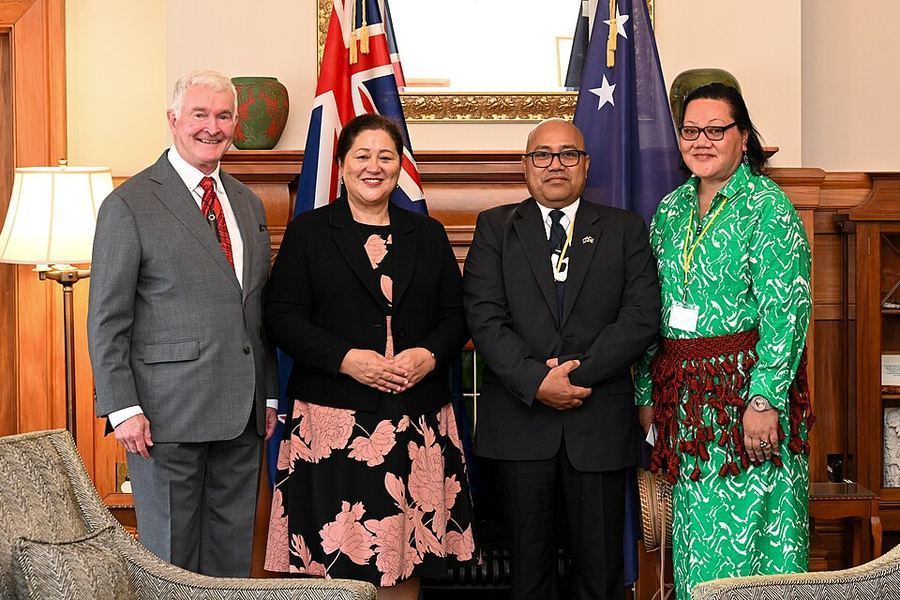
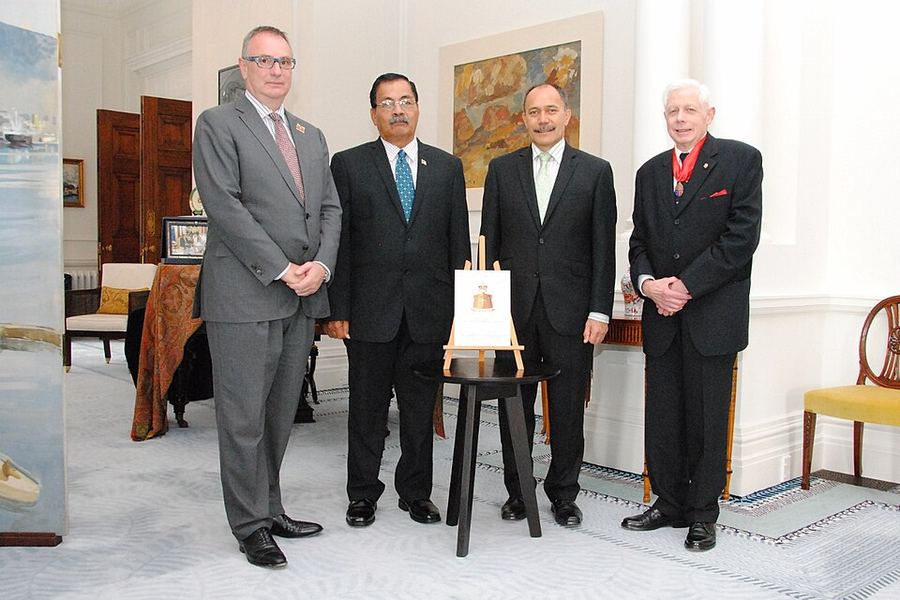
A territory of a few thousand people produces few internationally known figures, and Tokelau's best-known names have generally made their reputations abroad or in the region rather than at home. The most widely heard is the musician Opetaia Foa'i, founder of the group Te Vaka, whose father came from Tokelau and whose work has carried Tokelauan language and rhythm into Pacific music worldwide and, through the songs he co-wrote for the film Moana, to a mass international audience. In public life the recurring figures are the Faipule and the holders of the rotating office of Ulu-o-Tokelau, who represent the territory at the United Nations Special Committee on Decolonization and at Pacific regional meetings; Foua Toloa, who held the office around the period of the solar conversion, became the territory's most visible advocate abroad on climate change and renewable energy. Beyond these, the people who most shape Tokelau's public profile are the leaders of the New Zealand diaspora communities in Porirua, Hutt Valley and Auckland — church ministers, teachers and community organisers — who sustain the language and the fatele among a population several times larger than the one living on the atolls.
Notable People, Tokelau
New Zealand Government, Office of the Governor-General / CC0

Inventions & Breakthroughs

Tokelau's inventive tradition is one of adaptation to extreme constraint rather than of patented devices. The tuluma, the watertight carved wooden fishing box closed by a friction-fitted lid, solves the problem of keeping tinder, hooks and line dry in an open canoe with no metal fastening or sealant at all. Pulaka cultivation is a piece of soil engineering: pits are excavated through coral rubble down to the freshwater lens and built up over years with composted leaves and husk until they will support swamp taro on an island that otherwise has no soil. The paopao, the small single-outrigger canoe with sewn and lashed construction, is tuned to reef-passage conditions that would swamp a wider hull. The inati distribution system is a social technology of the same order — a rule set that converts an unpredictable individual catch into reliable household food security. In the modern period Tokelau's two most striking innovations are institutional: the complete conversion of its electricity supply to solar generation with battery storage in 2012, and the monetisation of its .tk internet country-code domain, which was offered free to registrants worldwide and for a period made this territory of a few thousand people the registrar of one of the most-used domain suffixes on the internet.
Inventions & Breakthroughs, Tokelau
CloudSurfer / CC BY-SA 3.0

Science & Technology

The Tokelau Renewable Energy Project, completed in 2012, replaced diesel generation on all three atolls with photovoltaic arrays of roughly four thousand panels backed by large battery banks, with generators running on locally pressed coconut oil retained as backup for extended cloud. It made Tokelau one of the earliest inhabited territories anywhere to meet effectively all of its electricity demand from renewable generation, and it is studied as a model for other island grids. The territory's other technological claim is the .tk internet domain, allocated to Tokelau as its country code and then offered without charge to registrants worldwide under a commercial arrangement, which produced a very large registered base and a significant revenue stream for a public budget of Tokelau's size, along with persistent problems of abuse of the free registrations. Satellite and improved broadband links have progressively reduced the isolation of the atolls, enabling telemedicine consultations with Samoa and New Zealand and distance tertiary study. Scientifically, Tokelau is significant chiefly as a study site: its reefs, its freshwater lens and its shoreline are monitored as a case study in how low-lying atolls respond to warming seas and rising water.
Science & Technology, Tokelau
Photographer: Mr. Nicholson / CC BY 2.0
On The World Stage
Champions of Tokelau

Champions & Defining Moments

Tokelau is not a member of the International Olympic Committee and does not have a national Olympic committee, so it has never appeared at the Olympic Games; nor is it a member of FIFA, so it plays no part in World Cup qualifying. Its international sporting life is regional. Tokelau competes at the Pacific Games and the Pacific Mini Games, sending small teams in a handful of codes, and its outstanding result came in lawn bowls at the 2007 Pacific Games hosted by Samoa, where Tokelauan bowlers took gold — an extraordinary outcome for a territory whose entire population would not fill a modest stadium. Tokelauan participation elsewhere is mostly indirect and runs through New Zealand: players of Tokelauan descent appear in New Zealand rugby league and rugby union competitions and in Pacific representative sides, and the territory's sporting identity abroad is largely carried by that diaspora. Distance and cost are the binding constraints — every athlete travelling to a regional games must first take a day-long boat passage to Samoa before any flight begins.

US Embassy / Public domain
Government & Leadership

Parliamentary democracy under a constitutional monarchy

Seat of the executive

Executive

Charles III — King

In office since 8 September 2022

Esera Fofō Filipo Tuisano Tuisano — Head of government

Government House / CC BY 4.0
The legislature

General Fono (Fono Fakamua)

Unicameral

Composition — 20 seats

independents 20

Last election 26 January 2023 · 15% women

Court of Appeal

in New Zealand) (consists of the court president and 8 judges sitting in 3- or 5-judge panels, depending on the case

Economy, Trade & Government

Currency & GDP

New Zealand Dollar — NZD ($)

GDP (PPP): $7,711,583 (2017 est.)

Per capita: $6,004 (2017 est.)

Exports

cars, telephones, garments, iron fasteners, fabric (2023)

Partners: Czechia 92%, Singapore 2%, Brazil 1%, South Africa 1%, Sri Lanka 1% (2023)

Imports

integrated circuits, stone processing machines, refined petroleum, gas turbines, plastic products (2023)

Partners: Samoa 31%, Italy 23%, France 21%, Netherlands 16%, Germany 2% (2023)

Government

Type: parliamentary democracy under a constitutional monarchy

Independence: none (territory of New Zealand)

Terrain → Where People Live

How mountains, coasts, and rivers shape settlement (LandScan).

Coming — data

Migration & Ethnic Settlement

Where groups settled and how people move (GeoEPR + UNHCR).

Coming — data

Universities

Notable institutions, mappable as points.

Coming — data
Economy & government facts: CIA World Factbook (public domain), via OpenFactBook / factbook.json.
Every fact and narrative claim will carry a visible source citation. Data-driven sections light up automatically wherever HERA has coverage.