HERA · Human Entity Reference Atlas by Masego Inc

← Thailand 🌐 3D View
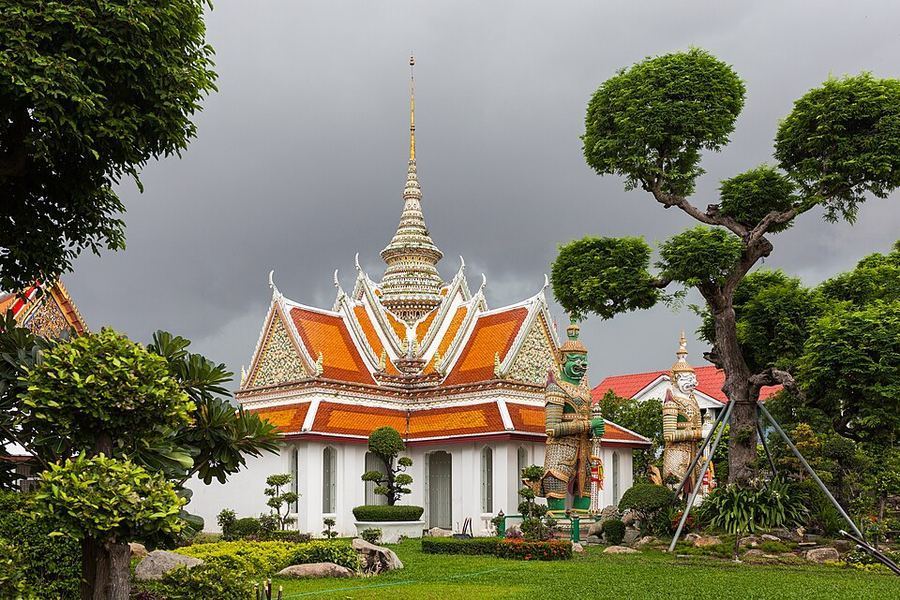
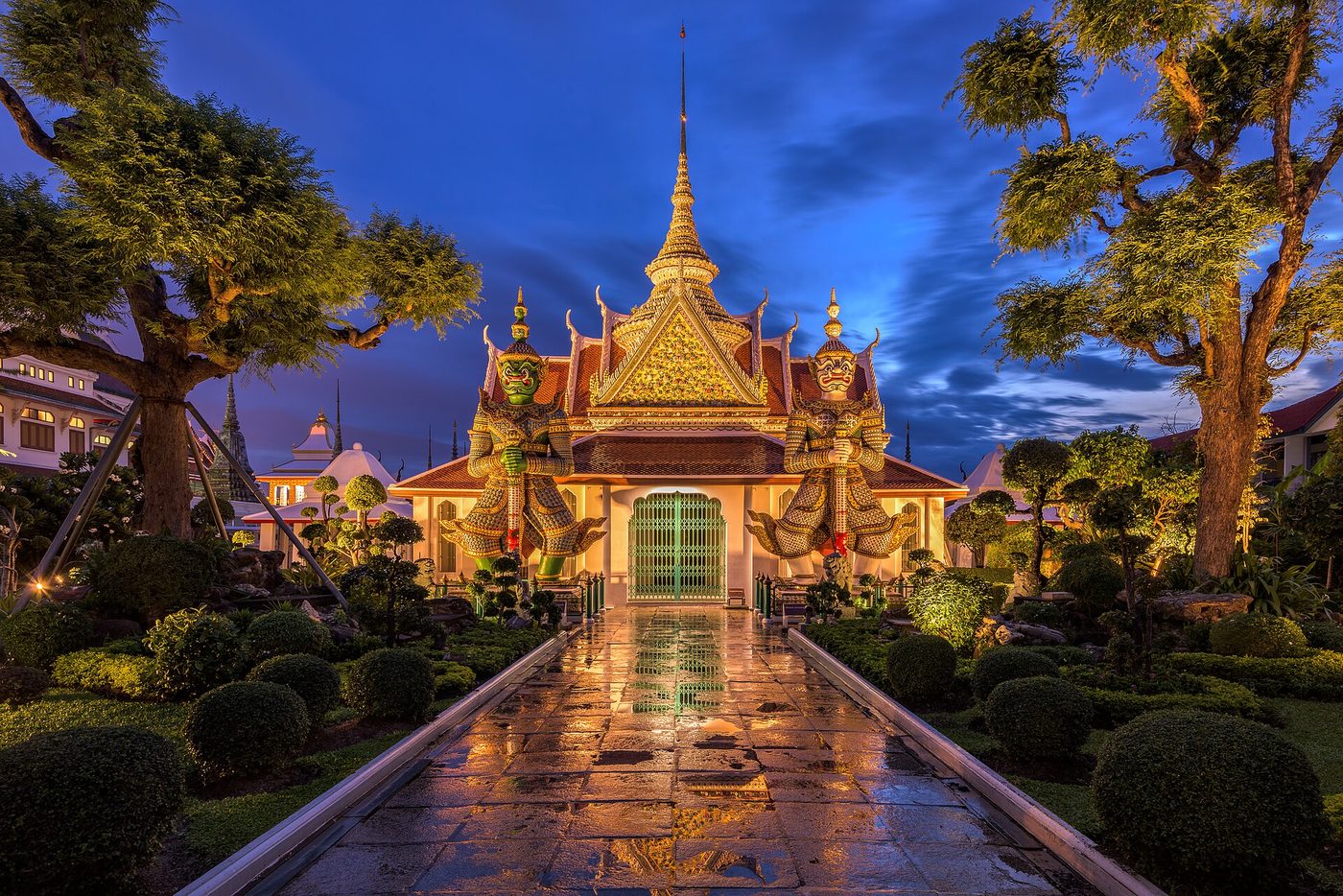
Wat Arun Bangkok, Thailand
Thailand THA
Wat Arun Bangkok — Photo: BerryJ / CC BY-SA 4.0 via Wikimedia Commons
Did You Know Thailand is the only country in Southeast Asia never colonised by a European power — nineteenth-century kings ceded peripheral territory to Britain and France and reformed the state from within to keep the centre independent. — Encyclopaedia Britannica

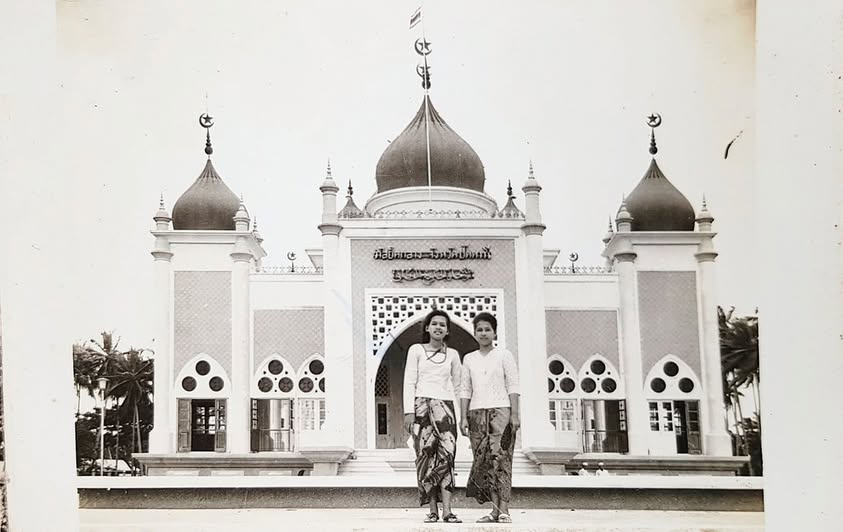
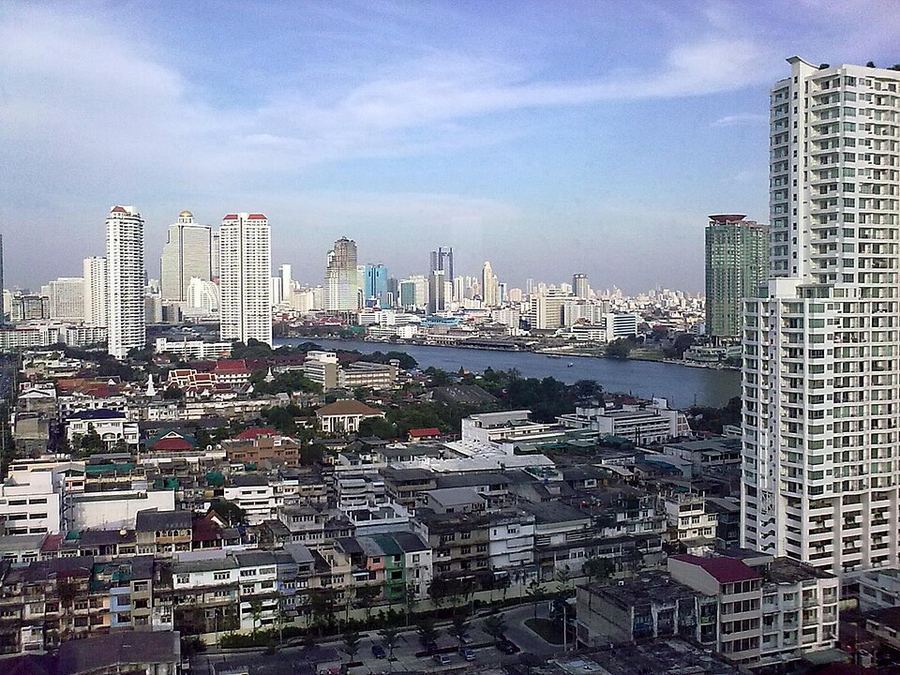
Thailand is a constitutional monarchy of roughly 70 million people occupying the centre of mainland Southeast Asia, wrapped around the Gulf of Thailand and reaching down the Malay Peninsula toward the Andaman Sea. Bangkok, the capital, is one of Asia's great primate cities — a river port turned megacity that dominates the country's economy, media and political life to a degree few capitals match. Thailand is unusual in the region for never having been colonised by a European power, a fact that shapes how Thais narrate their own history and that left the monarchy, the Buddhist sangha and the bureaucracy as continuous institutions rather than colonial inheritances. Its economy is upper-middle-income and heavily industrial: machine parts, integrated circuits, vehicles and broadcasting equipment lead its exports, and tourism adds a further pillar built on beaches, temples and food. Buddhism is professed by about 92.5% of the population, with a significant Muslim minority concentrated in the far south. The country's politics have been turbulent — repeated cycles of election, protest and military intervention — but its cultural confidence, culinary reach and diplomatic independence have given it an outsized global profile.

CIA World FactbookEncyclopaedia Britannica
Population
70,025,248
Capital
Bangkok
Currency
฿ THB
Time zones
Largest city
Bangkok
Human Geography Themes
Loading national figures…
Largest Cities
Bangkok19,048,032
Chiang Mai692,242
Phuket462,804
Hat Yai436,777
Lop Buri422,600
Chon Buri339,021
Khon Kaen297,168
Pattaya253,538
In Perspective

Bangkok's urban core is home to about 19,048,032 people.

That's bigger than London, Paris, Madrid and Toronto — each a great world city in its own right.

Bangkok19,048,032
London10,408,332
Paris9,366,654
Madrid5,680,137
Toronto5,566,382

Among the world's megacities, though, it's one of many — the giants of Asia and Latin America run larger still:

Bangkok19,048,032
Jakarta40,545,126
Dhaka37,307,160
Tokyo33,244,670
Shanghai30,678,616
Cairo25,230,325

More people live in Bangkok than in the entire nation of Sweden, Greece, Portugal or Israel.

The Country & Its People

History

Thai historiography traditionally dates the nation's founding to the Sukhothai kingdom of 1238, whose script and Theravada Buddhist patronage still anchor national identity. Sukhothai gave way to Ayutthaya, a cosmopolitan riverine capital that traded with Persia, Japan and the Netherlands and endured for four centuries until its destruction by Burmese armies in 1767. The capital shifted downriver to Thonburi and then, in 1782, to Bangkok under the Chakri dynasty that reigns still. The nineteenth century brought the defining achievement of Thai statecraft: kings Mongkut and Chulalongkorn modernised the administration, army and legal code while ceding peripheral territories to Britain and France, and Siam emerged as the only Southeast Asian state never formally colonised. A bloodless revolution in 1932 replaced absolute monarchy with a constitutional one, and the country was renamed Thailand in 1939. The post-war decades were shaped by alignment with the United States during the Indochina wars, rapid industrialisation, and a recurring cycle of coups and constitutions — more than a dozen since 1932. The 1997 Asian financial crisis, which began with the flotation of the baht, reset the economy and the political settlement alike, and the 2016 death of King Bhumibol Adulyadej after seventy years on the throne closed the longest reign in Thai history.
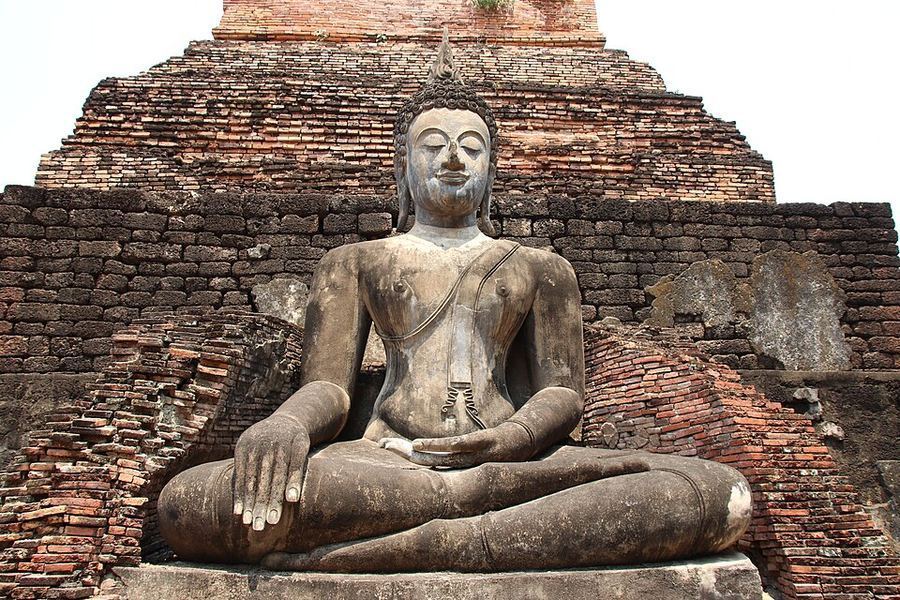
History, Thailand
Gary Todd / Public domain

Culture

Thai culture rests on three pillars its own institutions name explicitly — nation, religion and monarchy — and daily life is organised around a Theravada Buddhism practised by roughly 92.5% of the population. Merit-making shapes the calendar: alms to monks at dawn, ordination as a rite of passage for young men, temple fairs that double as village festivals. Social interaction is governed by a fine-grained sense of hierarchy and deference expressed in the wai, the palms-together greeting whose height signals relative status, and by kreng jai, a reluctance to impose that outsiders often misread as agreement. The complementary value is sanuk — the expectation that work, meals and even hard travel should contain some pleasure — which sits comfortably alongside the seriousness of religious observance. Songkran, the April new year, has become the country's best-known festival abroad for its water-throwing, though its origin is the gentle pouring of scented water over Buddha images and elders' hands. Loi Krathong, when banana-leaf floats carrying candles are set on rivers and ponds, supplies the other iconic image. Regional cultures remain distinct: the Lao-speaking Isan northeast, the northern Lanna sphere around Chiang Mai, and the Malay-Muslim far south each hold their own dialects, dishes and musical traditions.
Culture, Thailand
Buddhist072 / CC BY-SA 4.0

Points Of Pride

The pride Thais most readily name is that their country was never colonised — a distinction shared with no other state in Southeast Asia, and one credited to the diplomatic manoeuvring of nineteenth-century monarchs who played Britain and France against each other while reforming from within. The monarchy itself is a second: the Chakri dynasty has reigned since 1782, and King Bhumibol Adulyadej's seventy-year reign made him the longest-serving monarch in Thai history. Thai cuisine is a third and the most widely exported, carried by a government-backed programme of culinary diplomacy that helped make Thai restaurants ubiquitous worldwide. UNESCO has inscribed the historic cities of Ayutthaya and Sukhothai on the World Heritage list, alongside the Dong Phayayen–Khao Yai forest complex, and has recognised nuad Thai — traditional Thai massage — and khon masked dance drama as intangible cultural heritage. Thailand is also a tourism superpower, consistently among the most-visited countries in the world, and its universal health coverage scheme, introduced in 2002, is cited internationally as an achievement rare among upper-middle-income countries.
Points Of Pride, Thailand
Evilarry / Public domain

Cultural Fusion

Thai identity is officially homogeneous — 97.5% of the population is recorded as Thai — but that figure conceals a long history of absorption rather than exclusion. Chinese migration, heaviest between the mid-nineteenth and mid-twentieth centuries, produced a Sino-Thai population so thoroughly integrated through intermarriage, Thai surnames and Buddhist practice that it rarely registers as a separate ethnic category, even as Chinese ancestry runs through much of the commercial elite and the royal lineage itself. Indian influence arrived far earlier and more diffusely, supplying the Pali and Sanskrit vocabulary of religion and kingship, the Ramakien epic adapted from the Ramayana, and the Brahmanical rituals that still frame royal ceremony. The northeast is culturally and linguistically Lao; the north carries the Lanna inheritance of a formerly independent kingdom; the far south is Malay-speaking and Muslim, the one region where fusion has been contested rather than assumed. Portuguese traders left their mark on Ayutthayan desserts, and the chilli itself — now inseparable from Thai food — arrived only in the sixteenth century via Portuguese ships from the Americas.
Cultural Fusion, Thailand
Diego Delso / CC BY-SA 3.0

Music & Dance

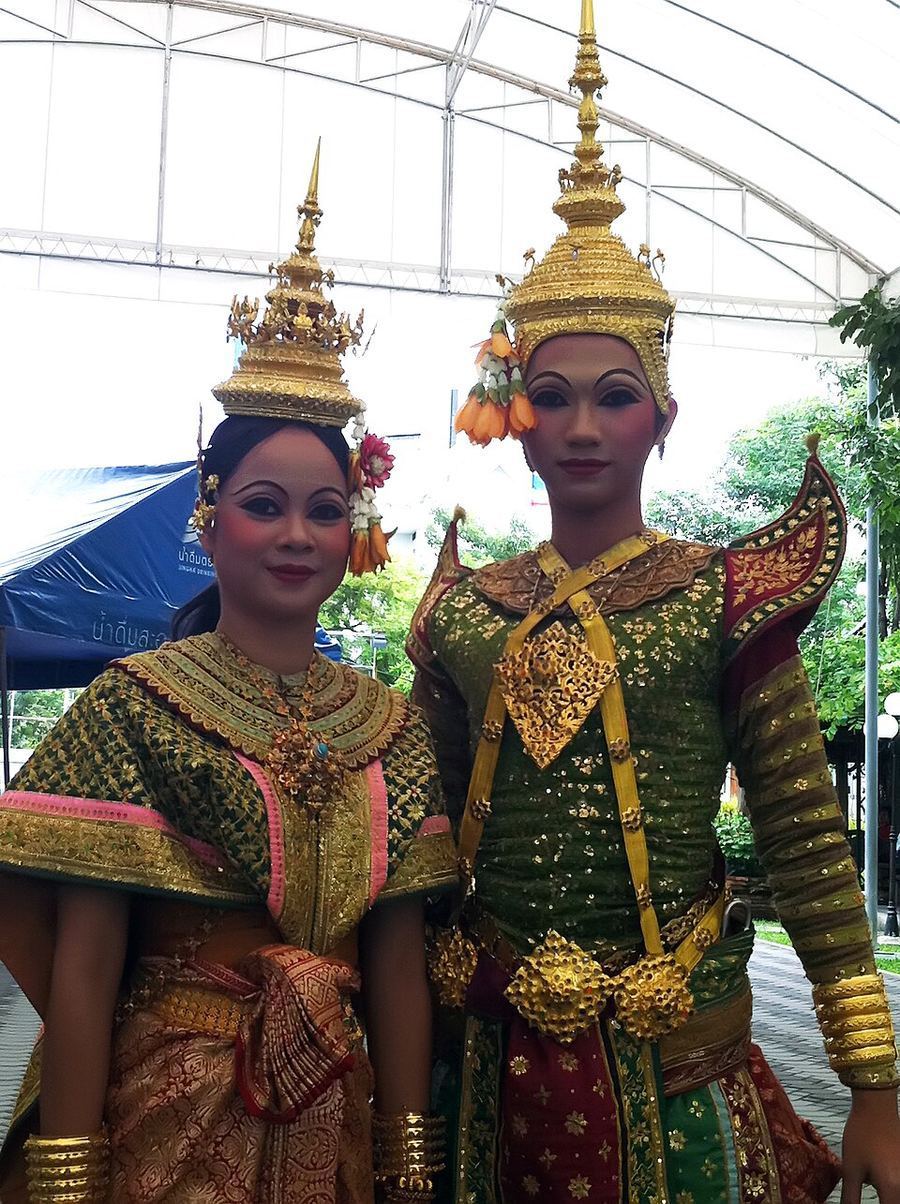
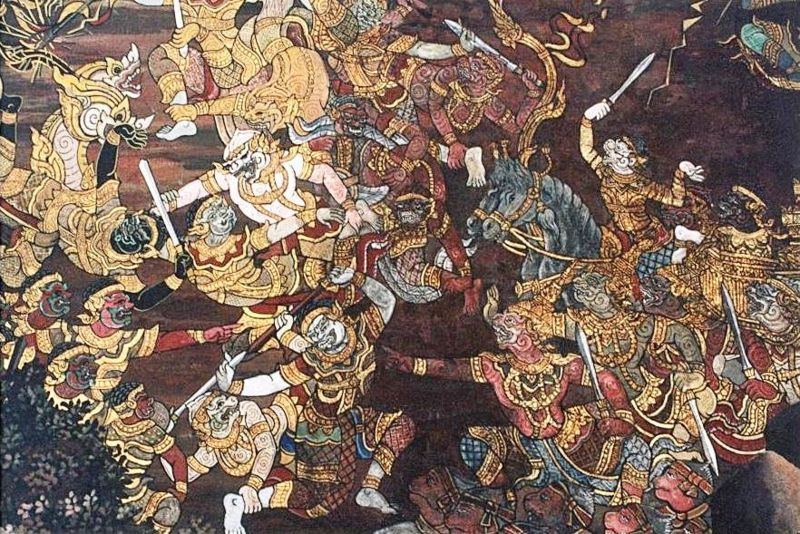
Classical Thai music is built on the piphat ensemble — gong circles, xylophones, oboe and drums — tuned to a seven-tone equidistant scale that sounds deliberately unlike Western temperament and accompanies dance drama rather than standing alone. Khon, the masked dance drama staging episodes of the Ramakien, is the most formal expression, its performers trained from childhood in codified gestures; UNESCO inscribed it as intangible cultural heritage. Lakhon offers a less rigid dance-drama form, and likay provides the popular, improvised, comic counterpart played at temple fairs. Regional traditions diverge sharply: the northeast's mor lam, sung to the khaen mouth organ in rapid Lao-language patter, became the template for the country's most successful popular genre when it fused with electric instrumentation. Luk thung, literally 'child of the fields', emerged in the mid-twentieth century as the music of rural migration — melodramatic, heavily ornamented, and for decades the soundtrack of Bangkok's working class. String pop and Thai indie now dominate the urban market, and the country has become a significant node in the wider Asian pop economy, though luk thung and mor lam retain audiences that no imported genre has displaced.
Music & Dance, Thailand
Saerin / CC BY-SA 3.0

Cuisine & Misattributed Foods

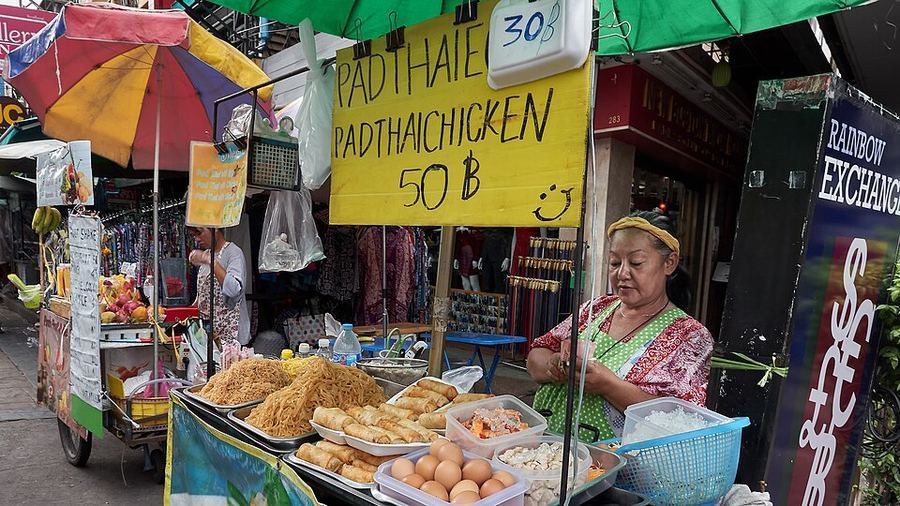
Thai cooking is organised around the balance of four tastes — hot, sour, salty and sweet — adjusted at the table rather than fixed by the cook, which is why a Thai meal arrives with a caddy of chilli, fish sauce, sugar and vinegar. Fish sauce supplies the salt and the depth; lime, tamarind and green mango the sourness; palm sugar the sweetness; and bird's eye chilli the heat that arrived only after Portuguese ships brought capsicums from the Americas in the sixteenth century. The pounded curry paste is the technical foundation, and its colour names the curry: green from fresh chillies, red from dried, yellow from turmeric in the Muslim-influenced south. Regional cooking varies more than the export menu suggests. The northeast eats sticky rice by hand with som tam, grilled chicken and larb; the north favours milder, herb-heavy dishes and the Burmese-influenced khao soi; the south is the hottest and most coconut-rich, with a strong Malay inheritance. Street food is not a novelty but the ordinary way a great many Thais eat, and Bangkok's vendor culture has become internationally emblematic. Pad thai, the dish most foreigners meet first, was promoted by the state in the mid-twentieth century as a nation-building noodle.
Cuisine & Misattributed Foods, Thailand
Edgardo W. Olivera from Montevideo, Uruguay / CC BY 2.0

National Dress

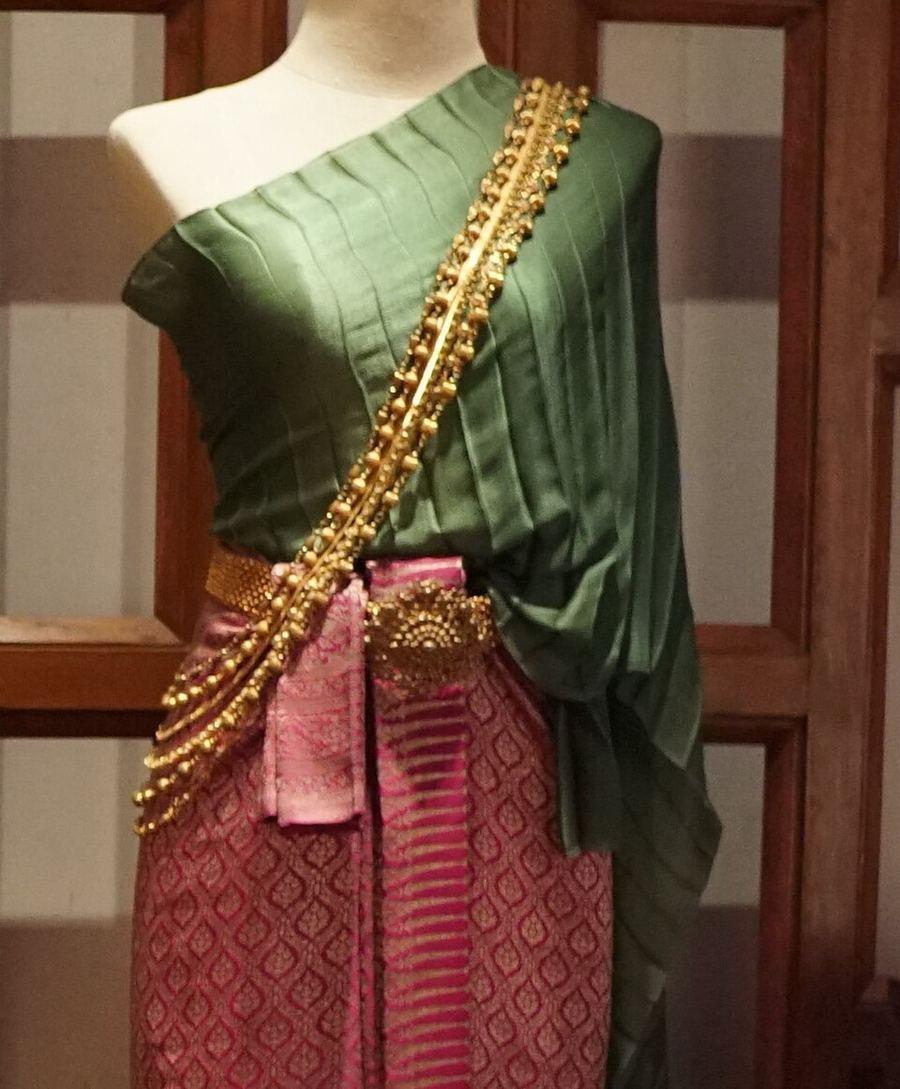
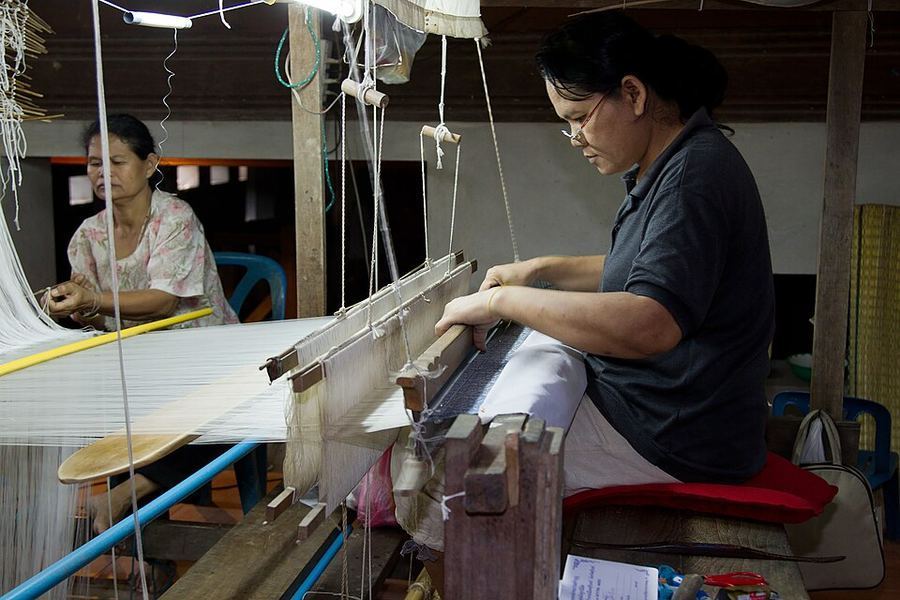
The garment most recognised as Thai national dress is comparatively modern: the chut thai phra ratcha niyom, a set of eight formal outfits codified in the 1960s under Queen Sirikit to give women a distinctly Thai formal wardrobe drawing on historical silhouettes. Its components — the sabai shoulder cloth draped diagonally across the chest, the wrapped or pleated silk skirt, and jewellery echoing court styles — reference Ayutthayan and early Bangkok-period dress rather than reproducing it. For men the formal counterpart is the suea phraratchathan, a high-collared shirt introduced in the same period as an alternative to the Western suit. Older forms persist regionally: the chong kraben, a length of cloth passed between the legs and tucked at the back, was once everyday wear for both sexes and survives in classical dance costume and ceremony. Thai silk, particularly the mudmee ikat of the northeast, is the material signature, and its post-war revival is closely associated with both royal patronage and the American entrepreneur Jim Thompson. Everyday clothing is otherwise thoroughly Western, with traditional dress reserved for weddings, ordinations, temple visits, state occasions and the Friday convention in many workplaces and schools.
National Dress, Thailand
Z3144228 / CC BY-SA 4.0

Sports & Inspiring Athletes

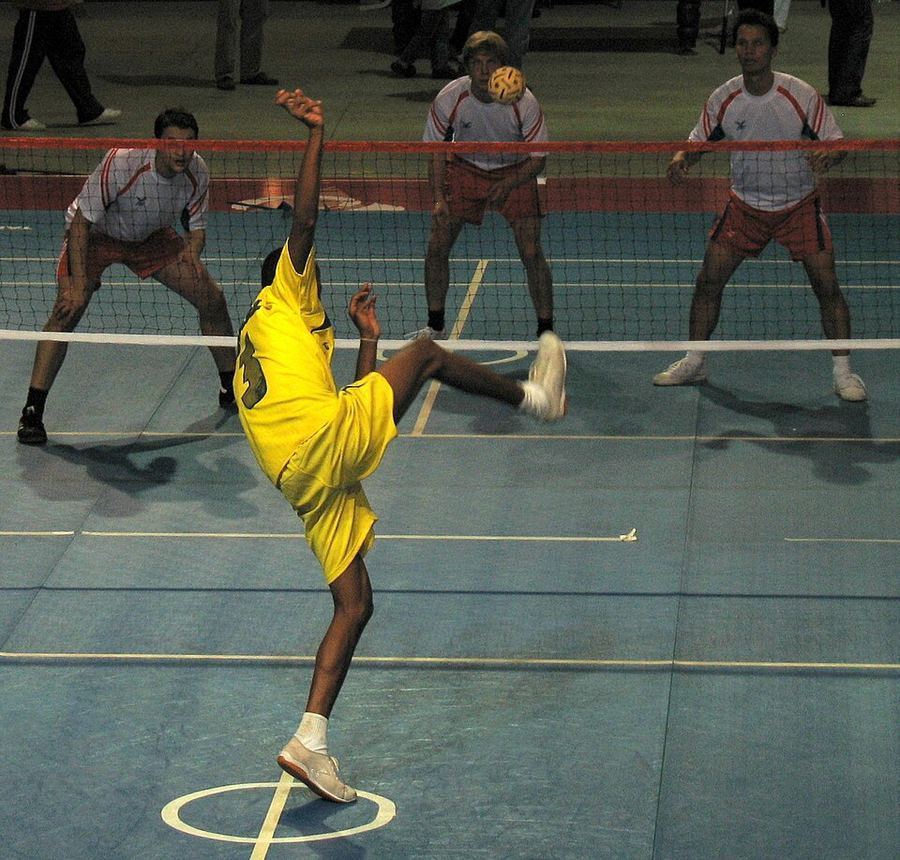
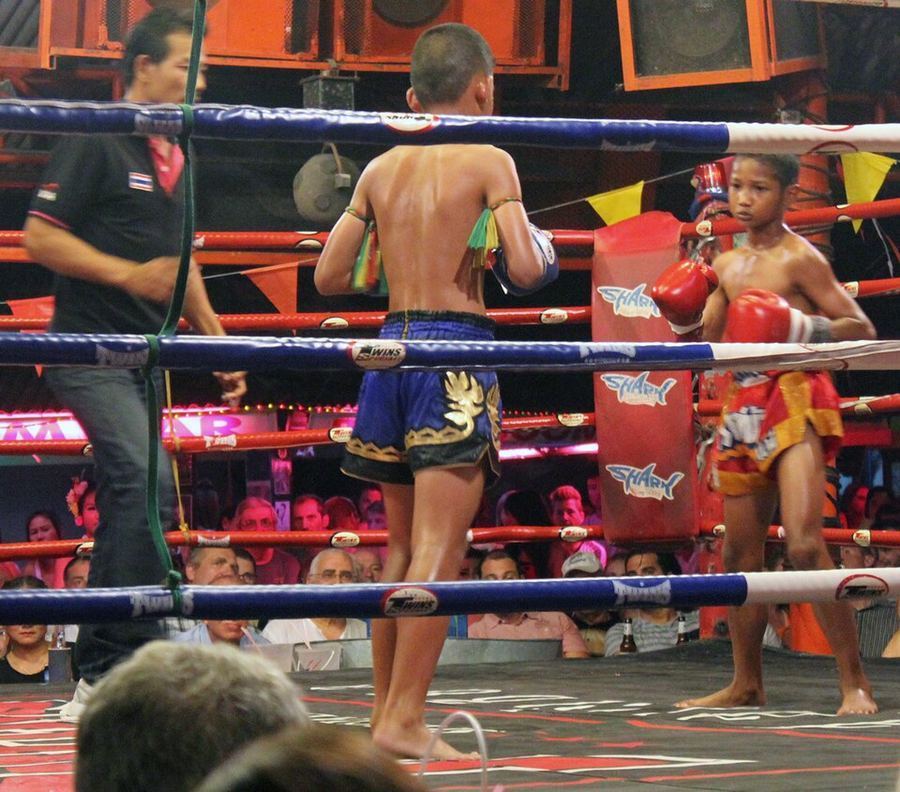
Muay Thai is the national sport and the clearest expression of Thai physical culture — a striking art using fists, elbows, knees and shins, preceded by the wai khru ram muay dance in which the fighter pays respect to teacher and ring. Professional cards at Bangkok's Lumpinee and Rajadamnern stadiums are broadcast nationally and accompanied by a large, legal betting culture, and provincial fights are a fixture of temple fairs. Football is the most watched sport overall: the Thai League draws committed provincial followings, the national team has won the ASEAN championship more often than any rival, and English Premier League matches command large late-night audiences. Sepak takraw, the kick-volleyball played with a rattan ball, is a regional speciality in which Thailand is consistently among the world's strongest nations. Badminton has produced world-class singles players and a growing professional base. At the Olympic Games Thailand's medals have come overwhelmingly from weightlifting, boxing and taekwondo, and Thai golfers of both sexes have become fixtures on the international tours.
Sports & Inspiring Athletes, Thailand
The original uploader was Jasy jatere at English Wikipedia. / CC BY 2.0

Notable Educational Programs

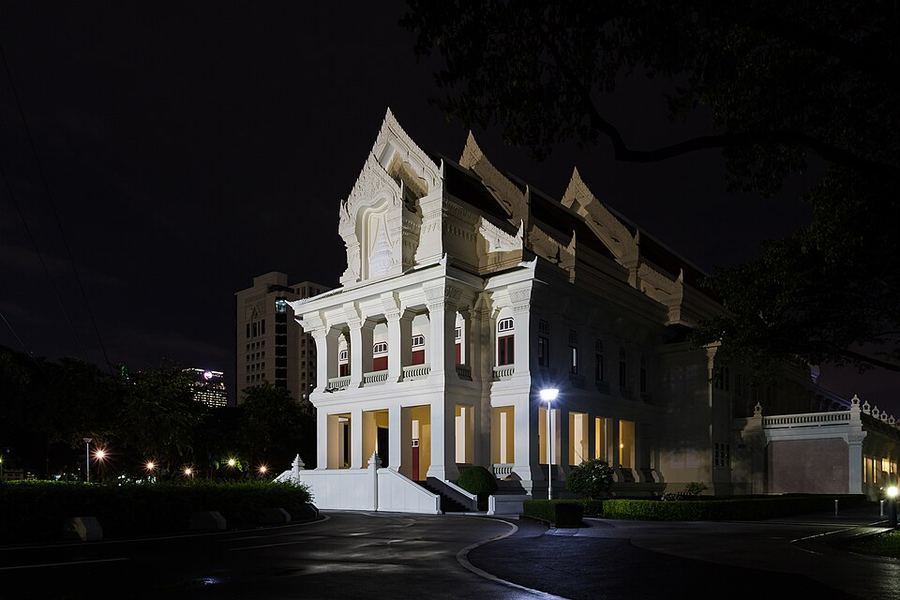
Education in Thailand is compulsory for nine years and free for twelve under a constitutional guarantee, and the country reports near-universal primary enrolment. The system is centralised under the Ministry of Education, with instruction in Thai and a curriculum that includes Buddhist moral instruction; uniforms are standard from primary school through university. Higher education is anchored by Chulalongkorn University, founded in 1917 and named for the modernising king, and Thammasat University, established in 1934 with an explicitly civic and political mission; Mahidol is the leading medical institution and Silpakorn the arts academy founded out of Silpa Bhirasri's school. Kasetsart's agricultural research has been closely tied to the country's rice and aquaculture industries. The persistent policy problem is quality and equity rather than access: international assessments have repeatedly shown Thai students underperforming relative to the country's income level, with wide gaps between Bangkok and rural provinces, and between well-resourced demonstration schools and small village ones. Language of instruction is a live issue in the Malay-speaking far south, and vocational education has been expanded to serve the electronics and automotive plants that anchor industrial employment.
Notable Educational Programs, Thailand
This Photo was taken by Supanut Arunoprayote. Feel free to use any of my images, but please mention me as the author and may send me a message. (สามารถใช้ภาพได้อิสระ แต่กรุณาใส่เครดิตผู้ถ่ายและอาจส่งข้อความบอกกล่าวด้วย) Please do not upload an updated image here without consultation with the Author. The author would like to make corrections only at his own source. This ensures that the changes are preserved.Please if you think that any changes should be required, please inform the author.Otherwise you can upload a new image with a new name. Please use one of the templates derivative or extract. / CC BY 3.0

Wars & Conflicts

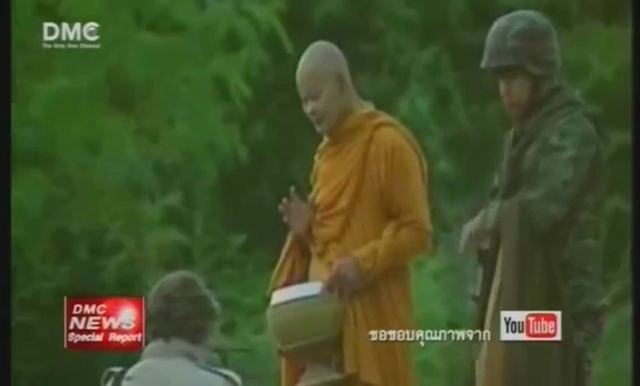
Thailand's most sustained internal conflict is the insurgency in its far south — the Malay-Muslim majority provinces of Pattani, Yala and Narathiwat — which reignited in 2004 after decades of lower-level unrest. It is a separatist conflict rooted in the 1909 incorporation of the former Patani sultanate, sharpened by language and education policy and by the security response; the Uppsala Conflict Data Program records it among the world's long-running low-intensity armed conflicts, with thousands killed since 2004 and periodic, inconclusive talks mediated by Malaysia. The country's other recurring form of violent contention is political rather than territorial: the cycle of mass protest and military intervention that produced coups in 2006 and 2014, with lethal crackdowns on demonstrators in 1973, 1976, 1992 and 2010. Externally, Thailand's most serious recent dispute has been with Cambodia over the land around the Preah Vihear temple, which produced armed exchanges between 2008 and 2011 before the International Court of Justice ruled in 2013. Thailand also hosts long-standing refugee populations along its Myanmar border, where camps have sheltered displaced people for decades and arrivals rose again after the 2021 coup in Myanmar.
Current as of 2026-08-06
Wars & Conflicts, Thailand
Unknown / Public domain

Land & Border Disputes

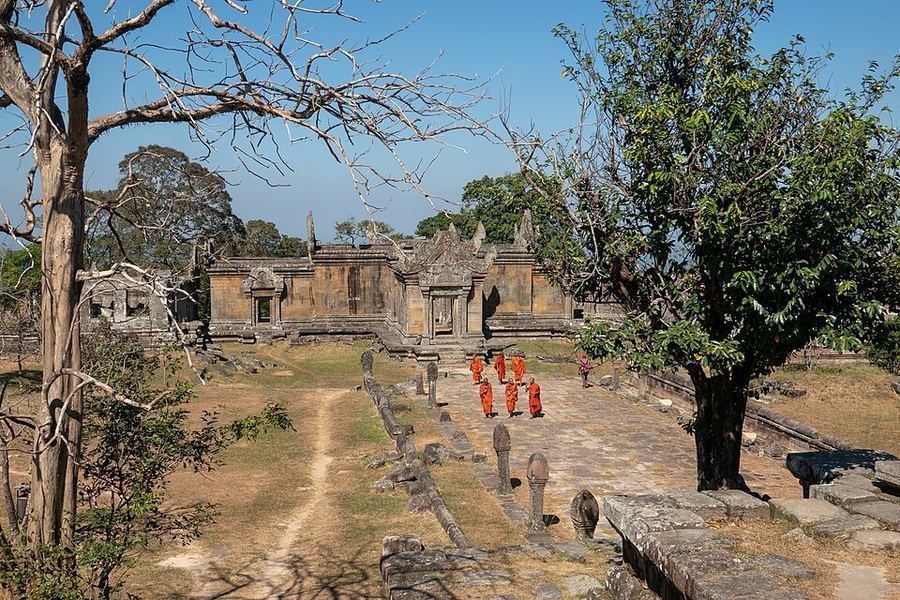
The best-documented of Thailand's territorial disputes concerns Preah Vihear, an eleventh-century temple on the Dangrek escarpment at the Cambodian border. The International Court of Justice awarded the temple to Cambodia in 1962; the surrounding land remained contested, and after Cambodia's 2008 World Heritage inscription the dispute produced deadly clashes. In 2013 the ICJ interpreted its earlier judgment to confirm Cambodian sovereignty over the promontory on which the temple stands, and both states accepted the ruling. Elsewhere the land boundary with Cambodia remains incompletely demarcated in places, and stretches of the boundary with Laos along the Mekong are complicated by shifting channels and river islands. Maritime claims in the Gulf of Thailand overlap with Cambodia's, leaving a large area of continental shelf with hydrocarbon potential subject to a long-running joint development discussion rather than a settled boundary. Relations with Myanmar involve border demarcation questions alongside the practical burdens of migration and displacement. Thailand has no claims in the South China Sea, which has allowed it to position itself as a mediator within ASEAN rather than a party.
Land & Border Disputes, Thailand
PsamatheM / CC BY-SA 4.0
Land, Life & Legacy

Land & Climate

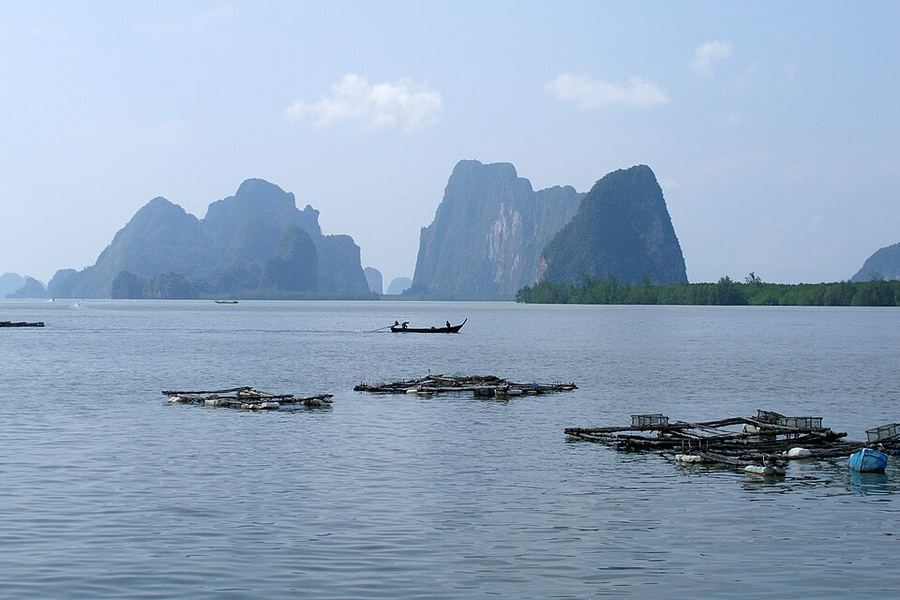
Thailand covers the centre of mainland Southeast Asia and is conventionally divided into four regions whose geography drives their economies. The north is mountainous, the southern edge of the ranges that run down from the Himalaya, cool enough in winter for temperate crops and historically the seat of the Lanna kingdom. The northeastern Khorat Plateau is a dry sandstone shelf, poorer in soil and rainfall and the source of much internal migration. The central plain is the country's heart — the alluvial basin of the Chao Phraya, one of Asia's great rice bowls, with Bangkok sitting near its mouth on ground that is subsiding even as sea level rises. The southern peninsula narrows toward Malaysia between the Gulf of Thailand and the Andaman Sea, its limestone karst towers and islands the basis of the beach tourism economy. The climate is tropical monsoon: a hot season from March, a southwest monsoon bringing the rains from about May to October, and a cooler dry season from November. That rhythm makes flood and drought the country's defining natural hazards — the 2011 floods inundated much of the central plain and disrupted global electronics and automotive supply chains for months.
Land & Climate, Thailand
Vyacheslav Argenberg / CC BY 4.0

Entertainment

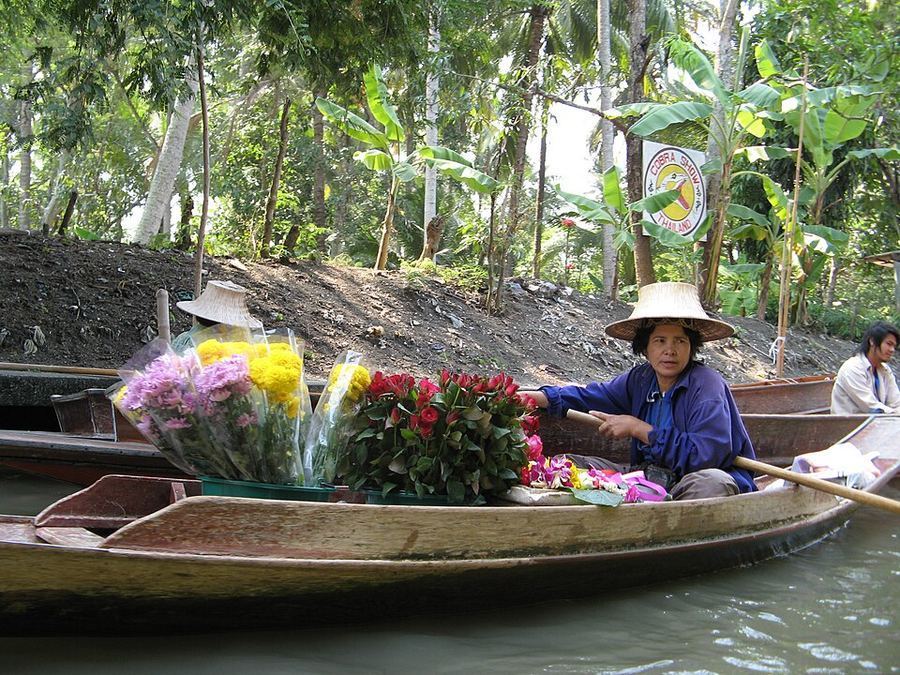
Leisure in Thailand is strongly social and, in keeping with the value of sanuk, rarely solitary. Eating out is the dominant pastime — markets, food courts and street vendors make the shared table the default evening activity — and the night market is as much a social institution as a retail one. Temple fairs punctuate the year with food, music, film and fairground rides on monastery grounds, and the great festivals of Songkran and Loi Krathong empty cities as people return to home provinces. Domestic tourism is substantial: beaches on both coasts, the cool northern hills around Chiang Mai and Pai, and national parks such as Khao Yai draw Thai visitors as much as foreign ones. Muay Thai is watched as well as practised, with stadium cards in Bangkok and provincial bouts at festivals. Football commands enormous television audiences, much of it for the English Premier League. Karaoke, badminton, takraw played in any spare courtyard, and increasingly cycling and running events in the cities fill out the picture, while shopping malls serve in Bangkok's heat as air-conditioned public space for whole families.
Entertainment, Thailand
Yulem / CC BY-SA 4.0

Art & Museums

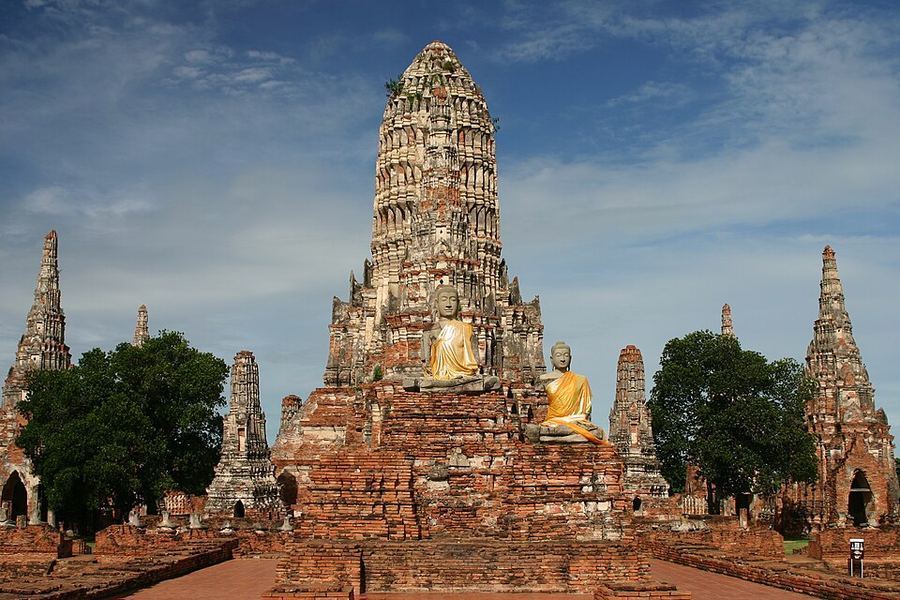
Thai visual art was for most of its history religious and anonymous, made for merit rather than signature. Its central forms are the Buddha image, whose proportions and gestures follow inherited canons, and temple mural painting, which narrates the Jataka tales and the Ramakien in registers of flattened perspective crowded with everyday incident — the murals of Wat Phra Kaew in Bangkok are the standard reference. Sukhothai-period bronze casting produced the walking Buddha, a figure of elongated grace regarded as the high point of Thai sculpture. Architecture supplies the other signature: multi-tiered roofs with soaring finials, gilded chedi, and the prang towers inherited from Khmer models at sites such as Ayutthaya. Lacquer and mother-of-pearl inlay, gold leaf on black lacquer, and benjarong enamelled porcelain carry the decorative tradition. Modern Thai art emerged in the twentieth century partly through the Italian sculptor Corrado Feroci, who took Thai citizenship as Silpa Bhirasri and founded what became Silpakorn University; the neo-traditional movement that followed, associated with painters who reworked Buddhist iconography in contemporary idioms, remains the most distinctive strand, alongside a contemporary scene centred on Bangkok and Chiang Mai.
Art & Museums, Thailand
Unknown authorUnknown author / Public domain

Notable People

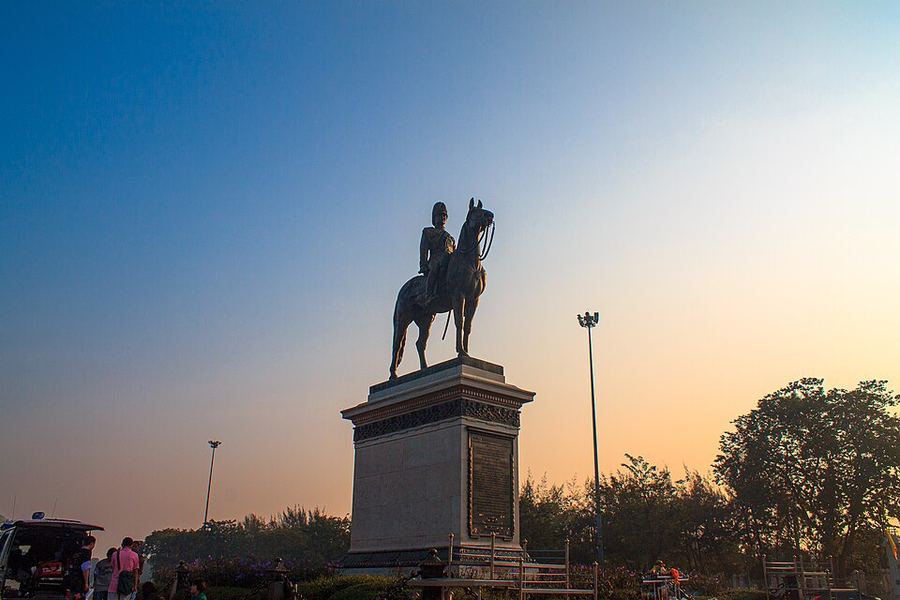
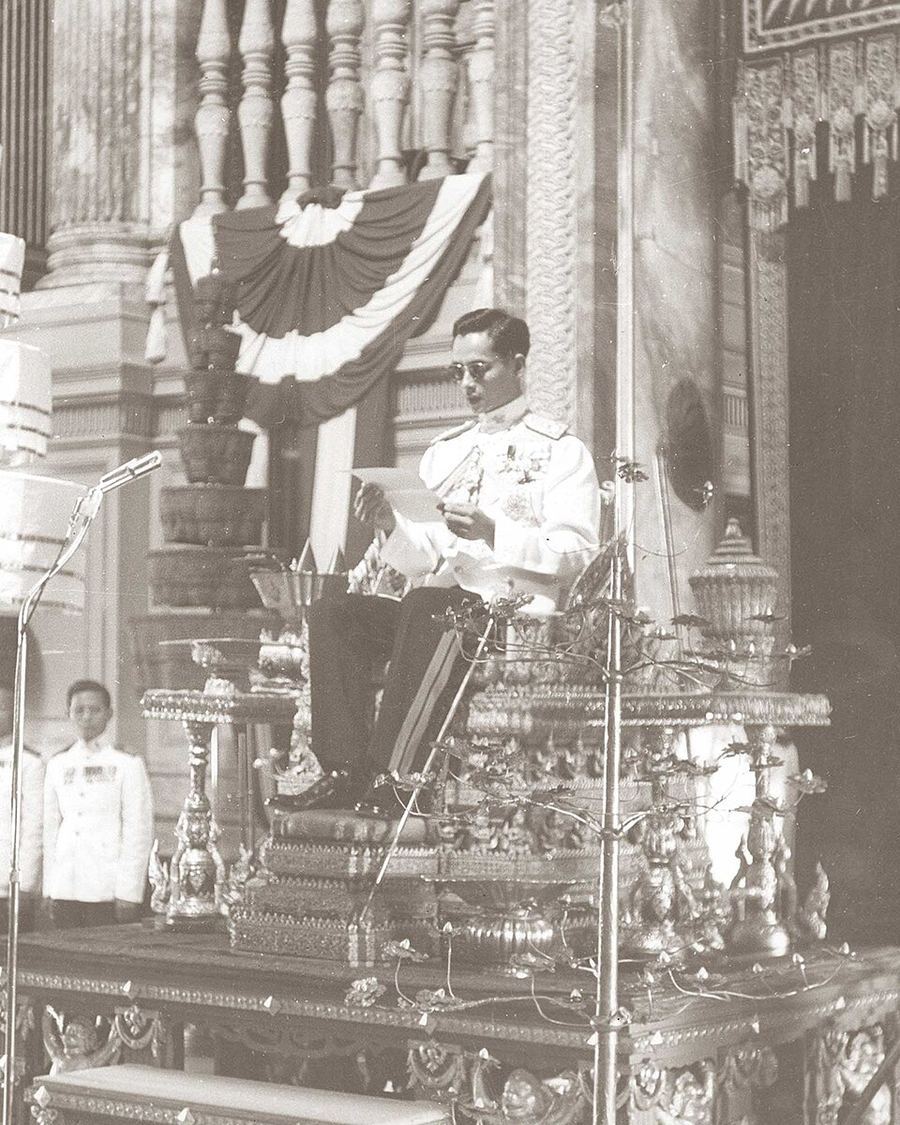
The figures most central to Thai public memory are its modernising monarchs. King Mongkut (Rama IV) opened Siam to treaty relations and scientific correspondence in the mid-nineteenth century, and his son Chulalongkorn (Rama V) abolished slavery and rebuilt the state's administration, army and schools — the reason his portrait still hangs in offices and shops. King Bhumibol Adulyadej (Rama IX), who reigned from 1946 to 2016, became the longest-reigning monarch in the country's history and was associated with thousands of rural development projects. In the arts, Silpa Bhirasri — the Italian-born Corrado Feroci — is credited as the father of modern Thai art education. Sunthorn Phu, the early nineteenth-century poet of Phra Aphai Mani, holds the place Thai literature reserves for a national voice, and UNESCO has marked his bicentenary among its anniversaries. Thai athletes have carried the flag furthest in weightlifting, boxing and taekwondo at the Olympic Games, and the country's chefs and film directors have given it a cultural presence abroad disproportionate to its size, with Thai auteur cinema a fixture of the major European festivals.
Notable People, Thailand
samfotograf / CC BY-SA 4.0

Inventions & Breakthroughs

Thailand's distinctive contributions are less in patented devices than in techniques, institutions and crops that travelled. Thai silk weaving, and especially the mudmee ikat of the northeast in which the yarn is resist-dyed before weaving, is the best-known craft technology, revived commercially after the Second World War into an export industry. Muay Thai codified an eight-limbed striking system — fists, elbows, knees and shins — that has since been absorbed into mixed martial arts training worldwide, making it one of the country's most widely adopted exports. Nuad Thai, the assisted-stretching bodywork inscribed by UNESCO as intangible cultural heritage, spread globally as a therapeutic practice. In agriculture, Thai jasmine rice (hom mali) is a bred cultivar whose aroma and grain quality made it a premium global commodity, and Thailand has long been among the world's leading rice exporters. In public policy the country's 2002 universal coverage scheme is studied internationally as a model for achieving near-universal health insurance at low income levels. Thai industry today is a major contract manufacturer of integrated circuits, machine parts and vehicles rather than a source of original consumer brands.
Inventions & Breakthroughs, Thailand
JJ Harrison (https://www.jjharrison.com.au/) / CC BY-SA 3.0

Science & Technology

Thailand's technological strength is industrial rather than frontier: it is a major contract manufacturer of integrated circuits, hard-disk components, machine parts, vehicles and broadcasting equipment, and those categories dominate its export list. The automotive cluster around the Eastern Seaboard, built on Japanese investment from the 1960s onward, made the country the region's leading vehicle producer and gave it the nickname 'Detroit of Asia'; the current policy push is toward electric-vehicle assembly and battery supply chains. Agricultural science has been a second strength, with breeding programmes behind jasmine rice, rubber and shrimp aquaculture that underpin major export industries. Public health research is the country's most internationally visible science: Thai institutions have contributed to malaria drug-resistance surveillance on the Myanmar border and hosted large HIV vaccine and treatment trials, work closely associated with Mahidol University and the Ministry of Public Health. The National Science and Technology Development Agency coordinates public research, and the Thailand 4.0 policy framework aims to move the economy from assembly toward higher-value design and biotechnology. Research and development spending remains modest relative to OECD economies, and the shortage of doctoral-level researchers is the constraint most often identified.
Science & Technology, Thailand
Piyatad / CC BY-SA 3.0
On The World Stage
Champions of Thailand

Champions & Defining Moments

Thailand's international sporting profile rests on three pillars. The first is muay Thai, which has spread far beyond the country as both a competitive sport and a training system: gyms across Europe, North America and Australia teach it, and its clinch and low-kick repertoire is standard in mixed martial arts. The second is the Olympic record, where Thailand's medals have been concentrated in weightlifting, boxing and taekwondo — disciplines with strong domestic development systems — making it one of Southeast Asia's most successful Olympic nations. The third is golf, where Thai players have won major championships on the women's tour and established a durable presence on the men's tours, supported by a dense network of resort courses that also serve golf tourism. In football the national side is a regional power rather than a global one, dominant in Southeast Asian competition but without a World Cup appearance. Thailand also hosts international events at scale — Bangkok staged the Asian Games four times, more than any other city — and Thai boxers, badminton players and takraw teams travel as regular medal contenders.

Per Meistrup / CC BY-SA 4.0
Government & Leadership

Constitutional monarchy

Seat of the executive

Executive

Wachiralongkon — King

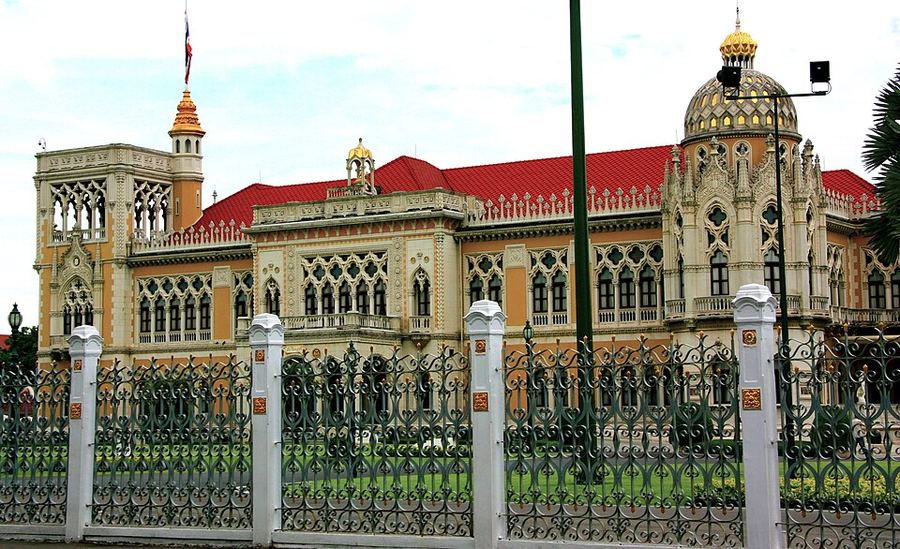
Anutin Charnvirakul — Prime Minister

Sodacan / CC BY-SA 3.0
The legislature

National Assembly (Rathhasapha)

Bicameral

Senate (Wuthisapha) — 200 seats

Last election 6/9/2024 to 6/26/2024 · 22.5% women

House of Representatives (Saphaphuthan Ratsadon) — Move Forward largest party

Move Forward 151 · Pheu Thai 141 · Bhumjaithai 71 · Palang Pracharath 40 · United Thai Nation 36 · Democrat Party 25 · Other 36

Last election 5/14/2023 (House of Representatives dissolved on 12 December 2025) · 19.6% women

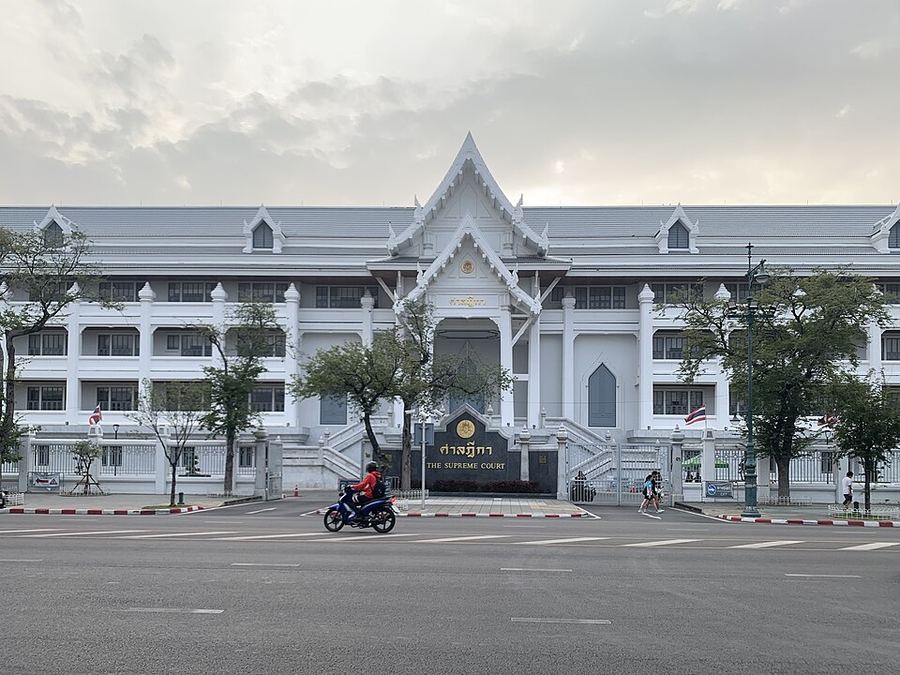
The highest court
The highest court — Chainwit. / CC BY 4.0

Supreme Court of Justice

consists of the court president, 6 vice presidents, 60-70 judges, and organized into 10 divisions); Constitutional Court (consists of the court president and 8 judges); Supreme Administrative Court (number of judges determined by Judicial Commission of the Administrative Courts

Economy, Trade & Government

Currency & GDP

Thai Baht — THB (฿)

GDP (PPP): $1.558 trillion (2024 est.)

Per capita: $21,700 (2024 est.)

Exports

$369.191 billion (2024 est.)

machine parts, integrated circuits, trucks, cars, broadcasting equipment (2023)

Partners: USA 18%, China 13%, Japan 7%, Australia 4%, Singapore 4% (2023)

Imports

$351.419 billion (2024 est.)

crude petroleum, integrated circuits, natural gas, gold, vehicle parts/accessories (2023)

Partners: China 26%, Japan 11%, USA 7%, UAE 6%, Taiwan 5% (2023)

Government

Type: constitutional monarchy

Independence: 1238 (traditional founding date; never colonized)

Terrain → Where People Live

How mountains, coasts, and rivers shape settlement (LandScan).

Coming — data

Migration & Ethnic Settlement

Where groups settled and how people move (GeoEPR + UNHCR).

Coming — data

Universities

Notable institutions, mappable as points.

Coming — data
Economy & government facts: CIA World Factbook (public domain), via OpenFactBook / factbook.json.
Every fact and narrative claim will carry a visible source citation. Data-driven sections light up automatically wherever HERA has coverage.