HERA · Human Entity Reference Atlas by Masego Inc

← Nigeria 🌐 3D View
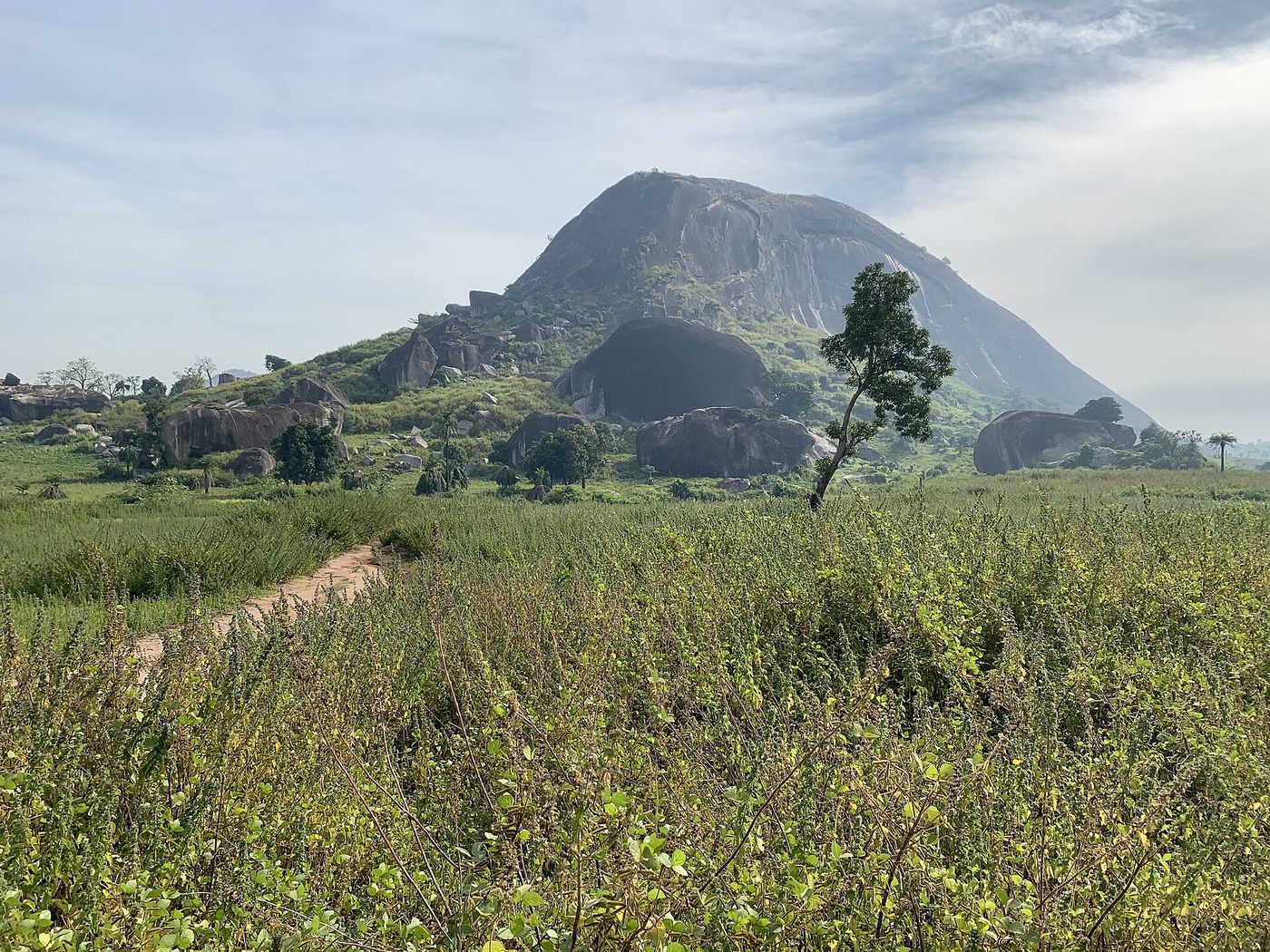
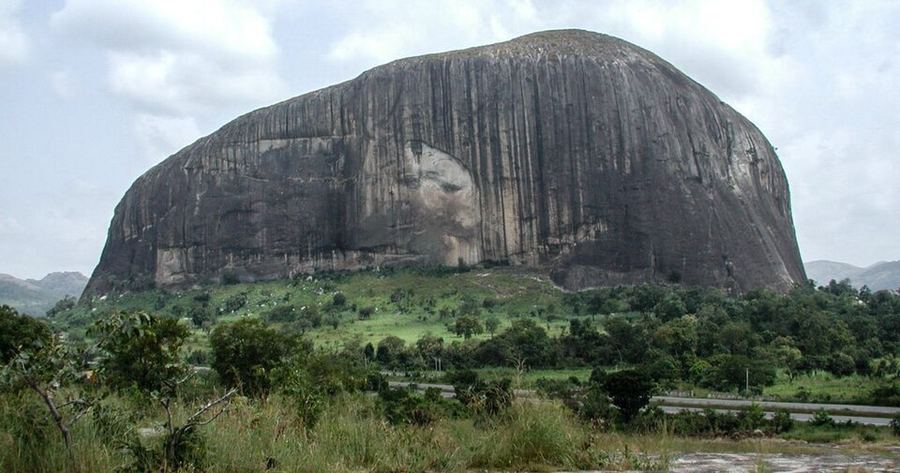
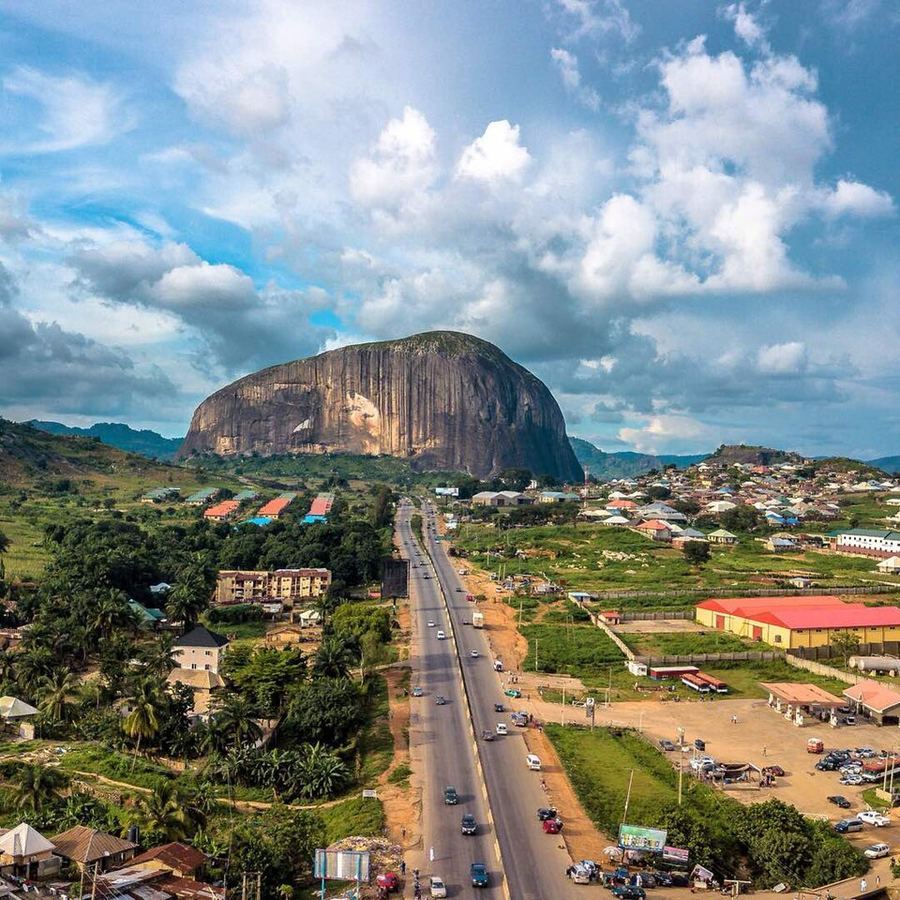
Zuma Rock - Nature, Nigeria
Nigeria NGA
Zuma Rock - Nature — Photo: Anass Sedrati / CC BY-SA 4.0 via Wikimedia Commons
Did You Know Nigeria's film industry, 'Nollywood', is among the most prolific in the world by number of films produced. — UNESCO

Nigeria is Africa's demographic giant: a federal presidential republic of roughly 244 million people (2025 est.), the most populous country on the continent and one whose median age of just 19.4 years makes it a nation overwhelmingly of the young. Governed from the purpose-built capital of Abuja since 1991 — though the coastal megacity of Lagos remains its commercial heartbeat — Nigeria gained independence from the United Kingdom on 1 October 1960. Its economy is among the largest in Africa, with a GDP of about $1.318 trillion (PPP, 2024 est.) anchored by crude petroleum and natural gas exports, alongside gold, fertilizers, and cocoa beans. The country's human landscape is astonishingly plural: the Hausa, Yoruba, Igbo, and Fulani are the largest of more than 250 ethnic groups, and beyond official English more than 500 indigenous languages are spoken — one of the highest counts of any country on Earth. Just over half the population is Muslim, concentrated in the north, and nearly half Christian, concentrated in the south, a religious geography that shapes politics, law, and daily life. Few countries pack as much cultural, linguistic, and economic energy into a single set of borders.

CIA World FactbookUNGlottologIMF
Population
244,344,065
Capital
Abuja
Currency
₦ NGN
Time zones
1
Largest city
Lagos
Local Time
Lagos
Human Geography Themes
Loading national figures…
Largest Cities
Lagos21,554,883
Onitsha5,788,296
Kano5,352,031
Ibadan4,043,955
Owerri3,594,823
Port Harcourt2,623,780
Kaduna1,937,932
Ikorodu1,924,830
In Perspective

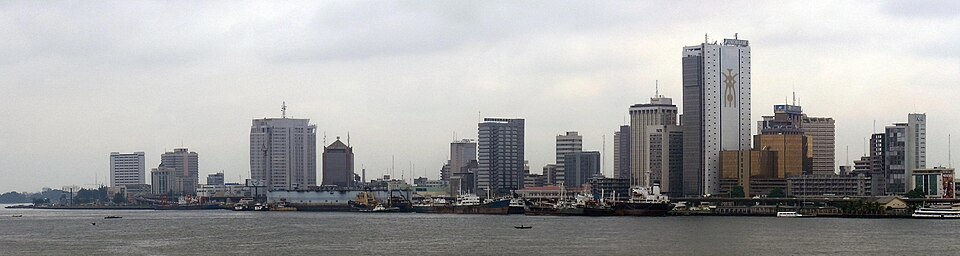
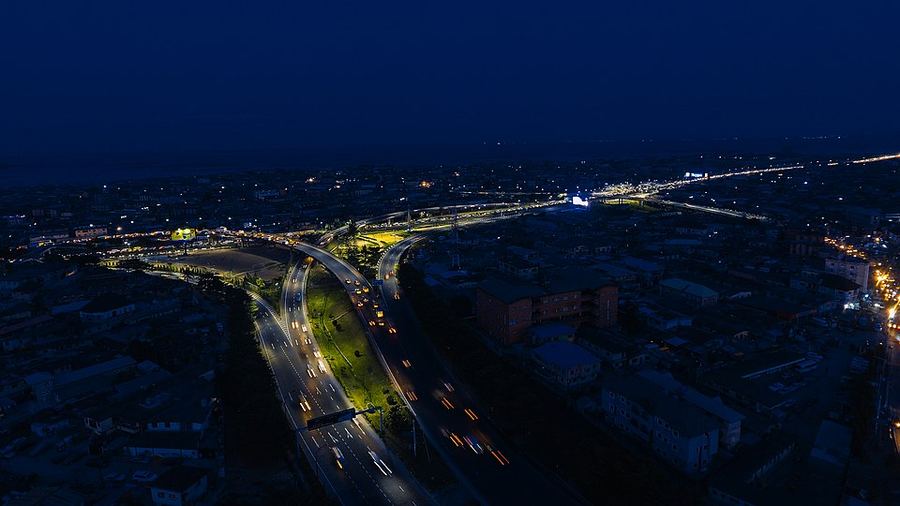
Lagos's urban core is home to about 21,554,883 people.

That's bigger than London, Paris, Madrid and Toronto — each a great world city in its own right.

Lagos21,554,883
London10,408,332
Paris9,366,654
Madrid5,680,137
Toronto5,566,382

Among the world's megacities, though, it's one of many — the giants of Asia and Latin America run larger still:

Lagos21,554,883
Jakarta40,545,126
Dhaka37,307,160
Tokyo33,244,670
Shanghai30,678,616
Cairo25,230,325

More people live in Lagos than in the entire nation of Sweden, Greece, Portugal or Israel.

The Country & Its People

History

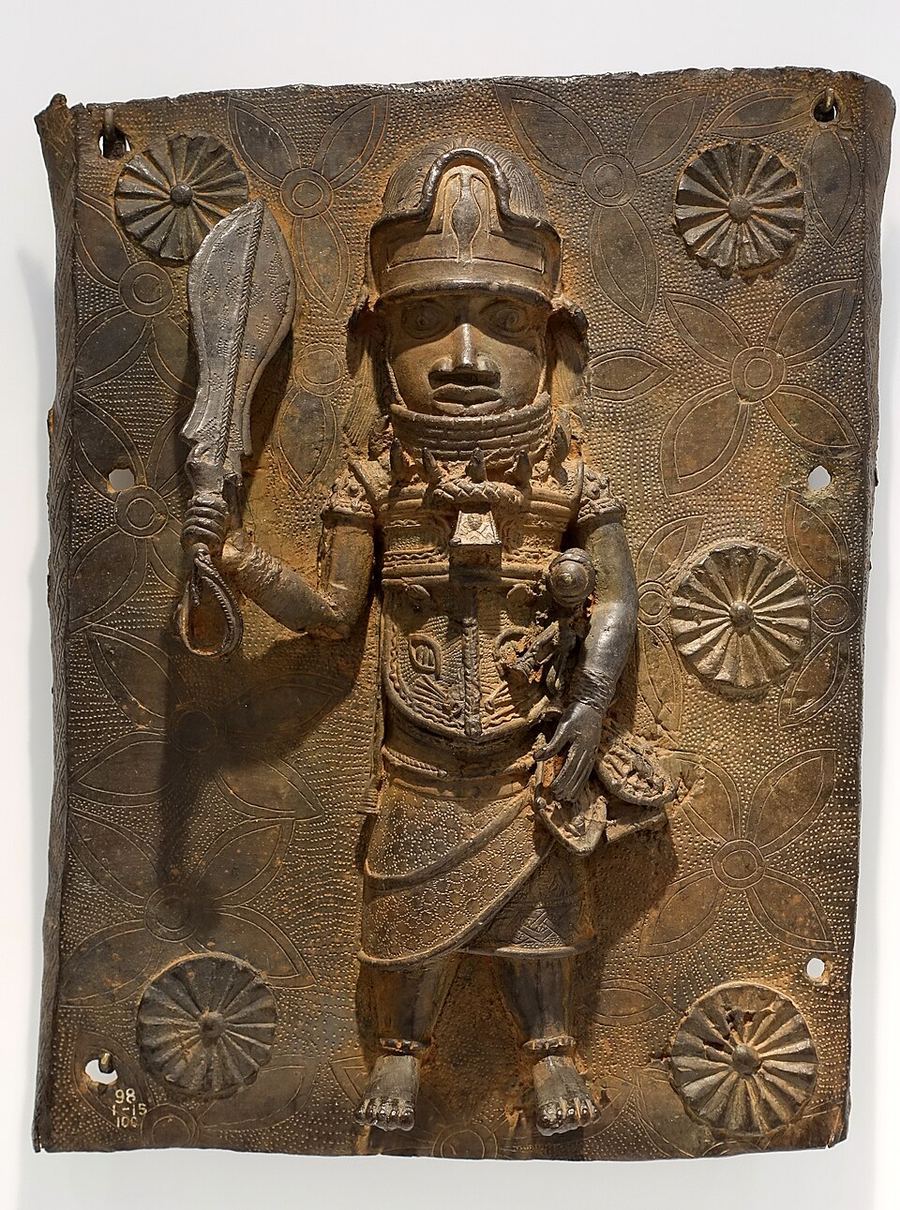
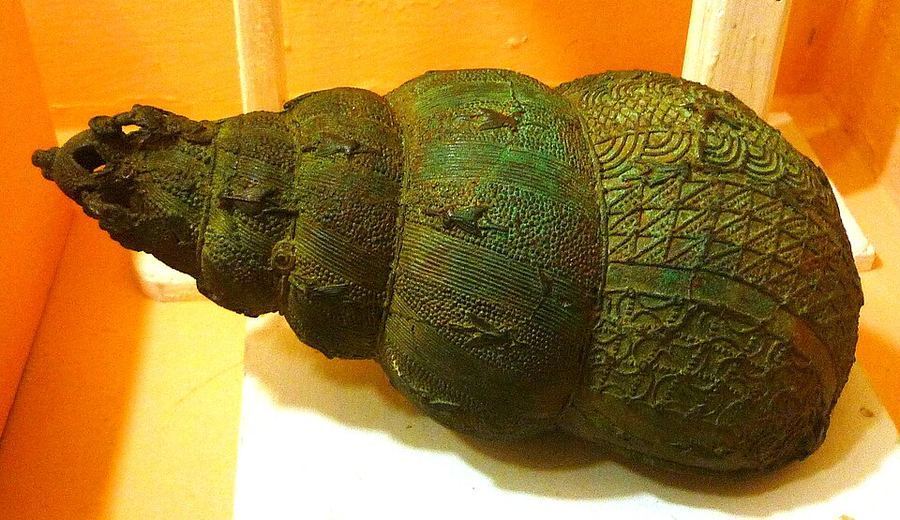
Long before the name Nigeria existed, the territory hosted some of Africa's most sophisticated societies: the Nok culture was producing celebrated terracotta sculpture centuries before the common era, and the ages that followed saw the rise of the Kanem-Bornu empire around Lake Chad, the walled Hausa city-states of the north, the Yoruba kingdoms of Ife and Oyo, and the Kingdom of Benin, whose bronze artistry stunned the Europeans who later looted it. In the early nineteenth century the Fulani scholar Usman dan Fodio's jihad forged the Sokoto Caliphate, one of the largest states in precolonial Africa. British influence advanced through Lagos (annexed 1861) and the Royal Niger Company until the northern and southern protectorates were amalgamated into a single colony in 1914 — a stroke of administrative convenience that bound together vastly different societies. Independence came on 1 October 1960, but the young federation was soon tested: a 1966 coup and counter-coup spiraled into the 1967–70 civil war, when the southeastern region declared itself the Republic of Biafra and more than a million people died, many from starvation, before reunification. Decades of alternating military and civilian rule followed until 1999, when the country returned to elected government under a new constitution — the longest unbroken democratic stretch in its history, now more than a quarter-century old.
History, Nigeria
Daderot / Public domain

Culture

Nigeria is a cultural superpower whose exports now reach every continent. Its film industry, Nollywood, is among the most prolific in the world by number of films produced — a rapid-turnaround, direct-to-audience machine that grew from Lagos market stalls into a multi-billion-dollar industry whose dramas are watched across Africa and its diaspora. Its literature reshaped how the world reads Africa: Chinua Achebe's Things Fall Apart (1958) became one of the most widely read African novels ever written, and Wole Soyinka won the Nobel Prize in Literature in 1986, the first African laureate, with later generations — Chimamanda Ngozi Adichie, Ben Okri, Buchi Emecheta — extending the tradition. In music, the global Afrobeats wave carried Burna Boy, Wizkid, and Davido from Lagos clubs to Grammy stages and sold-out stadiums in London and New York. Beneath the contemporary glamour lies deep artistic inheritance: the Benin bronzes, Ife heads, Igbo-Ukwu metalwork, and the masquerade traditions of the Yoruba, Igbo, and Ijaw remain touchstones of African art history. Traditional institutions — emirs, obas, and hundreds of chieftaincies — retain real cultural authority alongside the modern state, and everyday Nigerian culture is famously exuberant: loud, entrepreneurial, argumentative, and warm.
Culture, Nigeria
Borgatti, Jean / Public domain

Points Of Pride

Nigerians take vocal pride in being Africa's most populous nation and one of its largest economies, a country whose diaspora punches far above its weight in medicine, technology, literature, and business worldwide. Nollywood is a special badge of honor — a homegrown industry, built with little state support, that out-produces almost every film industry on the planet. Wole Soyinka's 1986 Nobel Prize in Literature remains a landmark for the entire continent, and Achebe's global stature gives Nigerians a claim to having redefined the modern African novel. On the field, the Super Eagles' gold medal at the 1996 Atlanta Olympics — beating Brazil and Argentina back-to-back — is retold like folklore, and the Super Falcons' unmatched trophy haul makes Nigeria the undisputed dynasty of African women's football. The Afrobeats takeover of global pop is celebrated as proof that Lagos now sets trends the world follows. Add the country's staggering linguistic wealth of 500-plus languages, jollof rice supremacy (fiercely asserted against Ghana), and a tech scene that leads the continent in start-up investment, and the national confidence is easy to understand.
Points Of Pride, Nigeria
Jeff Attaway / CC BY 2.0

Cultural Fusion

Nigeria is less a melting pot than a vast federation of cultures negotiating a shared roof: more than 250 ethnic groups and over 500 languages coexist within one state, with the Hausa-Fulani north, Yoruba southwest, and Igbo southeast forming the three historic poles around which hundreds of smaller nations — Tiv, Kanuri, Ibibio, Ijaw, Efik, Nupe, and many more — orbit. The great religious traditions meet here on a continental fault line: a majority-Muslim north shaped by centuries of trans-Saharan trade and the Sokoto Caliphate, and a heavily Christian south transformed by missionary schooling, with indigenous religious practice woven through both — Yoruba orisha traditions, for instance, survived the Atlantic crossing to become Santería in Cuba and Candomblé in Brazil. English is the official glue, but the true lingua franca of the street is Nigerian Pidgin, a supple creole that lets a Kano trader, a Port Harcourt dockworker, and a Lagos musician banter in the same tongue. Interethnic marriage, internal migration to Lagos and Abuja, and shared national obsessions — football, Nollywood, jollof — continually stitch the federation together, even as politics often pulls along ethnic and religious seams. The result is one of the most intense laboratories of pluralism anywhere in the world, with a huge diaspora feeding global influences back home in turn.
Cultural Fusion, Nigeria
kopee15 / Public domain

Music & Dance

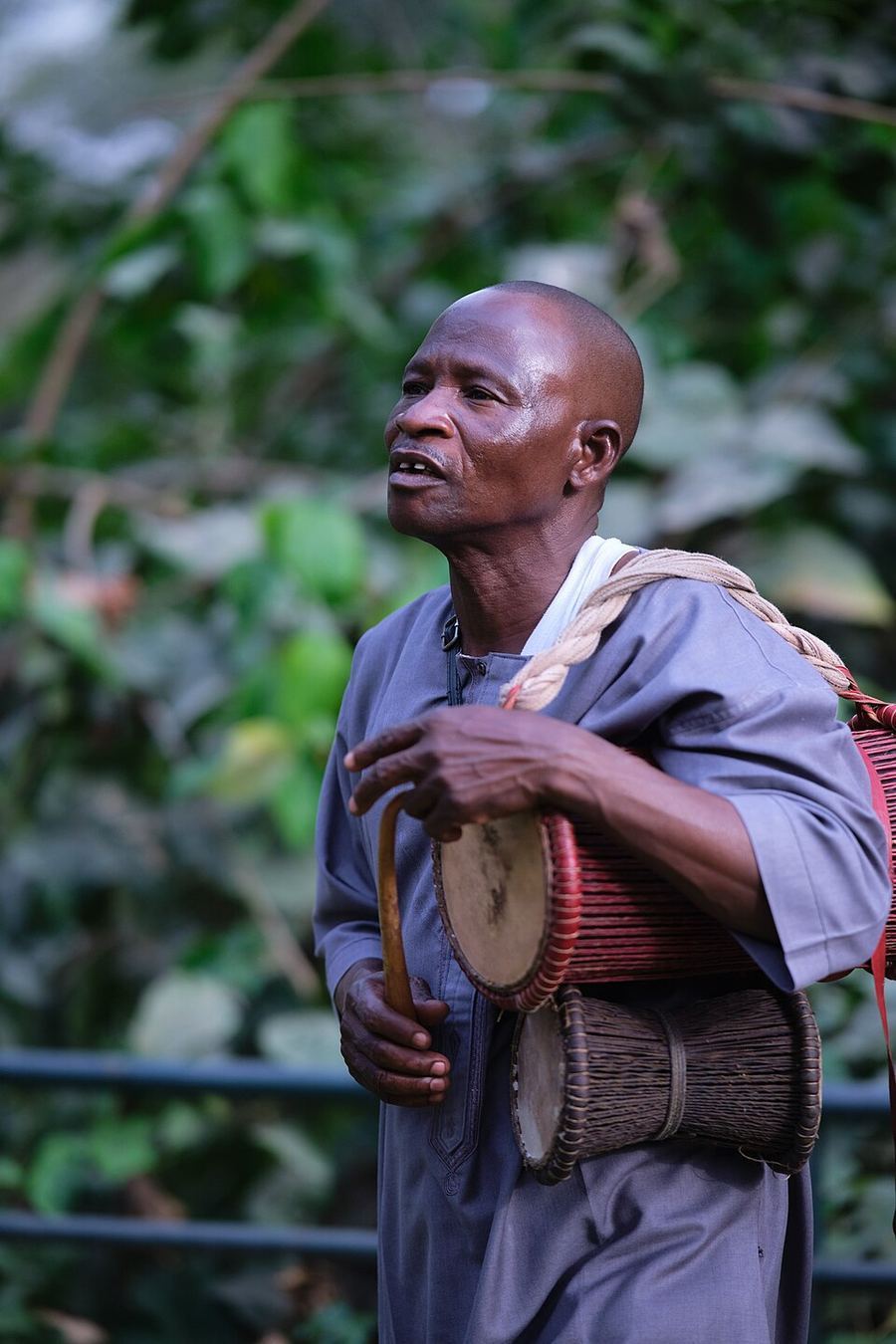
Nigeria's soundscape is arguably Africa's most influential. In the 1970s Fela Anikulapo-Kuti fused highlife, jazz, funk, and Yoruba rhythm into Afrobeat — long, hypnotic, politically fearless compositions performed at his Lagos 'Shrine' that made him both a musical legend and a thorn in the side of successive military governments. Alongside Fela flourished juju, the guitar-and-talking-drum style perfected by King Sunny Adé; fuji, the percussion-driven sound of the Yoruba Muslim heartland; and highlife, the horn-led dance music shared with Ghana that Igbo bands made their own. Traditional forms run deeper still: the 'talking' dundun drum that mimics the tones of Yoruba speech, Igbo ogene bell ensembles, Hausa court praise-singing, and masquerade dances in which drummers and masked spirits perform in call and response. The twenty-first century brought Afrobeats (with an 's') — the glossy, percussive pop of Wizkid, Davido, Burna Boy, Tiwa Savage, and Rema — which leapt from Lagos to global streaming dominance and collaborations with the world's biggest stars. Dance drives it all, from ancient ceremonial steps to viral crazes that begin on Lagos streets and circle the globe within weeks.
Music & Dance, Nigeria
Tijani Taofeek Bamidele / CC BY-SA 4.0

Cuisine & Misattributed Foods

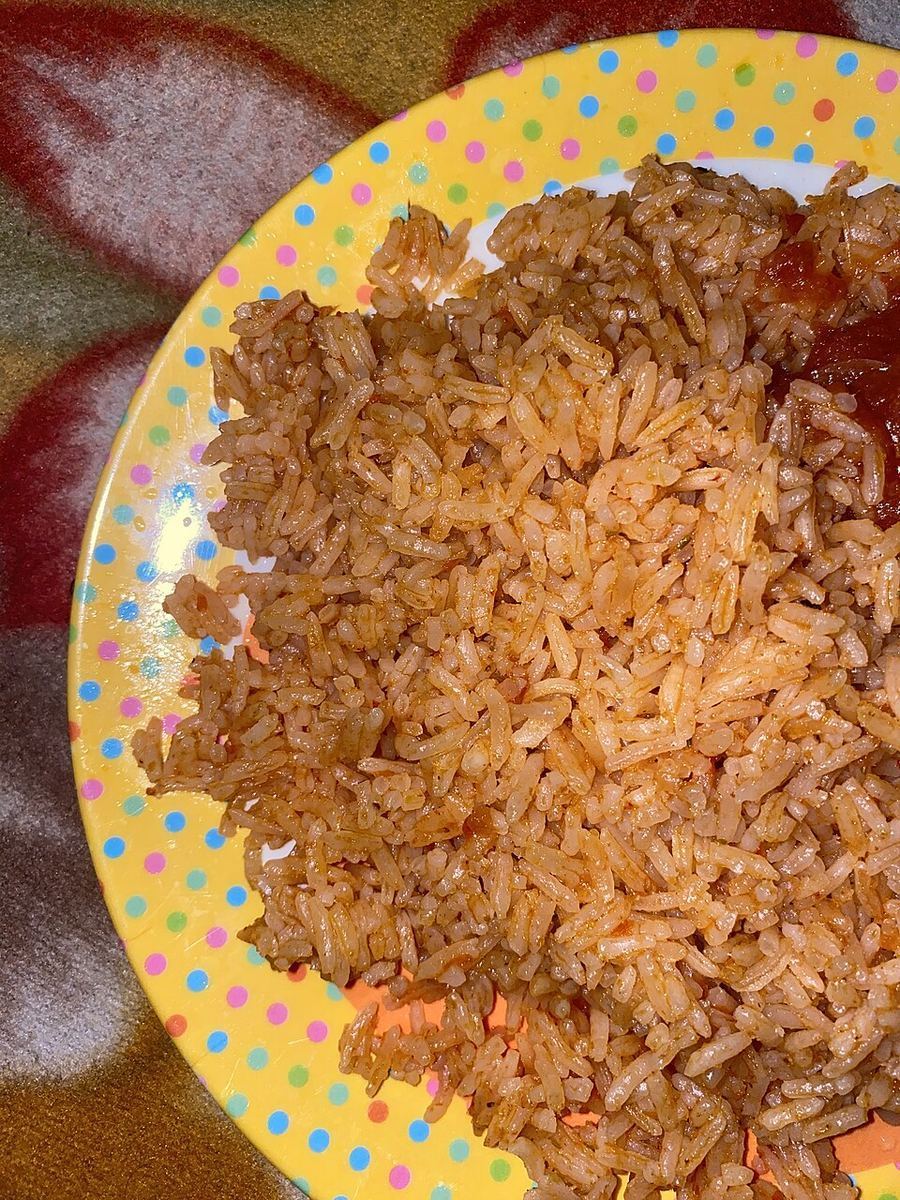
Nigerian food is bold, peppery, and built for communal joy. Its centerpiece is jollof rice — rice simmered in a smoky tomato-pepper base until every grain glows orange — a dish whose origins trace to the Wolof people of the Senegambia region (the very name 'jollof' derives from 'Wolof'), but which West Africans have transformed into a friendly continental rivalry: the 'jollof wars' between Nigeria and Ghana over whose version reigns supreme are fought with memes, celebrity taste-tests, and unshakeable conviction. Egusi soup, thickened with ground melon seeds and laced with bitterleaf and assorted meats, is a national staple eaten with pounded yam, eba, or fufu — 'swallows' that are dipped and swallowed, never chewed, by proper technique. In the north, suya — beef skewers rubbed with yaji, a fiery peanut-spice blend — is grilled over open flame by roadside mai suya and wrapped in newspaper with raw onions, the definitive Nigerian street food. The repertoire runs on: pepper soup sharp enough to cure any ailment, moin-moin (steamed bean pudding), akara fritters at breakfast, and puff-puff sweetening every party, while cocoa remains one of the country's signature agricultural exports. Nigerian dining is social by design — big pots, shared plates, and the firm belief that a guest must never leave hungry.
Cuisine & Misattributed Foods, Nigeria
Maame1Yaa / CC BY-SA 4.0

National Dress

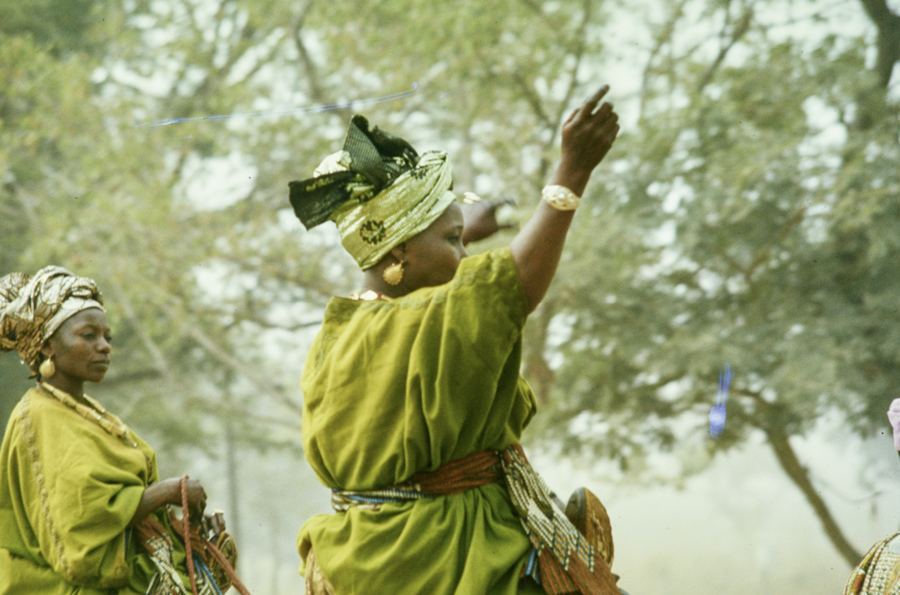
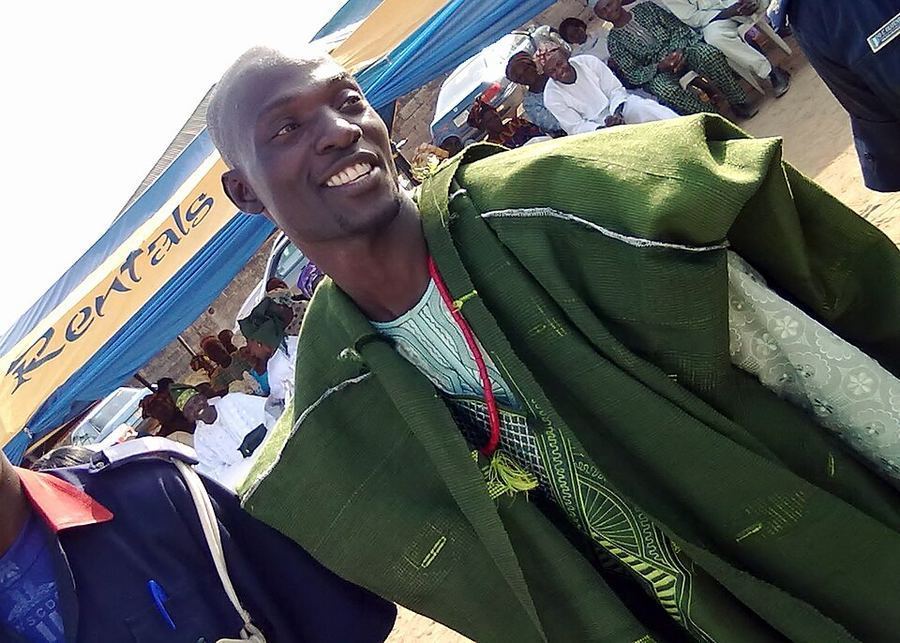
Nigerian dress is peacock-proud, and every region contributes its own splendor. The garment most associated with the country is the agbada — a voluminous, richly embroidered flowing robe worn by Yoruba men (and adopted nationwide) with a fila cap for weddings, chieftaincy ceremonies, and any occasion demanding gravitas; its northern cousin, the Hausa babban riga, is equally grand and often paired with an embroidered cap. Yoruba women crown their outfits with the gele, an elaborately folded headwrap whose architectural pleats are an art form in themselves, worn over blouse-and-wrapper ensembles cut from aso-oke, the prestige handwoven cloth of the southwest, or indigo-dyed adire. Igbo men favor the isiagu, a velvet tunic patterned with lion heads and worn with a red chieftaincy cap, while heavy embellished 'george' wrappers mark celebration across the southeast and Niger Delta. Everywhere, vibrant ankara wax prints supply everyday fashion, and the tradition of aso ebi — coordinated 'family cloth' worn by all guests at a celebration — turns Nigerian weddings into seas of matching color. Lagos designers now carry these traditions onto global runways, making Nigerian fashion one of the continent's most watched.
National Dress, Nigeria
Jamie Tubers / CC BY-SA 4.0

Sports & Inspiring Athletes

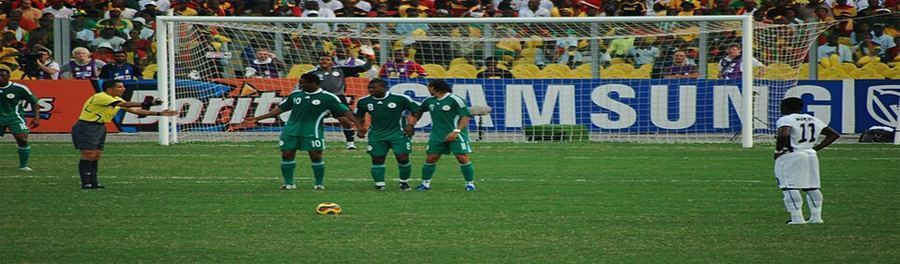
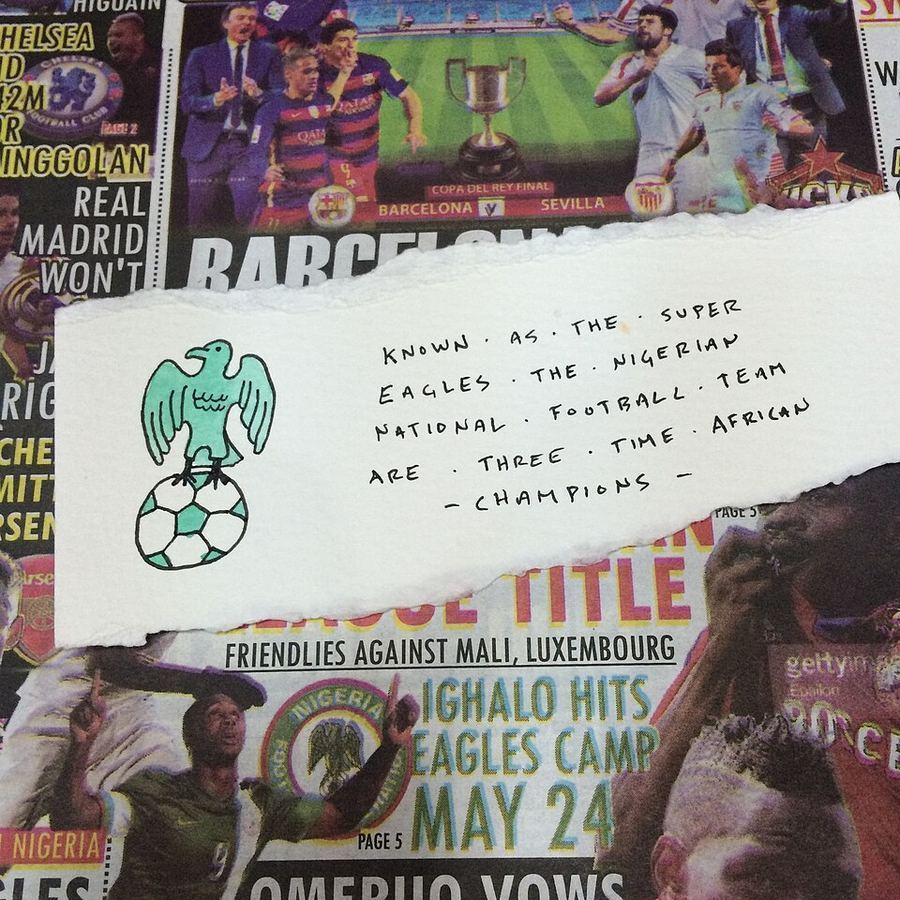
Football is Nigeria's true national religion. The men's national team, the Super Eagles, have won the Africa Cup of Nations three times (1980, 1994, 2013) and produced generations of stars — Jay-Jay Okocha, Nwankwo Kanu, Rashidi Yekini, Victor Osimhen — but the achievement etched deepest in national memory is the 1996 Atlanta Olympics, when Nigeria's 'Dream Team' came from behind to beat Brazil in the semi-final and Argentina in the final, seizing Africa's first Olympic football gold. The women's side is even more dominant: the Super Falcons are the unrivaled queens of African women's football, having won the Women's Africa Cup of Nations more times than every other nation combined and appeared at every FIFA Women's World Cup since the tournament began in 1991. Beyond football, Nigeria has produced Olympic medalists in athletics, boxing, and wrestling — Chioma Ajunwa's long-jump gold at those same 1996 Games made her the country's first individual Olympic champion — and the D'Tigress basketball team has become a serial African champion. Sport is also everyday culture: viewing centers packed for European league Saturdays, street football on every patch of open ground, and traditional Dambe boxing still drawing crowds in the north.
Sports & Inspiring Athletes, Nigeria
Blaise Raise / CC BY-SA 3.0

Notable Educational Programs

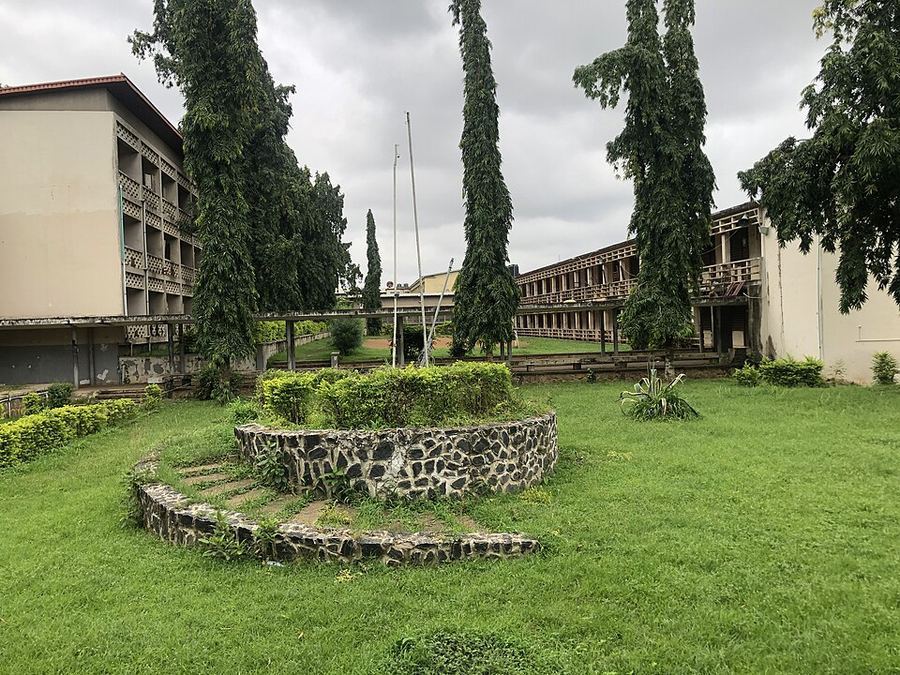
Nigeria operates one of Africa's largest education systems, organized under the Universal Basic Education (UBE) program, which since 1999 has guaranteed nine years of free, compulsory schooling — six primary and three junior secondary — administered federally and by the 36 states. The tertiary sector is the continent's biggest by institution count, anchored by historic universities such as the University of Ibadan (founded 1948) and the University of Nigeria, Nsukka, and supplemented by a fast-growing private sector; the National Youth Service Corps, created after the civil war, still posts every graduate to a year of service in a different region as a deliberate exercise in national integration. The challenges are as large as the system: Nigeria has one of the world's highest populations of out-of-school children, concentrated in the insecure north where poverty, early marriage, and attacks on schools depress enrollment, and there is a persistent north-south gap in literacy and girls' schooling. Government responses include school-feeding programs, conditional cash transfers for girls' attendance, and integration of Qur'anic schools into the formal curriculum, with UN-supported and international partners backing teacher training and safe-schools initiatives. Meanwhile Nigeria's universities and a thriving self-taught tech culture feed one of Africa's most dynamic talent pipelines, powering the Lagos start-up ecosystem and a global professional diaspora.
Notable Educational Programs, Nigeria
Peniel2023 / CC BY-SA 4.0

Wars & Conflicts

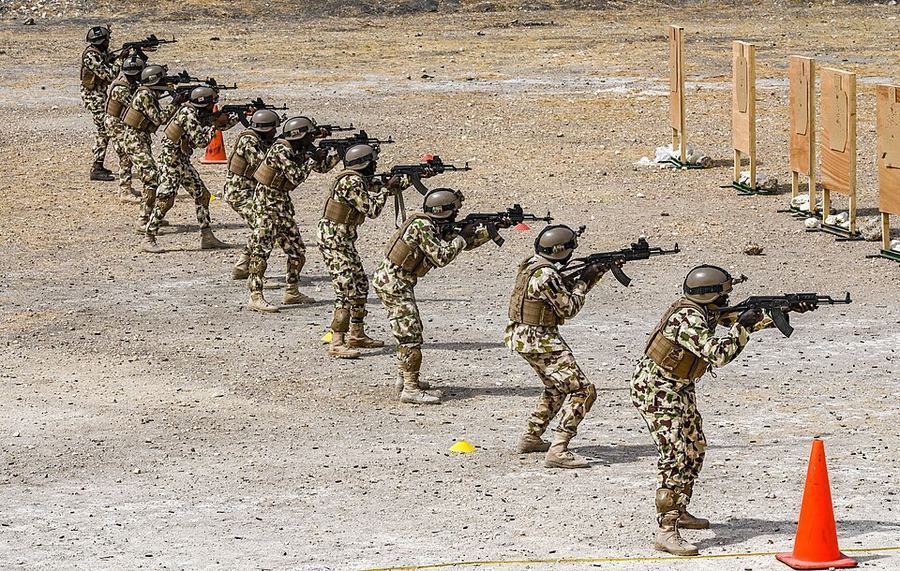
Nigeria's principal security theatres all remained active as of 17 August 2026, in a year marked by an unprecedented — and now largely concluded — direct US combat role. In the northeast, the insurgency waged since around 2009 by Boko Haram and the Islamic State West Africa Province (ISWAP) continues: the Nigerian Army said troops of Operation Hadin Kai repelled a pre-dawn, two-pronged ISWAP assault on Forward Operating Base Mandaragirau in Borno State's Biu area on 15 August, reporting several attackers killed and rifles and a rocket-propelled grenade launcher recovered, with no losses among its own personnel (Daily Post Nigeria, 15 August 2026; Vanguard, August 2026). The US intervention that began with airstrikes on Islamic State-linked militants in late December 2025 — followed by the February deployment of roughly 200 personnel and a joint offensive launched on 16 May, in whose first days Nigerian authorities said about 175 ISWAP and Boko Haram fighters had been killed, figures never independently verified — has wound down: AFRICOM's General Dagvin Anderson announced in early July that most US troops had been withdrawn with the operation's objectives achieved and intelligence-sharing continuing at Abuja's request (Premium Times, July 2026), while Nigeria's Defence Headquarters said US personnel remained in-country for joint intelligence and training work (Vanguard, July 2026). The relationship has since shifted toward diplomacy: a US-Nigeria joint working group — created after President Trump redesignated Nigeria a Country of Particular Concern over the treatment of Christians, a framing Abuja disputes, maintaining that insecurity afflicts Nigerians of all faiths — met in Washington on 12-13 August, with National Security Adviser Nuhu Ribadu leading the Nigerian delegation and talks covering protection of Christian communities, accountability for perpetrators of violence, and deeper military-to-military cooperation (This Day, 14 August 2026; News Agency of Nigeria, August 2026). In the Middle Belt, violence between farming and herding communities persisted past the peak of the planting season: after Businessday (July 2026) reported more than 40 farmers killed in a month of attacks blamed on armed herders in Benue and Plateau states, Daily Post Nigeria reported on 4 August that suspected herders killed three people in a fresh Benue attack, Tribune Online reported on 10 August that troops repelled an armed-herder assault on Benue's Azege community, killing one attacker, and Daily Post Nigeria reported on 16 August that gunmen on motorcycles struck villages in Benue's Ukum area — police confirmed three dead and four injured at Aboajo village and said tactical teams had been deployed, while community sources put the toll at about ten. In the northwest, armed groups the government calls 'bandits' sustain a raiding and kidnapping-for-ransom economy: P.M. News reported on 4 August 2026 that gunmen killed at least 21 people and abducted 37 in an overnight raid on Tsamaye community in Sokoto State's Sabon Birni area; Al Jazeera reported on 11 August 2026 that a firefight between police and a large armed group moving from Zamfara State toward Kebbi left 10 police officers, two civilians and 17 suspected bandits dead, according to police figures described as still being assessed; and Daily Post Nigeria reported on 2 August 2026 that the DSS and vigilantes foiled a major attack in Katsina State in which officials said a bandit kingpin and some 60 of his fighters died — none of these tolls independently verified. The military says counter-bandit operations continue across the region, reporting foiled attacks, rescues and weapons recoveries in Katsina, Kebbi and Borno states in mid-August (Businessday, August 2026). In the Niger Delta, organized militancy has largely given way to industrial-scale crude theft, and the navy's Operation Delta Sentinel continues: in early August the navy said it destroyed two illegal refining sites and recovered some 85,300 litres of suspected stolen crude in Rivers State's Ogba-Egbema-Ndoni axis (Guardian Nigeria, August 2026) and uncovered a concealed depot holding about 87,000 litres of illegally refined fuel in the Okarki area (P.M. News, August 2026). In the southeast, IPOB leader Nnamdi Kanu remains imprisoned in Sokoto following his November 2025 terrorism conviction and life sentence; his family said on 31 July that he had declined an offered transfer and would not leave Sokoto without a court order, arguing that his place of detention is central to his pending appeal (Sahara Reporters, July 2026), while the federal government maintains that Nigeria's territorial integrity is not negotiable.
Current as of 2026-08-17
Wars & Conflicts, Nigeria
USAFRICOM from Stuttgart, Germany / CC BY 2.0

Land & Border Disputes

Nigeria's most consequential territorial dispute is now a closed chapter, and a widely cited example of peaceful settlement. Sovereignty over the Bakassi Peninsula — a fishing-rich, oil-adjacent finger of land on the Gulf of Guinea — was contested with neighbouring Cameroon for decades, flaring into armed clashes in the 1990s. Cameroon took the case to the International Court of Justice, which ruled in its favour in 2002, grounding the decision largely in colonial-era boundary agreements. Rather than defy the judgment, Nigeria negotiated: the UN-brokered Greentree Agreement of 2006 set a phased handover, and Nigeria completed the transfer of sovereignty to Cameroon in 2008. A joint UN-supported commission has since worked to demarcate the roughly 2,000-kilometre land boundary between the two countries. The episode is frequently held up as a rare case of a major African territorial dispute resolved through adjudication and diplomacy rather than war, though some displaced Bakassi residents in Nigeria continue to press grievances over resettlement.
Land & Border Disputes, Nigeria
DLR / CC BY 3.0
Land, Life & Legacy

Land & Climate

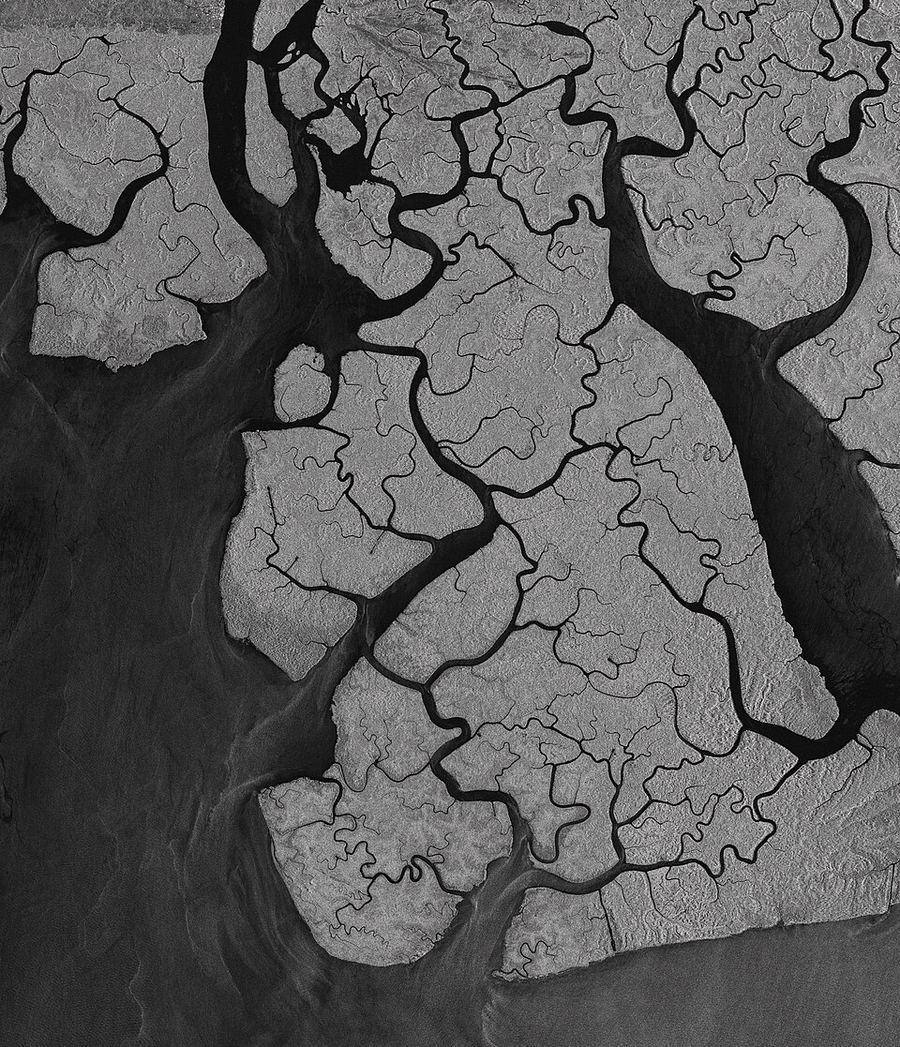
Nigeria covers about 924,000 square kilometres and is organised by a strong north-south climatic gradient and by two rivers. The Niger and the Benue meet at Lokoja in a Y that divides the country into three, and the Niger Delta in the south is one of the largest river deltas in the world, a dense maze of creeks and mangrove that is also the centre of the oil industry and badly degraded by spills and gas flaring. The coast has lagoons and rainforest; inland the forest gives way to Guinea savanna, then Sudan savanna, then Sahel scrub near the borders with Niger and Chad, where desertification and the shrinking of Lake Chad are severe. The Jos Plateau rises in the centre, and the highest ground is on the Cameroonian border in the Mambilla highlands, where Chappal Waddi reaches about 2,400 metres. The climate is tropical: the south has a long wet season with well over 2,000 millimetres of rain a year on the coast, while the north has a single short and unreliable rainy season and the dry, dust-laden harmattan blowing off the Sahara from December.
Land & Climate, Nigeria
Fatima / CC BY-SA 4.0

Entertainment

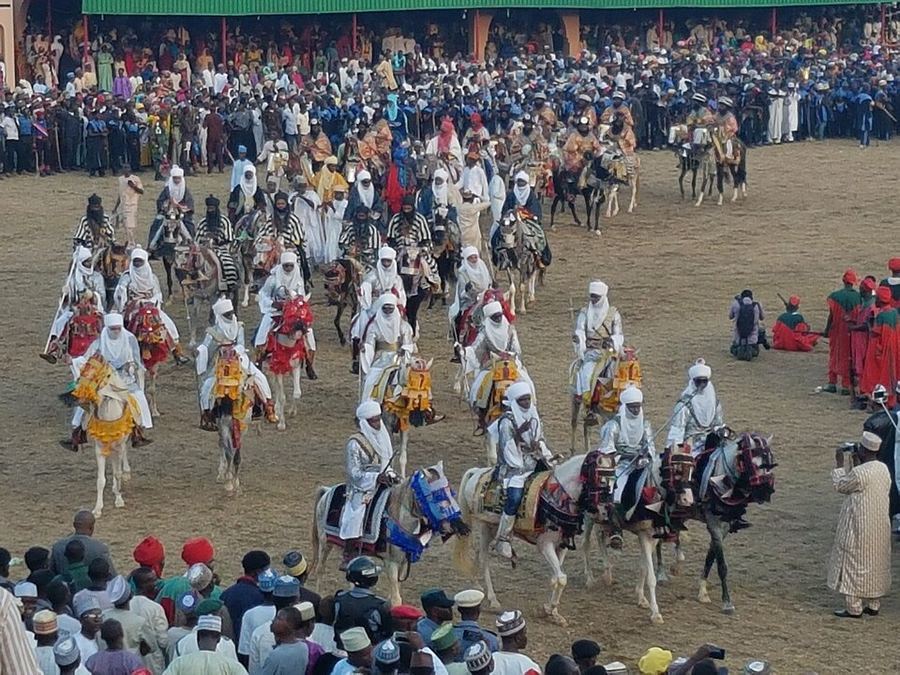
Nigerian leisure runs at full volume. The owambe — the lavish weekend party of matching aso ebi outfits, live bands, and celebratory money-spraying — is the great social institution, and Lagos's 'Detty December' season of concerts and beach parties now draws the global diaspora home every year. The festival calendar is spectacular: the Durbar of Kano, a centuries-old parade of armored horsemen marking the Islamic Eids, joined UNESCO's intangible heritage list in 2024; the Argungu fishing festival of Kebbi State, inscribed in 2016, climaxes with thousands of fishermen plunging into the river at once; the white-clad Eyo masquerade takes over Lagos Island on rare ceremonial occasions; and the annual Osun-Osogbo festival animates a UNESCO World Heritage sacred grove. The Calabar Carnival each December bills itself as Africa's biggest street party. Everyday pleasures are simpler: viewing centers roaring for Premier League Saturdays, suya stands after dark, boat trips to Tarkwa Bay beach, and draughts and Ludo contested with championship seriousness.
Entertainment, Nigeria
DonCamillo / CC BY-SA 4.0

Art & Museums

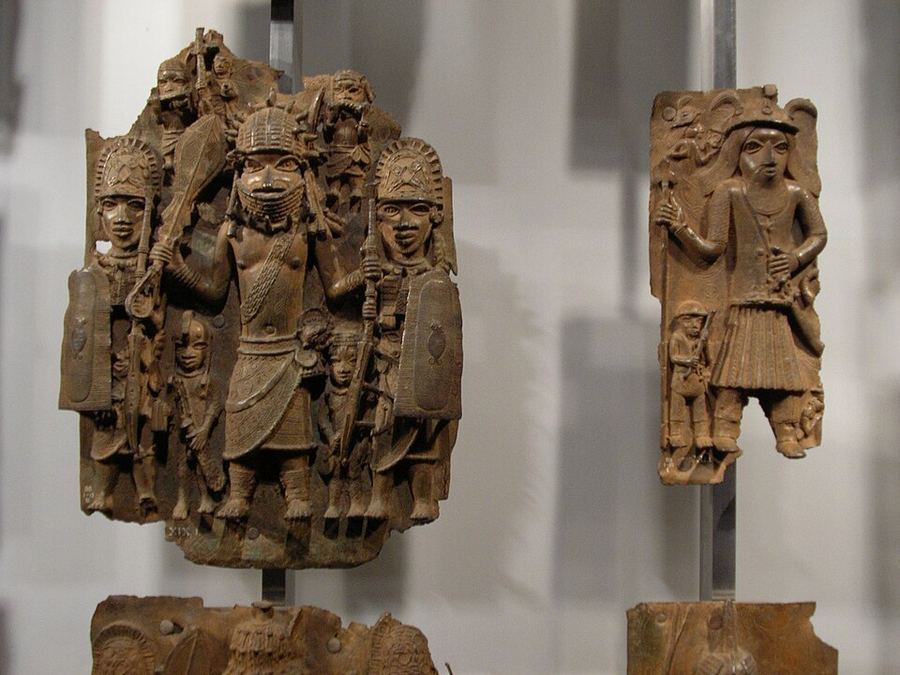
Nigeria holds several of Africa's greatest art traditions. The Nok culture of the central plateau was firing expressive, near-life-sized terracotta heads by around 500 BCE — among the oldest sculpture in sub-Saharan Africa. Ninth-century Igbo-Ukwu produced bronze vessels of astonishing intricacy by lost-wax casting; the naturalistic brass and terracotta heads of Ife (twelfth–fifteenth centuries) rank with the finest portraiture anywhere; and the Kingdom of Benin's brass plaques and commemorative heads — thousands of which were looted in the British punitive expedition of 1897 and scattered to Western museums — are now the subject of a landmark restitution movement, with returns underway from European collections. Modern Nigerian art carries the lineage forward: Ben Enwonwu's sculpture Anyanwu stands at the National Museum in Lagos and at the United Nations, and his rediscovered portrait Tutu — dubbed the 'African Mona Lisa' — set auction records in 2018; the Nsukka school led by Uche Okeke drew Igbo uli design into contemporary practice, and Lagos's galleries and art fairs now power one of Africa's liveliest markets.
Art & Museums, Nigeria
en:User:Warofdreams / CC BY-SA 3.0

Notable People

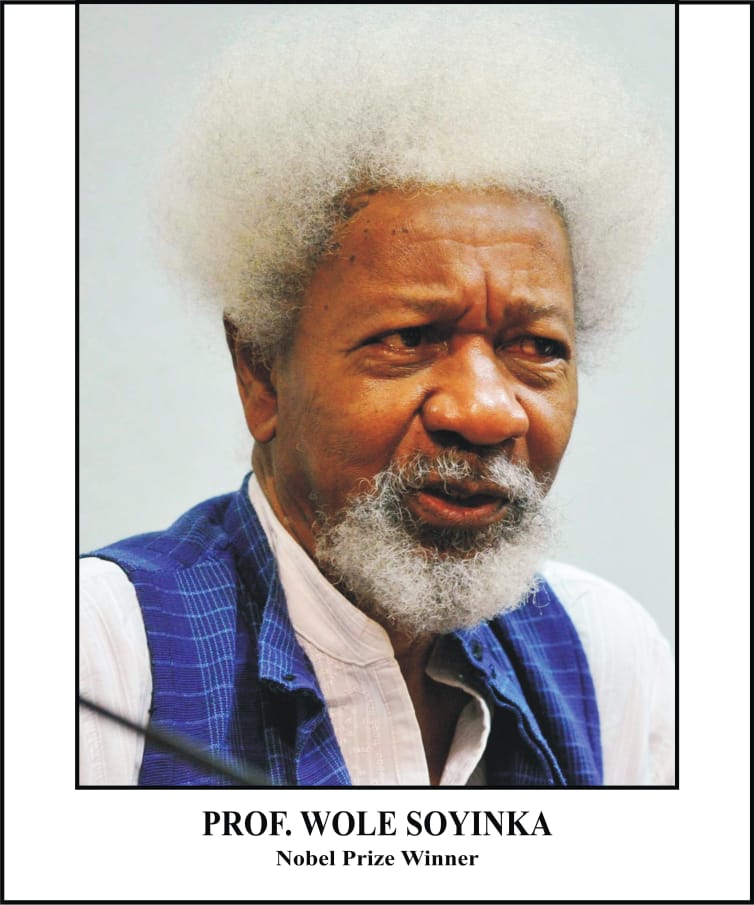
Nigeria's roster of world figures is long. Nnamdi Azikiwe, the journalist-statesman who became the first president in 1963, joins Obafemi Awolowo and Ahmadu Bello in the founding trio of the independence generation. Chinua Achebe and Nobel laureate Wole Soyinka redefined African literature, and Chimamanda Ngozi Adichie carries that global standing today. Fela Anikulapo-Kuti invented Afrobeat and remains an icon of musical defiance decades after his death. Ngozi Okonjo-Iweala, twice finance minister, became Director-General of the World Trade Organization in 2021 — the first woman and the first African to hold the post. Aliko Dangote, the cement-and-refining industrialist, has topped Forbes' ranking of Africa's richest people for more than a decade. Lagos-born Hakeem Olajuwon won back-to-back NBA championships with the Houston Rockets and entered basketball's Hall of Fame. Add Nollywood star Genevieve Nnaji, Grammy-winning Burna Boy, and world-record hurdler Tobi Amusan, and the pattern holds: whatever the field, Nigeria supplies protagonists.
Notable People, Nigeria
Unknown authorUnknown author / CC0

Inventions & Breakthroughs

Nigeria's scientific story starts with metallurgy: the Nok culture was smelting iron by roughly 500 BCE, among the earliest dates in West Africa, and the ninth-century bronze-casters of Igbo-Ukwu commanded lost-wax techniques of a sophistication that startled the archaeologists who uncovered them. Monumental engineering followed — the walls and moats of Benin City and the vast Sungbo's Eredo earthwork in Yorubaland rank among the largest pre-mechanical construction projects anywhere on Earth. The modern record is anchored in medicine and technology. In 2014, Lagos physician Ameyo Adadevoh and her colleagues held Nigeria's index Ebola patient in isolation despite intense pressure, a stand credited with containing the outbreak in a megacity of some 20 million; Adadevoh died of the disease, and the WHO hailed Nigeria's response as a piece of world-class epidemiology. Nigerian researchers lead global study of sickle-cell disease, of which the country is the world epicenter, and the Lagos tech ecosystem — Africa's most funded, producing fintech successes like Paystack and Flutterwave — now exports financial-technology infrastructure across the continent.
Inventions & Breakthroughs, Nigeria
Ochiwar / CC BY-SA 3.0

Science & Technology

Nigeria has the largest technology start-up sector in Africa, clustered in the Yaba district of Lagos, and it has produced several financial-technology companies of continental scale, including Interswitch, Flutterwave and Paystack, which Stripe acquired in 2020; the sector grew around a young, mobile-first population underserved by conventional banking. The National Space Research and Development Agency has operated satellites since 2003, with the NigeriaSat Earth-observation series built and launched in partnership with British firms and the NigComSat communications satellite with Chinese partners. Public-health capability was demonstrated in 2014, when an imported Ebola case reached Lagos and was contained within weeks by contact tracing run through the emergency operations structure built for polio surveillance, a response the World Health Organization highlighted; that same polio programme led to certification of the African region as free of wild poliovirus in 2020, with Nigeria the last country in the region to interrupt transmission. The International Institute of Tropical Agriculture at Ibadan breeds cassava, yam, cowpea and maize for the humid tropics.
Science & Technology, Nigeria
Olusegun Aderogba / CC BY-SA 3.0
On The World Stage
Champions of Nigeria

Champions & Defining Moments

Nigeria's global sporting peak came at Atlanta 1996, when the 'Dream Team' beat Brazil 4–3 in a semifinal for the ages and came from behind to defeat Argentina 3–2 for Olympic football gold — the first for any African nation — days after Chioma Ajunwa leapt to long-jump gold as Nigeria's first individual Olympic champion. The Super Eagles have won the Africa Cup of Nations three times (1980, 1994, 2013) and reached the World Cup round of 16 in 1994, 1998, and 2014, announcing themselves at USA '94 with one of that tournament's most admired sides. The Super Falcons have won the Women's Africa Cup of Nations a record number of times and have appeared at every FIFA Women's World Cup since 1991. In athletics, Tobi Amusan set the 100-meter hurdles world record of 12.12 seconds while winning the 2022 world title — Nigeria's first world championship gold on the track. Boxing and wrestling medals, including Blessing Oborududu's Tokyo silver, and basketball's serial African champion D'Tigress complete the modern ledger.

Zacharymccune / Public domain
Government & Leadership

Federal presidential republic

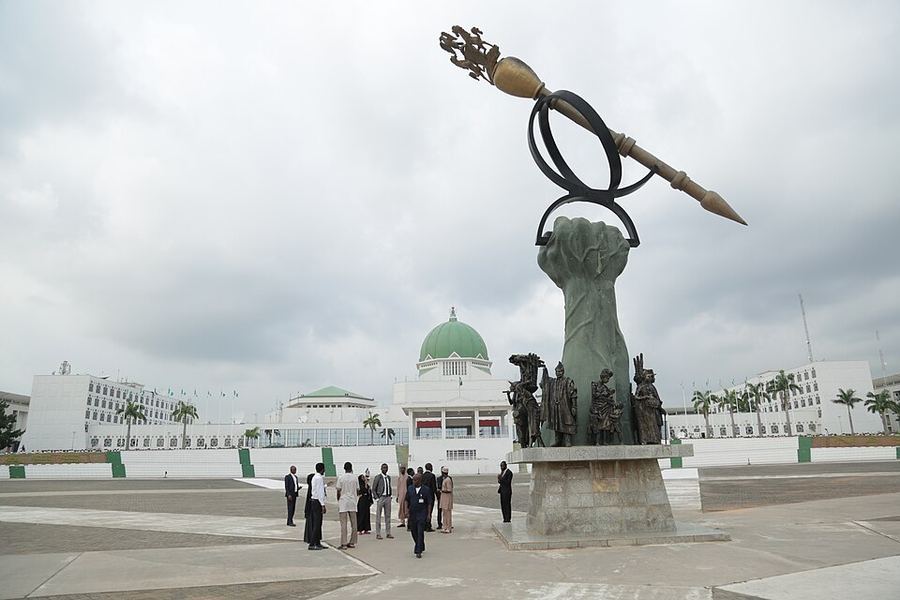
Seat of the executive

Executive

Bola Ahmed Adekunle Tinubu — PresidentAPC

In office since 29 May 2023

ABORISADEADETONA / CC BY 4.0
The legislature

National Assembly

Bicameral

Senate — APC majority

APC 59 · PDP 36 · LP 8 · Other 6

Last election 2/25/2023 · 3.7% women

House of Representatives — APC largest party

APC 180 · PDP 116 · LP 35 · NNPP 19 · Other 10

Last election 2/25/2023 · 4.2% women

Kabusa16 / CC BY-SA 4.0
The highest court
The highest court — Can4cool / CC BY-SA 4.0

Supreme Court

consists of the chief justice and 15 justices

Economy, Trade & Government

Currency & GDP

Nigerian Naira — NGN (₦)

GDP (PPP): $1.318 trillion (2024 est.)

Per capita: $5,700 (2024 est.)

Exports

$57.536 billion (2024 est.)

crude petroleum, natural gas, gold, fertilizers, cocoa beans (2023)

Partners: USA 10%, Spain 9%, France 8%, Netherlands 7%, India 6% (2023)

Imports

$57.73 billion (2024 est.)

refined petroleum, tanks and armored vehicles, wheat, plastics, cars (2023)

Partners: China 26%, Singapore 14%, Belgium 8%, India 6%, USA 4% (2023)

Government

Type: federal presidential republic

Independence: 1 October 1960 (from the UK)

Terrain → Where People Live

How mountains, coasts, and rivers shape settlement (LandScan).

Coming — data

Migration & Ethnic Settlement

Where groups settled and how people move (GeoEPR + UNHCR).

Coming — data

Universities

Notable institutions, mappable as points.

Coming — data
Economy & government facts: CIA World Factbook (public domain), via OpenFactBook / factbook.json.
Every fact and narrative claim will carry a visible source citation. Data-driven sections light up automatically wherever HERA has coverage.