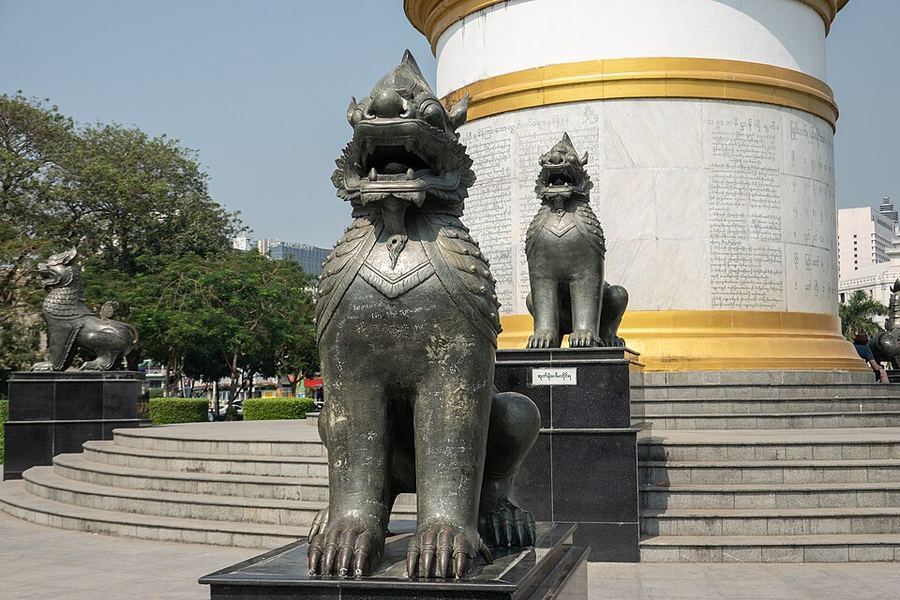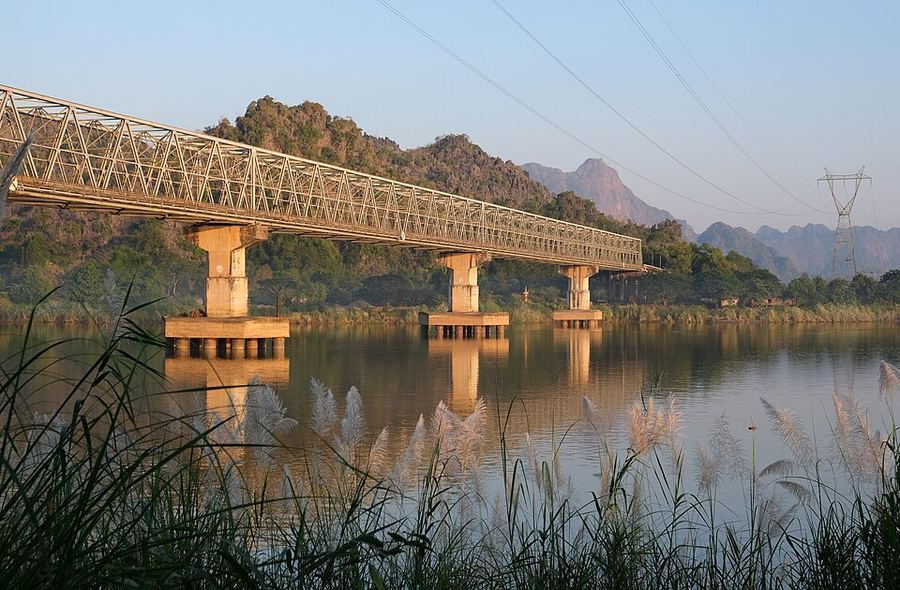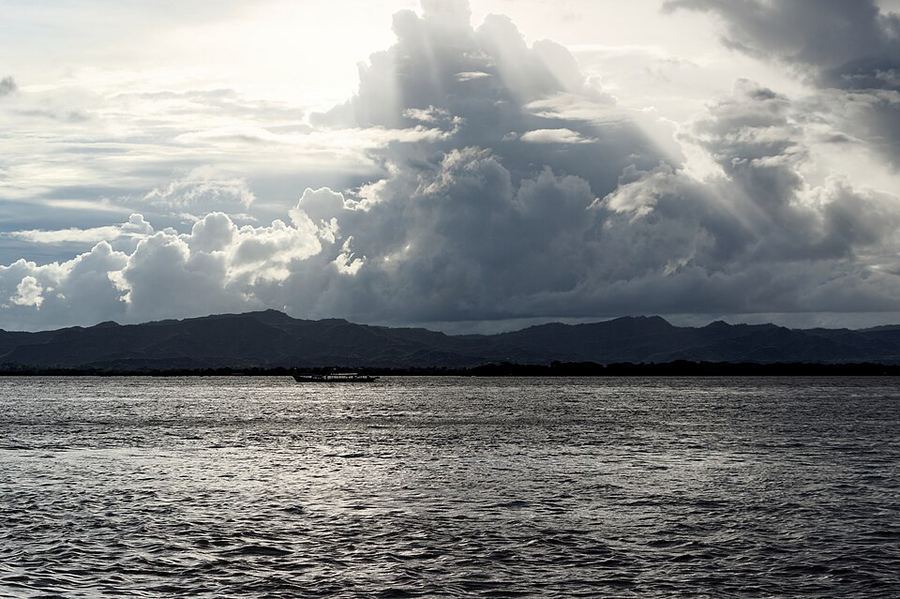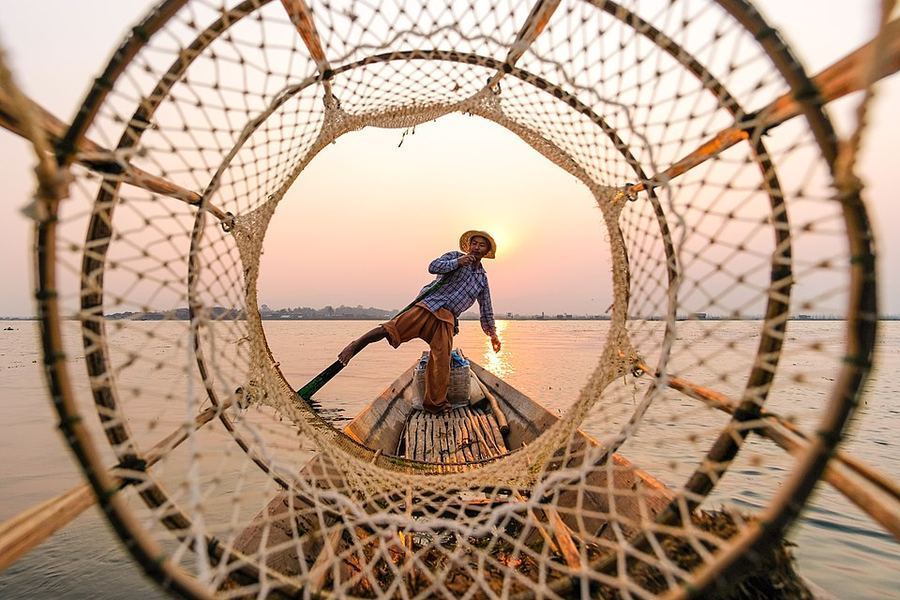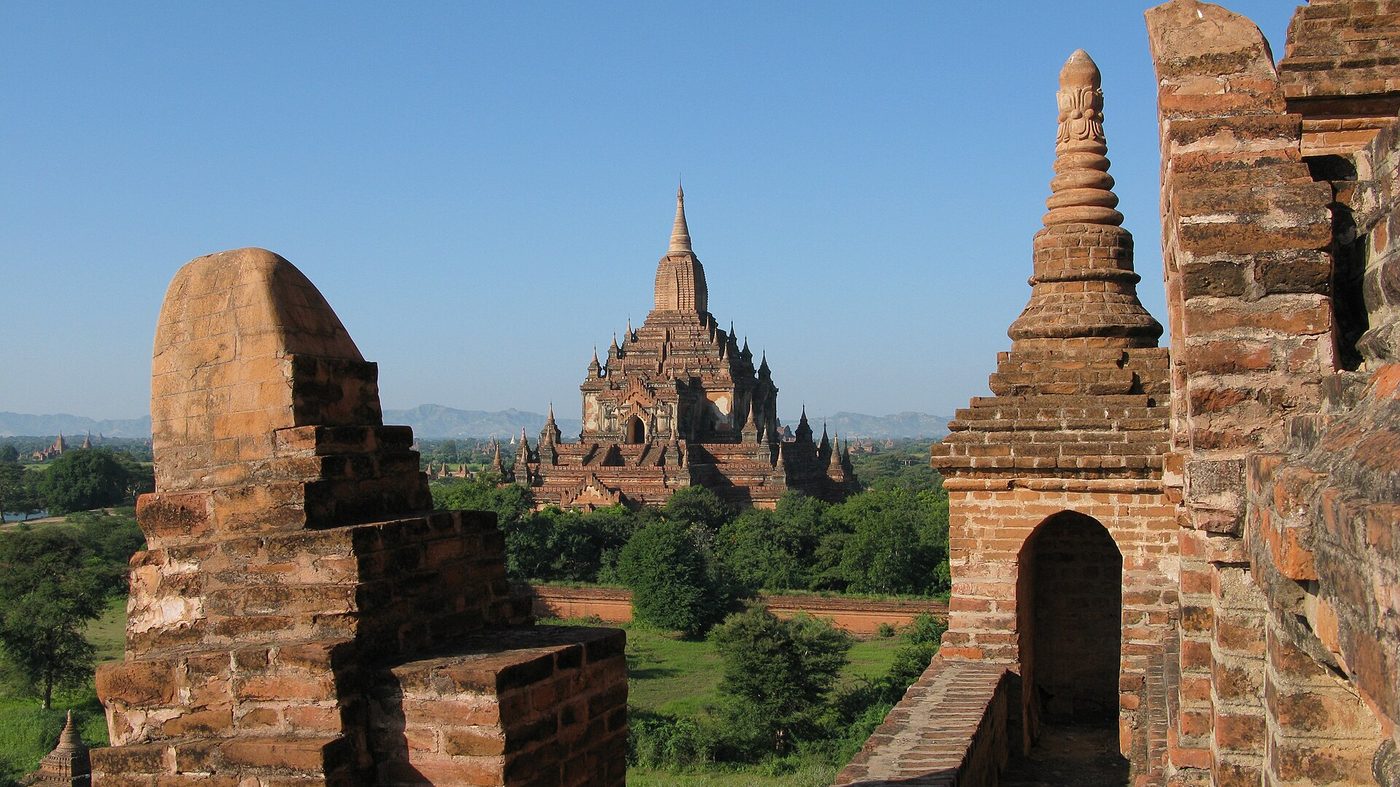
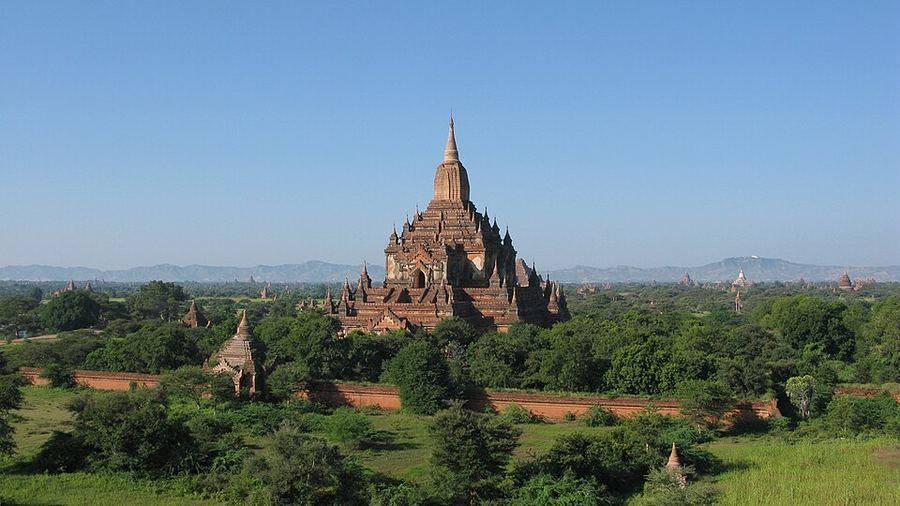
Bagan temples Myanmar — Photo: Vyacheslav Argenberg / CC BY 4.0 via Wikimedia Commons
Did You Know
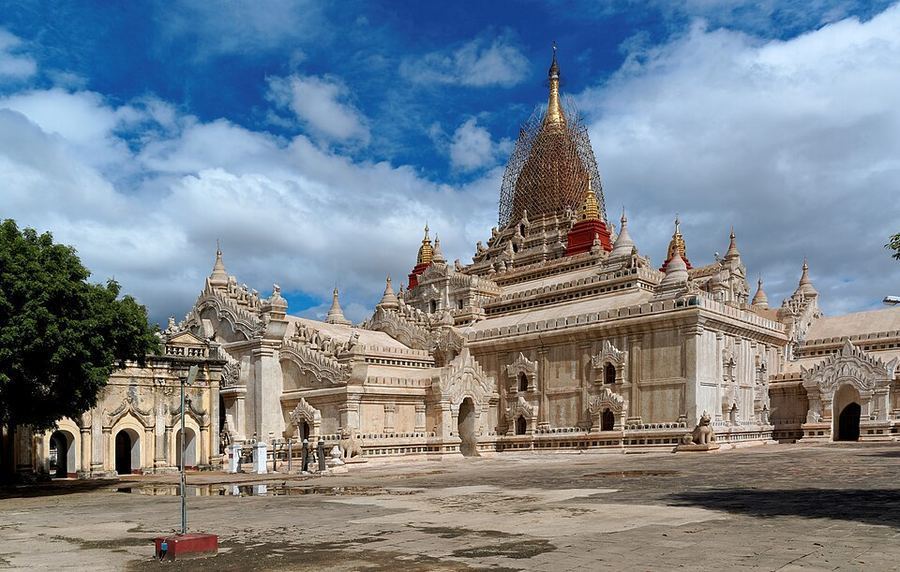
The Bagan plain along the Irrawaddy carries more than two thousand surviving brick temples and stupas built between the eleventh and thirteenth centuries, and was inscribed as a UNESCO World Heritage site in 2019. — UNESCO World Heritage Centre
Myanmar, also known as Burma, is the largest country on mainland Southeast Asia, a nation of roughly 58 million people stretching from the eastern Himalaya down the Bay of Bengal and the Andaman Sea to the Isthmus of Kra. Yangon, the former Rangoon, remains the commercial capital and largest city, while the administrative capital was moved inland to the purpose-built city of Nay Pyi Taw in 2005. The country is dominated demographically by the Bamar, who make up around 68% of the population, but its highlands and borderlands are home to Shan, Karen, Rakhine, Mon, Kachin, Chin and dozens of smaller peoples, and the state officially recognises 135 ethnic groups. Theravada Buddhism, professed by nearly 88% of the population, is the central cultural institution, alongside Christian, Muslim, Hindu and animist minorities. Independence from Britain came on 4 January 1948, but the state has spent almost all of the period since in armed conflict with ethnic insurgent movements, and almost all of it under military rule — most recently after the coup of 1 February 2021, which returned the country to open civil war. Myanmar is resource-rich in gas, jade, teak and rare earths, yet remains among Asia's poorest economies, with over 3.6 million people displaced.
The first states in the Irrawaddy basin were the Pyu city-states of Halin, Beikthano and Sri Ksetra, walled Buddhist settlements of the first millennium AD now inscribed together as Myanmar's first UNESCO World Heritage site. Bamar-speaking migrants consolidated power at Bagan, where King Anawrahta unified the valley from 1044 and made Theravada Buddhism the state religion; over two centuries his successors built the thousands of temples on the Bagan plain, inscribed by UNESCO in 2019. Bagan fragmented after the Mongol campaigns of the late thirteenth century, and rival Mon, Shan and Bamar polities contended until the Toungoo dynasty under Bayinnaung built the largest empire in mainland Southeast Asia in the sixteenth century. The Konbaung dynasty, founded by Alaungpaya in 1752, expanded into Assam and Manipur and so collided with British India. Three Anglo-Burmese wars in 1824–26, 1852 and 1885 ended with the exile of King Thibaw and the annexation of the whole country, administered as a province of India until 1937. Japanese occupation from 1942 produced the nationalist Thirty Comrades and Aung San, who negotiated independence and was assassinated with most of his cabinet on 19 July 1947. Independence followed on 4 January 1948; General Ne Win seized power in 1962, the 1988 uprising was crushed, the 1990 election result annulled, and a partial opening from 2011 was reversed by the 2021 coup.
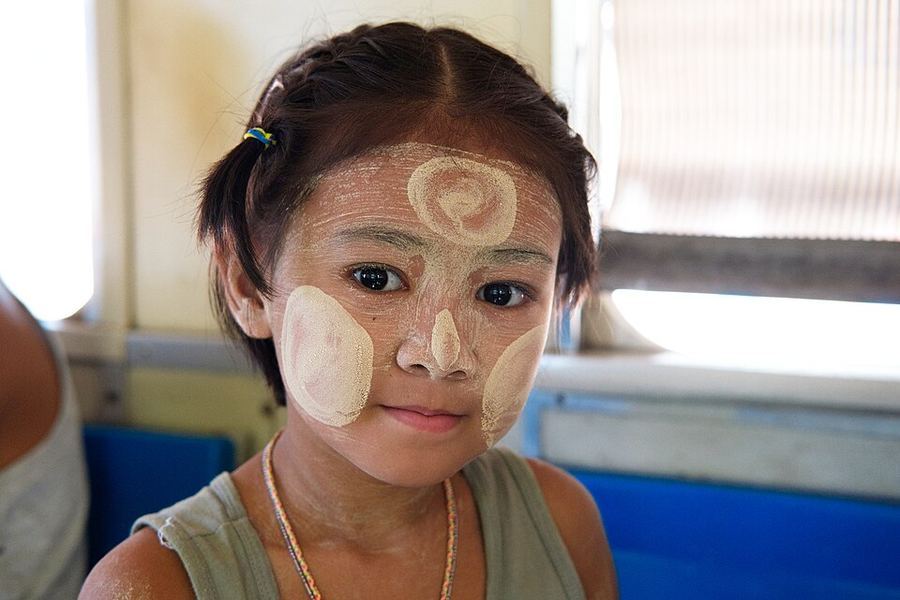
Theravada Buddhism organises the rhythm of Burmese life. Almost every family expects its sons to be ordained at least briefly, and the shinbyu — the novitiation ceremony in which a boy is dressed as a young prince in imitation of the Buddha before having his head shaved and entering a monastery — is the great family celebration. Monks in maroon robes walk the alms round at dawn, and merit-making by donating food, gold leaf or a pagoda repair is a constant social activity. Alongside orthodox Buddhism runs the older worship of the nats, a canonical set of thirty-seven spirits with their own festivals, mediums and shrines, tolerated and often housed at the same pagodas. Two cosmetic and sartorial markers are near-universal and instantly recognisable: thanaka, a pale yellow paste ground from bark and worn on the cheeks as sun protection and adornment, and the longyi, the sarong worn by men and women alike. Social life centres on the teashop, where sweet milky tea, fried snacks and political conversation are consumed in equal measure. The calendar peaks at Thingyan, the water festival marking the new year in April, and Thadingyut, the festival of lights at the end of Buddhist Lent, when houses and pagodas are lit with candles.
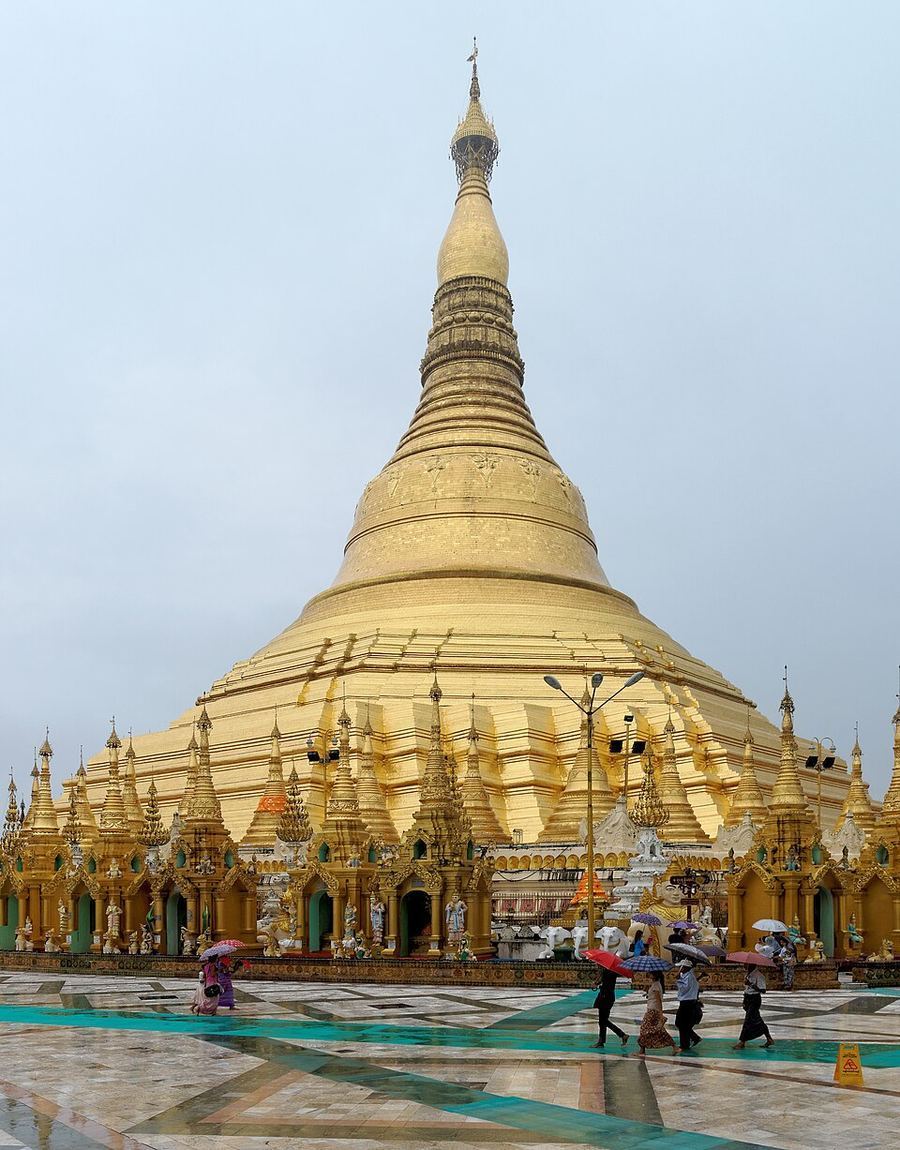
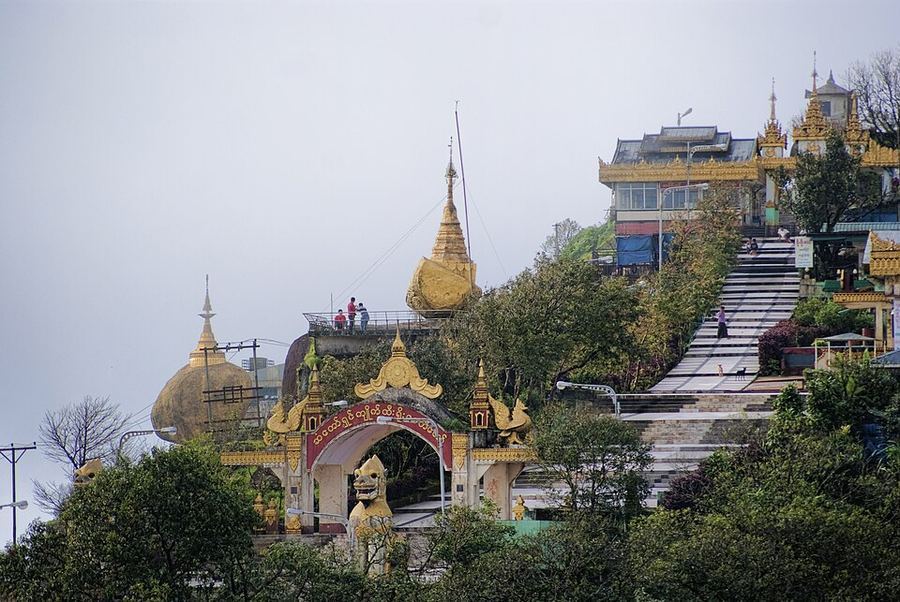
The Shwedagon Pagoda in Yangon is the country's central monument — a gilded stupa nearly a hundred metres high on Singuttara Hill, encrusted with thousands of diamonds and rubies at its crown and revered as enshrining relics of four Buddhas. Bagan is the other great claim: an alluvial plain along the Irrawaddy carrying more than two thousand surviving brick temples, monasteries and stupas built between the eleventh and thirteenth centuries and inscribed as a UNESCO World Heritage site in 2019. The Pyu Ancient Cities, inscribed in 2014, were the country's first World Heritage listing. The Golden Rock at Kyaiktiyo, a gilded boulder balanced on a cliff edge and topped with a small stupa, is the most-visited pilgrimage site after Shwedagon. Inle Lake, designated a UNESCO Biosphere Reserve in 2015, is famous for Intha fishermen who row standing on one leg with the oar wrapped round the other, and for gardens floating on rafts of matted weed. Myanmar also takes pride in its gemstones — the Mogok valley has produced the world's finest rubies for centuries — and in U Thant, the Burmese diplomat who served as Secretary-General of the United Nations from 1961 to 1971.
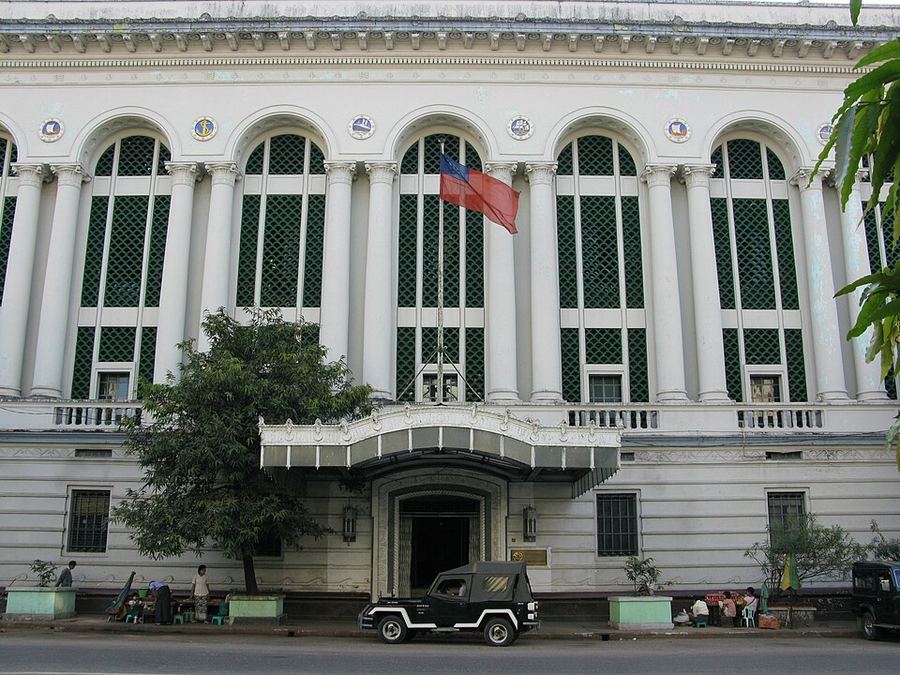
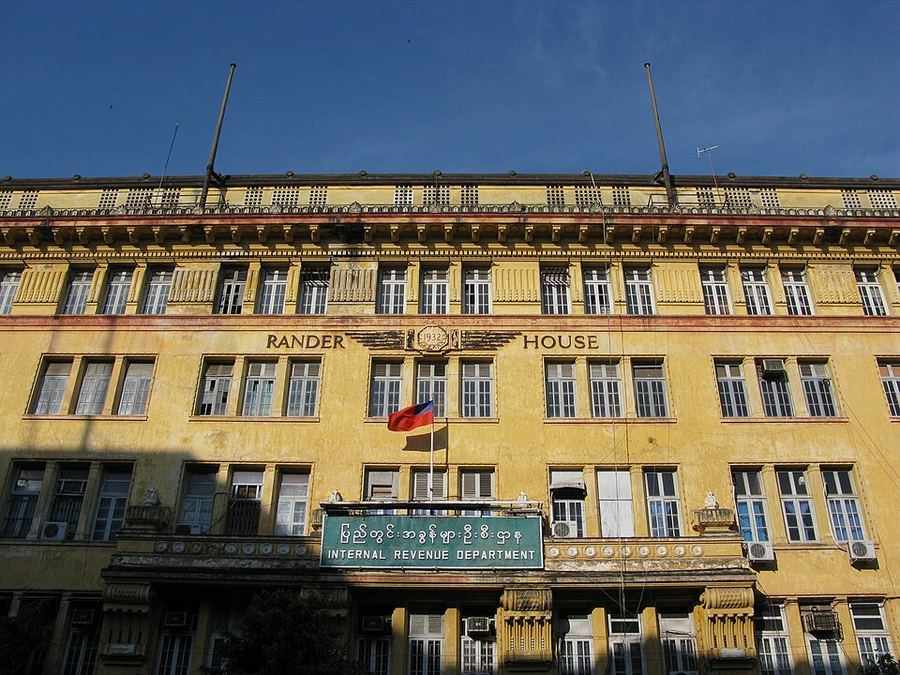
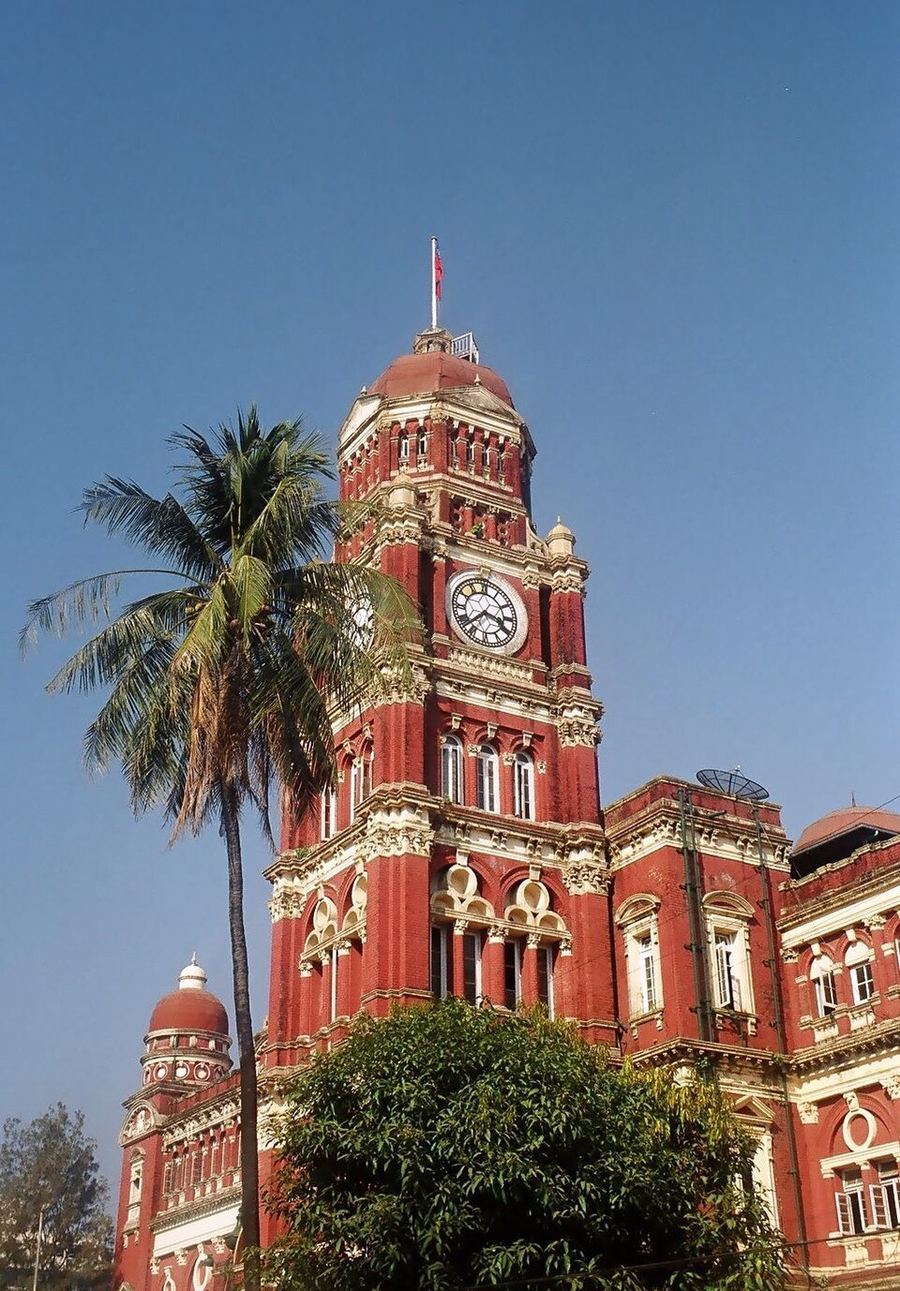
Myanmar sits at the junction of India, China and Southeast Asia, and its culture reads as a compound of all three. Religion, script and statecraft came overwhelmingly from India: Theravada Buddhism arrived through Sri Lanka and the Mon, the Burmese alphabet descends through Mon from the Brahmic scripts of southern India, and court ritual, astrology and the Yama Zatdaw — the Burmese telling of the Ramayana — are Indic inheritances. Chinese influence runs strongest along the northern and eastern trade routes and in Mandalay, where Yunnanese commerce and cuisine are long established. The Mon of the delta contributed early urban Buddhism and much of the classical literary vocabulary. British rule left the colonial waterfront of Yangon, a common-law legal inheritance, an English-educated professional class and, through labour migration from Bengal and Madras, substantial Indian and Muslim communities whose biryani and samosa stalls sit beside Bamar noodle shops. In the Shan hills, Tai peoples share language, dress and cuisine with Thailand and Laos; in Rakhine, ties run west to Bengal; in Kachin and Chin, nineteenth-century American Baptist missions created Christian majorities with their own written languages. Glottolog catalogues well over a hundred languages in the country, from Sino-Tibetan to Tai-Kadai and Austroasiatic families.
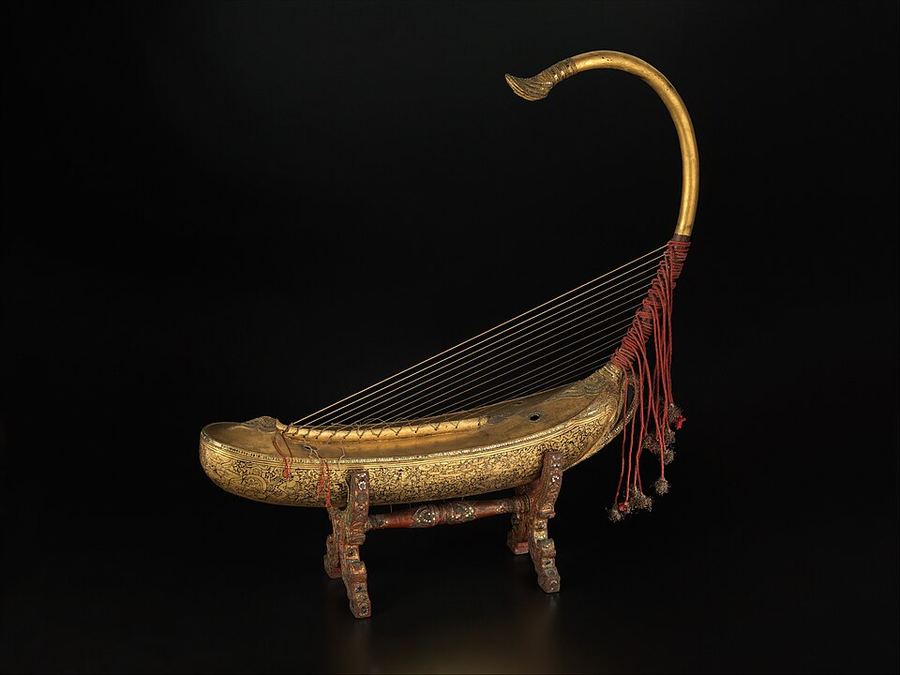
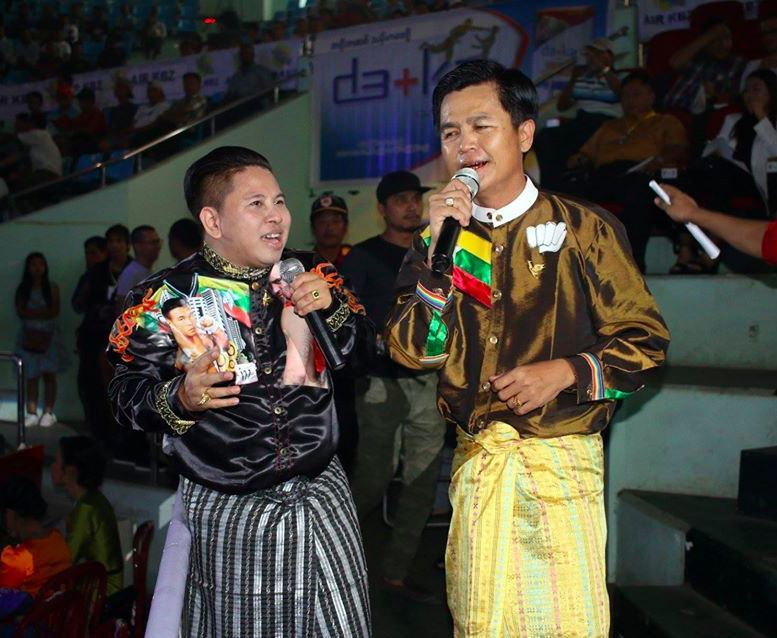
The classical Burmese ensemble is the hsaing waing, built around the pat waing — a circle of twenty-one tuned drums played by a single seated musician who is both percussionist and melodist. Around it sit the kyi waing gong circle, the hne oboe, bamboo clappers and cymbals, producing the bright, highly ornamented sound that accompanies theatre and ceremony. The instrument that best represents the country abroad is the saung-gauk, a boat-shaped arched harp with a deer-skin soundboard, one of the very few arched harps to survive in continuous use anywhere in the world since antiquity. The classical song repertoire, the Mahagita, preserves courtly and religious cycles that singers learn as a canon. In performance, the great popular form is zat pwe, an all-night open-air variety show combining dance, classical song, slapstick comedy and modern pop, staged at pagoda festivals; alongside it is yokthe pwe, the marionette theatre in which carved puppets with elaborate string articulation act out Jataka tales and the Ramayana. Anyeint is a lighter form pairing a dancer with satirical comedians — a genre whose political jokes have repeatedly brought its performers into conflict with the authorities. Dance style favours angular elbows, flexed hands and abrupt punctuation rather than continuous flow.
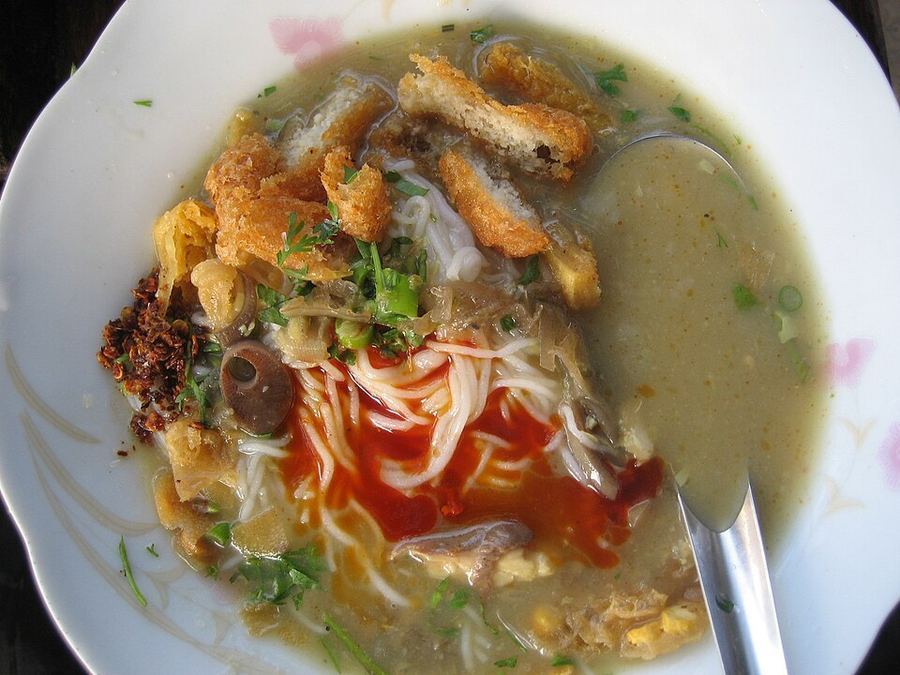
The dish that functions as a national breakfast is mohinga: rice vermicelli in a thick, peppery broth of catfish, lemongrass, banana-stem and toasted chickpea flour, finished with crisp fritters, coriander, lime and chilli, and sold from pavement stalls from dawn. The most distinctive Burmese food, however, is laphet thoke — a salad of fermented tea leaves tossed with fried garlic, peanuts, roasted sesame, split peas, dried shrimp, tomato and green chilli. Myanmar is one of the very few places where tea is eaten as well as drunk, and laphet historically served as a ceremonial offering to seal agreements and settle disputes. Curries are cooked in a generous slick of oil with turmeric, onion and ngapi, the pungent fermented fish or shrimp paste that underlies most savoury cooking, and are served with rice and a tray of raw and blanched vegetables. Regional cooking is strongly differentiated: Shan noodles with tomato and chicken, Shan tofu made from chickpea flour, the coconut-chicken noodles of ohn no khao swè in the delta, sour Rakhine seafood soups, and Mandalay's mont di. Sweets rely on sticky rice, jaggery and coconut, and falooda arrived with Indian migration.
Myanmar is one of the few countries in Asia where traditional dress is still ordinary daily wear rather than costume. The universal garment is the longyi, a tube of cloth about two metres round, stepped into and secured at the waist: men knot theirs at the front, in the version called paso, while women fold and tuck theirs at the side in the htamein. Women pair it with the eingyi, a fitted, often sheer blouse fastened at the side or front. For formal and ceremonial occasions men add a collarless jacket, the taikpon, and the gaung baung, a headdress of cloth wound over a frame, worn at weddings, ordinations and state functions. Silk longyis are the prestige item, and the most valued of all is acheik luntaya — the hundred-shuttle wave-patterned silk woven in Amarapura near Mandalay, in which interlocking wave and lotus motifs are built up by a team of weavers passing dozens of small shuttles by hand, a fabric historically reserved for the court. Thanaka on the cheeks completes the everyday look for women and children. Ethnic minorities maintain distinct dress: Chin facial tattooing among older women, Kachin silver-hung wool and Padaung brass neck coils are the best known.
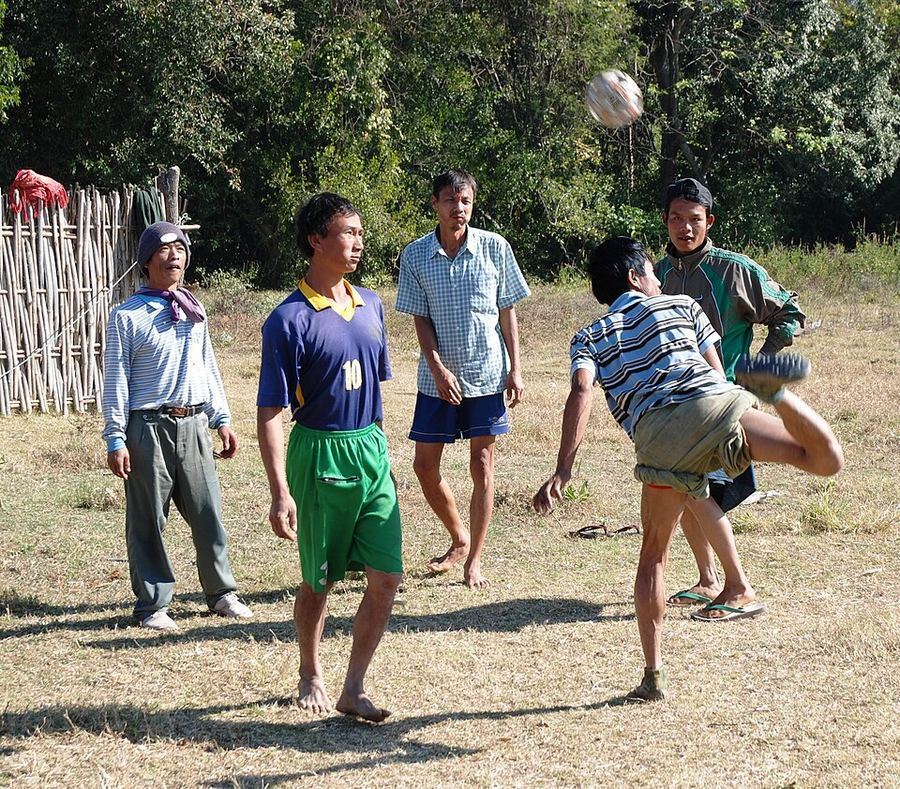
Football is the most popular spectator sport, organised since 2009 in the Myanmar National League with clubs including Yangon United, Shan United and Ayeyawady United, and the national side plays at the Thuwunna Stadium in Yangon. The traditional national sport is chinlone, the rattan-ball game played in a circle, which has a competitive tournament form as well as its cooperative version and was showcased when Myanmar hosted the Southeast Asian Games in Nay Pyi Taw in 2013, having previously hosted them in 1961 and 1969. The country's most distinctive combat sport is lethwei, Burmese bare-knuckle boxing, fought without gloves and permitting punches, kicks, knees, elbows and — uniquely among major codified striking sports — headbutts, traditionally decided only by knockout. Alongside it sits bando and banshay, the empty-hand and weapon systems of Burmese martial arts. Sepak takraw, volleyball, cane ball and chess have wide followings, and golf is a legacy of the colonial period with courses in Yangon and Pyin Oo Lwin. Traditional boat races on the Irrawaddy and at Inle, and Myanmar's version of the regional bull and cart races, remain part of the festival calendar. Sporting infrastructure has deteriorated markedly since 2021.
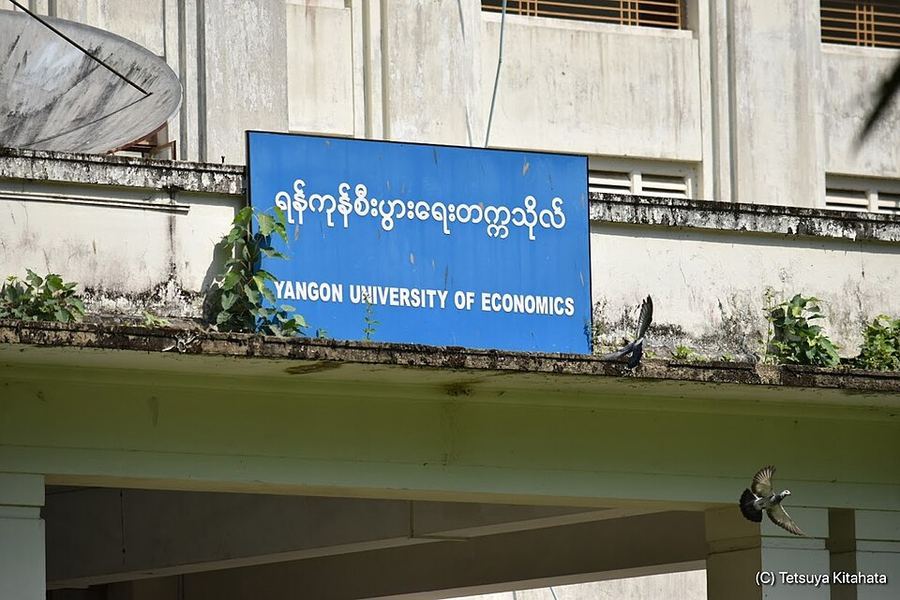
Burmese education has been shaped by two opposing forces: an old and deep monastic literacy tradition, and a modern university system repeatedly shut down for political reasons. Monastic schools attached to Buddhist monasteries have taught reading, writing and Buddhist texts for centuries and still educate large numbers of poor and displaced children free of charge, a parallel system recognised by the state and supported by UNICEF. The University of Yangon, founded in 1920, became the crucible of nationalist politics — the student strikes of 1920 and 1936 launched the independence generation, and its student union building was dynamited after the 1962 coup. Successive governments responded to the 1988 uprising by closing universities for years at a time and dispersing campuses to the outskirts of cities to prevent student concentration, a policy whose effects on academic quality are still felt. Mandalay University, Yangon University of Economics and a network of technological universities complete the higher education sector. Reforms after 2011 restored some autonomy and reopened international academic links. Since the 2021 coup the Civil Disobedience Movement has drawn tens of thousands of teachers and lecturers out of state schools, and UNESCO and UNICEF have reported a severe disruption of schooling for millions of children.
Myanmar has been at war with itself almost continuously since independence, in what is commonly described as the world's longest-running civil war. Armed struggle by the Karen National Union began in 1949, and by the 1960s the Kachin Independence Army, Shan, Chin, Karenni, Mon and Wa forces were all in the field; a series of ceasefires from the 1990s and a Nationwide Ceasefire Agreement in 2015 never covered all groups and largely broke down. In 2016 and 2017 the military conducted clearance operations in northern Rakhine State that drove more than 700,000 Rohingya into Bangladesh, which the United Nations described as bearing the hallmarks of ethnic cleansing; The Gambia brought a genocide case against Myanmar at the International Court of Justice in 2019, and the International Criminal Court opened an investigation into deportation across the border. The coup of 1 February 2021 triggered mass protests, a lethal crackdown, and the emergence of People's Defence Forces aligned with the parallel National Unity Government. Fighting escalated sharply after Operation 1027, launched in northern Shan State in October 2023 by the Three Brotherhood Alliance, which took large areas from the army. Over 3.6 million people are displaced, and the March 2025 earthquake struck a country already in crisis.
Myanmar's land boundaries are settled by treaty but contested in practice. The frontier with China was demarcated by a 1960 boundary treaty, yet substantial stretches on the Myanmar side — the Wa and Kokang regions — are administered by armed groups rather than by the central state, and cross-border trade, casinos and scam compounds along the line are a persistent source of friction that has drawn direct Chinese pressure. The border with Thailand follows the Moei and Salween rivers over long distances, with shifting channels, undemarcated stretches and long-standing refugee camps on the Thai side. India and Myanmar share a mountainous and porous frontier across which the Free Movement Regime long permitted local crossing; India announced in 2024 that it would end that arrangement and fence the border, a decision reported by Reuters that cuts across communities living on both sides. With Bangladesh the land border along the Naf River is fenced and heavily militarised, and the two states' overlapping maritime claims in the Bay of Bengal were resolved by the International Tribunal for the Law of the Sea, a United Nations body, in a judgment delivered in March 2012. The deepest unresolved dispute is not over territory but over belonging: the 1982 citizenship law that renders most Rohingya stateless.
Myanmar covers about 677,000 square kilometres, the largest country in mainland Southeast Asia, shaped like a kite with a long tail running down the Tenasserim coast. Its structure is simple and decisive: a horseshoe of mountains — the Arakan Yoma in the west, the eastern Himalayan ranges of Kachin in the north, and the Shan Plateau in the east — enclosing the central lowland of the Irrawaddy and its tributary the Chindwin. The Irrawaddy runs some 2,000 kilometres from the Kachin hills to a vast delta on the Andaman Sea and is the country's spine for transport, rice cultivation and settlement; the Salween cuts a separate gorge through the eastern hills. The highest point, Hkakabo Razi in far northern Kachin, is generally given as around 5,880 metres and claimed as the highest peak in Southeast Asia. The climate is tropical monsoon, with a hot dry season from March, heavy south-west monsoon rain from May to October — the Arakan coast is among the wettest places in Asia — and a cool dry season from November; a central dry zone around Bagan and Mandalay sits in the rain shadow. The country is highly exposed to disaster: Cyclone Nargis killed well over a hundred thousand people in the delta in May 2008, and a magnitude 7.7 earthquake on the Sagaing Fault devastated Mandalay and Sagaing in March 2025.
The default social space in Myanmar is the teashop — low plastic stools on a pavement, sweet milky tea, fried dough and stewed pork buns, and hours of conversation. Free time otherwise follows the pagoda calendar: festivals at Shwedagon, Kyaiktiyo, Taung Byone and hundreds of local shrines combine pilgrimage with fairground, market, all-night zat pwe theatre and, at Inle, the Phaung Daw Oo festival in which gilded Buddha images are rowed around the lake on a great barge by teams of leg-rowers. The most characteristic pastime is chinlone, in which a circle of players keeps a woven rattan ball aloft with feet, knees and head; in its traditional form it is not a contest at all but a cooperative performance judged on grace, and it is played in streets and monastery yards across the country. Board and card games, betel-chewing and thanaka-grinding fill domestic time, and football is watched with passion, with English Premier League matches followed closely in teashops. Domestic travel means the Irrawaddy river boats, Ngapali beach on the Rakhine coast, the cool hill station of Pyin Oo Lwin and the Shan hills. Since 2021 curfews, fuel shortages and conflict have curtailed much of this.
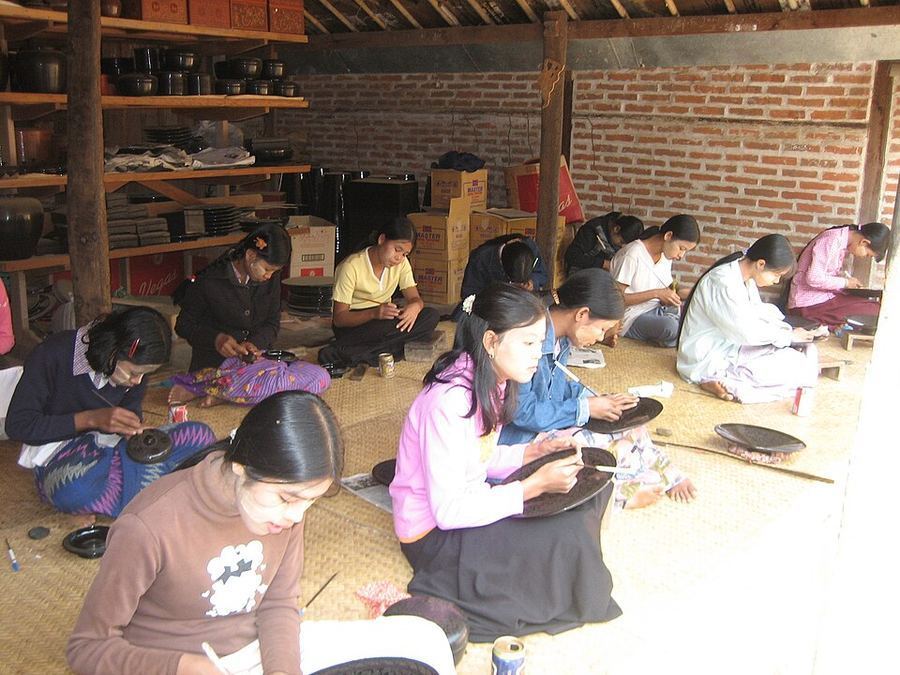
Myanmar's oldest surviving painting is on the walls of Bagan, where the interiors of temples such as Ananda, Lokahteikpan and Gubyaukgyi carry twelfth- and thirteenth-century murals of Jataka cycles in red, ochre and black — one of the largest bodies of medieval Buddhist wall painting in Asia. The great applied art is lacquerware, centred on Bagan, where a bamboo or horsehair core is coated with successive layers of thitsi resin and then incised and coloured in the yun technique, a process taking months and producing bowls flexible enough to be squeezed without cracking. Mandalay is the centre of wood carving, gold-leaf beating and the making of alabaster and bronze Buddha images, along with shwe chi doe, a heavily sequinned and appliquéd tapestry depicting court and Jataka scenes in raised relief. Kammavaca ordination manuscripts, written in lacquered and gilded tamarind-seed script on palm leaf or cloth, are a distinctive book art. Marionettes are carved as sculpture in their own right and collected as such. Modern painting begins with the Western-trained figures of the colonial period and runs through Bagyi Aung Soe, the country's most influential modernist; contemporary artists work under tight censorship, and much of the strongest recent work has circulated abroad or online.
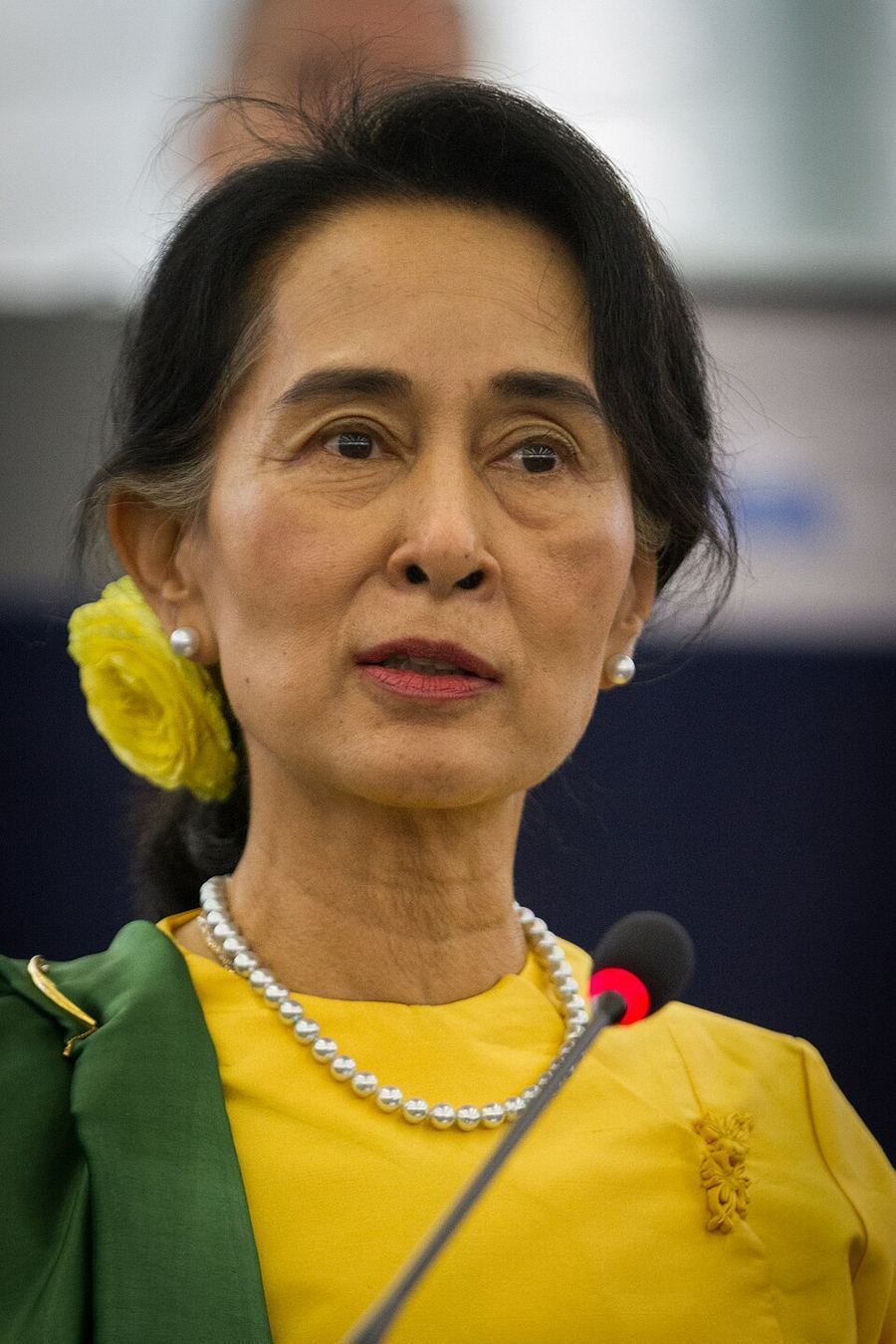
Aung San, the independence leader who founded the Burmese army and negotiated the terms of British withdrawal before his assassination in July 1947 at the age of thirty-two, remains the country's central political figure and is commemorated on Martyrs' Day. U Thant, a schoolteacher and journalist from Pantanaw, became the third Secretary-General of the United Nations in 1961 and the first from outside Europe, serving through the Cuban missile crisis and the Six-Day War until 1971; the refusal of the military government to grant him a state funeral in 1974 triggered mass student protests. Aung San's daughter, Aung San Suu Kyi, led the National League for Democracy from 1988, spent some fifteen years under house arrest, received the Nobel Peace Prize in 1991, governed as State Counsellor from 2016, and was detained again in the 2021 coup; her defence of the military against genocide allegations at the International Court of Justice in 2019 sharply divided international opinion of her. Ne Win, who ruled from 1962 to 1988, and Min Aung Hlaing, who led the 2021 coup, are the dominant military figures. Reuters journalists Wa Lone and Kyaw Soe Oo were jailed for reporting on the killing of Rohingya men and shared a Pulitzer Prize in 2019.
Myanmar's distinctive contributions are craft technologies and cultural forms rather than patented invention, and the honest list is short but real. Yun lacquerware, developed at Bagan, is a genuine technical tradition: the incised and multiply-coloured finish built over a woven bamboo core, cured for months in underground cellars, produces vessels that are simultaneously waterproof, lightweight and flexible, and the technique is distinct from Chinese and Japanese lacquer practice. Acheik luntaya silk weaving is another — a hundred-shuttle method in which interlocking wave patterns are produced by many small weft shuttles worked simultaneously rather than by a single pass, giving a fabric that cannot be reproduced on a conventional loom. Laphet, the fermentation and eating of tea leaves as a food rather than an infusion, is close to unique in the world and represents a genuine local food technology, with tea pressed into pits or bamboo to ferment under weight. Chinlone codified a non-competitive form of ball play judged on the aesthetics of the movement, and lethwei formalised a bare-knuckle striking system that permits headbutts, distinguishing it from every other codified ring sport. Thanaka is an indigenous cosmetic and sunscreen preparation ground fresh from bark on a stone.
Myanmar's research base is small and has been repeatedly disrupted by university closures, isolation and sanctions. The most dramatic technological change of the past two decades was in telecommunications: until 2013 a SIM card cost hundreds of dollars and mobile penetration was among the lowest in the world, but the award of licences to Telenor and Ooredoo that year collapsed the price to a few dollars, and within a handful of years most adults had a mobile phone and the country moved directly to smartphone internet use, skipping fixed broadband almost entirely. That opening has since been reversed in part by post-coup internet shutdowns, mobile blackouts in conflict areas and restrictions on virtual private networks, documented by Reuters and human rights organisations. Extractive geology dominates applied science: the Mogok gem tract, the jade mines of Hpakant in Kachin State, and heavy rare-earth mining in Kachin that feeds Chinese processing plants and has become globally significant to magnet supply chains. Offshore gas from the Yadana and Shwe fields is the state's largest single foreign-exchange earner. Seismology has an unwelcome prominence: the Sagaing Fault runs the length of the country through Mandalay and Nay Pyi Taw, and the magnitude 7.7 rupture of March 2025 has focused attention on building standards in the central corridor.
Myanmar first competed at the Olympic Games in 1948 under the name Burma and has taken part in most Summer Games since, but has never won an Olympic medal — a record it shares with a handful of comparably sized nations. Its strongest international results came in football in the era when the country was among the leading sides in Asia: Burma won the football gold medal at the Asian Games in Bangkok in 1966 and again in 1970, when the title was shared with South Korea, and reached the final of the Asian Cup in 1968. Since then the national team has slipped well down the continental order, though youth sides have qualified for FIFA age-group world cups. At regional level Myanmar remains a consistent medallist at the Southeast Asian Games, particularly in traditional and combat disciplines. The country's most internationally recognised athlete of recent years is Aung La Nsang, a Myanmar-born mixed martial artist who won world titles with the Singapore-based ONE Championship and became a national celebrity known as the Burmese Python. Myanmar's participation in international sport has been complicated since 2021 by sanctions, travel restrictions and the exile or arrest of athletes who supported the protest movement.