History
Morocco occupies the north-western corner of Africa, facing the Atlantic along a coastline of well over a thousand kilometres and the Mediterranean across the Strait of Gibraltar, which narrows to about 14 kilometres between Africa and Europe. It is a parliamentary constitutional monarchy of roughly 37 million people ruled by the Alaouite dynasty, in place since the seventeenth century, in which the king holds both political authority and the religious title Commander of the Faithful. Rabat is the capital and Casablanca the commercial centre and largest city, with Fez, Marrakesh, Tangier and Agadir following. The population is described in official statistics as Arab-Amazigh at about 99%, a formulation that reflects centuries of intermarriage rather than two separate blocs; Arabic and Tamazight are both official languages, Moroccan Darija is the everyday spoken form, and French remains the language of much business, higher education and diplomacy. Islam is professed by about 99% of the population, almost entirely Sunni of the Maliki school, and a Jewish community of a few thousand is the largest remaining in the Arab world. GDP per capita is about $9,100 at purchasing power parity, earned from phosphates, automotive assembly, agriculture, textiles, tourism and remittances. Morocco became independent from France on 2 March 1956.
Casablanca's urban core is home to about 4,577,677 people.
That's bigger than Sydney, Barcelona, Berlin and Rome — each a great world city in its own right.
Among the world's megacities, though, it's one of many — the giants of Asia and Latin America run larger still:
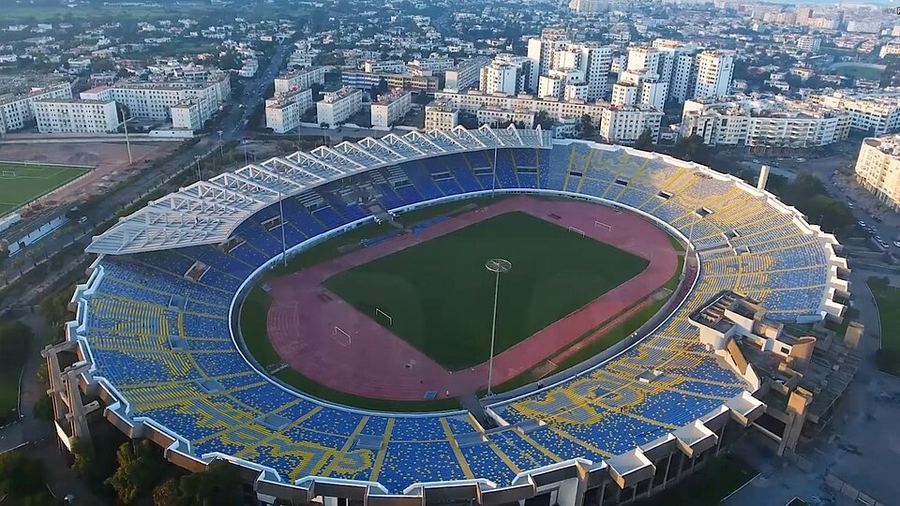
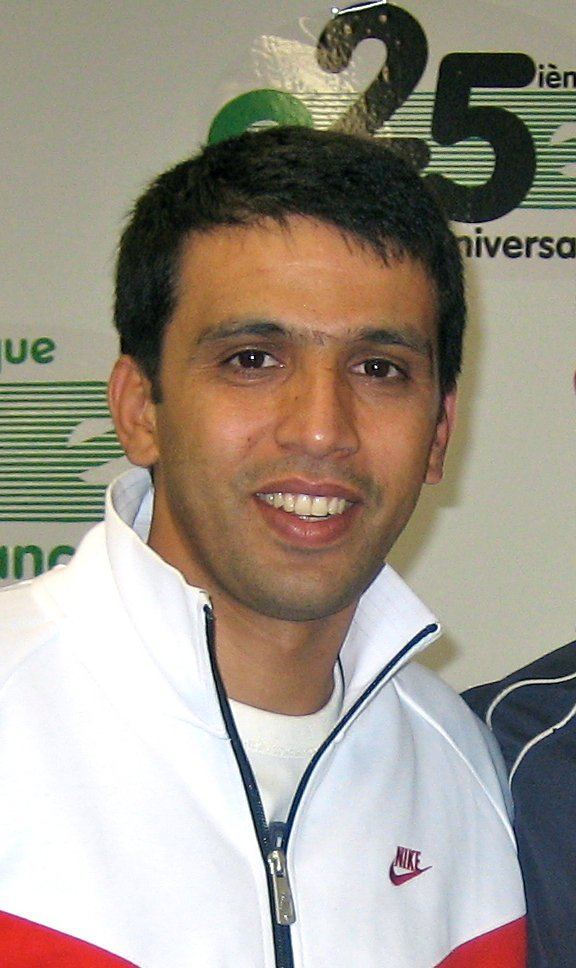
Morocco's greatest sporting moment came at the 2022 World Cup in Qatar, where the national team beat Belgium, Spain and Portugal to reach the semi-finals — the first African and the first Arab team ever to do so — and finished fourth, prompting celebrations across the Arab world and the African diaspora. Morocco was awarded co-hosting rights, with Spain and Portugal, for the 2026 tournament's successor in 2030, and hosts the Africa Cup of Nations. In athletics the country's record is exceptional for its size: Nawal El Moutawakel's 400 metres hurdles gold at Los Angeles in 1984 was the first Olympic title won by a woman from a majority-Muslim country, and she later became an International Olympic Committee member; Said Aouita won the 5000 metres in the same Games and set world records across a range of distances; Khalid Skah took the 10,000 metres in 1992; and Hicham El Guerrouj won the 1500 and 5000 metres at Athens in 2004 and still holds the world records at 1500 metres and the mile. The Marathon des Sables, a multi-stage ultramarathon across the southern Sahara, has been a fixture of global endurance running since 1986.
Parliamentary constitutional monarchy
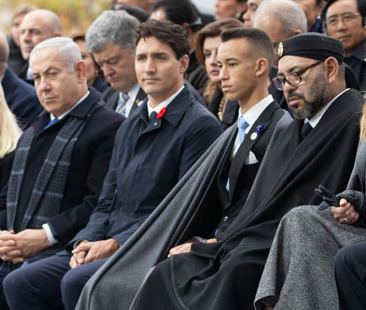
Mohammed VI — King
In office since 30 July 1999
Aziz Akhannouch — Prime Minister
Bicameral
House of Councillors (Majlis al-Mustacharin) — 120 seats
Last election 10/5/2021 · 11.7% women
House of Representatives (Majliss-annouwab) — RNI largest party
RNI 102 · PAM 87 · PI 81 · USFP 34 · MP 28 · PPS 22 · Other 41
Last election 9/8/2021 · 24.3% women
consists of 5-judge panels organized into civil, family matters, commercial, administrative, social, and criminal sections); Constitutional Court (consists of 12 members
Moroccan Dirham — MAD (DH)
GDP (PPP): $350.594 billion (2024 est.)
Per capita: $9,100 (2024 est.)
$61.746 billion (2023 est.)
fertilizers, cars, garments, insulated wire, tomatoes (2023)
Partners: Spain 20%, France 17%, Germany 6%, UK 5%, Italy 4% (2023)
$73.759 billion (2023 est.)
refined petroleum, cars, vehicle parts/accessories, natural gas, coal (2023)
Partners: Spain 16%, China 11%, France 10%, USA 9%, Turkey 5% (2023)
Type: parliamentary constitutional monarchy
Independence: 2 March 1956 (from France)
How mountains, coasts, and rivers shape settlement (LandScan).
Coming — dataWhere groups settled and how people move (GeoEPR + UNHCR).
Coming — dataNotable institutions, mappable as points.
Coming — data