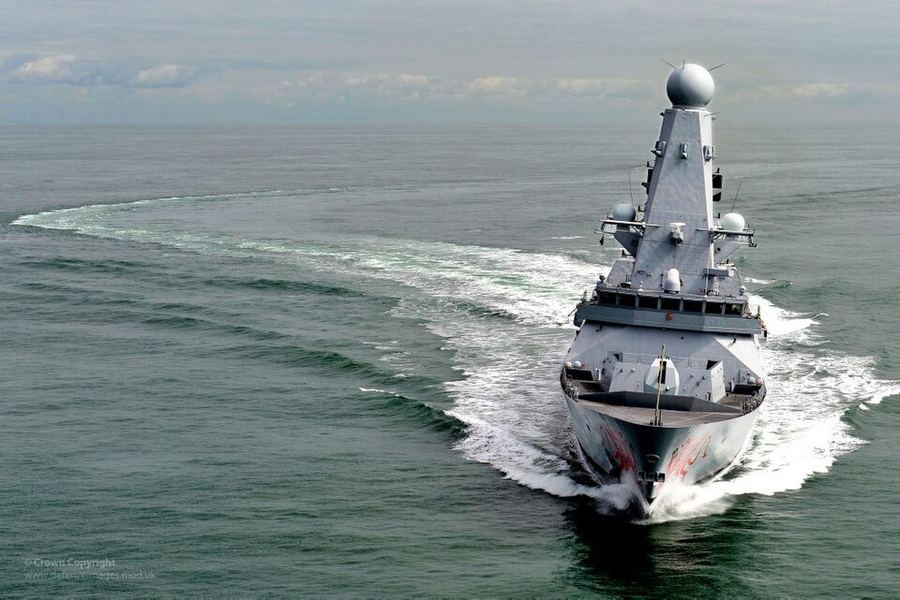
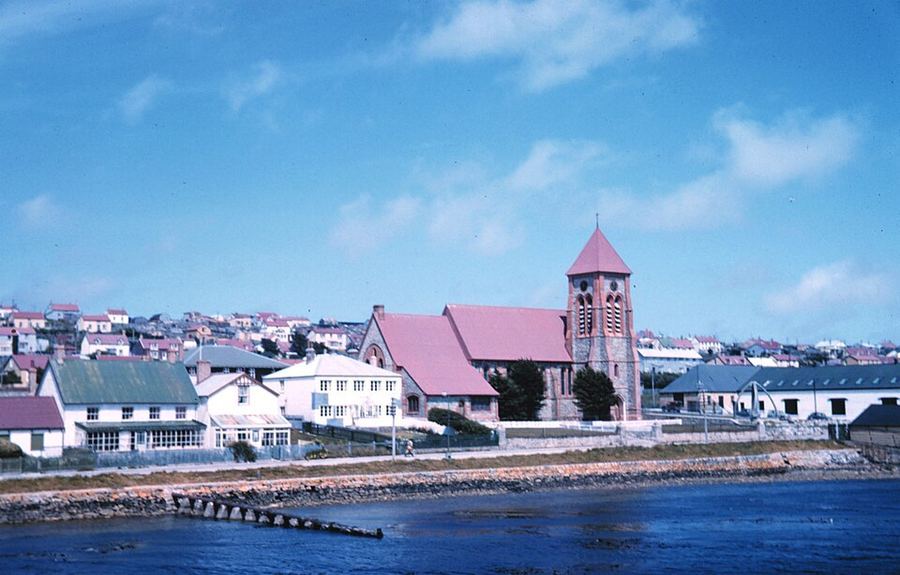
As of 21 September 2026, the United Kingdom under Prime Minister Andy Burnham remains engaged on the same fronts as a week earlier — deepening support for Ukraine against Russia, the maritime fallout of the US-Iran war, a renewed Argentine claim to the Falklands and a domestic terrorism caseload police describe as unusually heavy — with the week's main event still ahead: Burnham's first face-to-face meeting with President Donald Trump on the sidelines of the UN General Assembly in New York. The Associated Press reports (21 September 2026) that Ukraine and the soaring cost of the Middle East conflict top his agenda, that he will urge Trump to release interceptor missiles for Ukraine's air defences before another winter of war, and that London wants to discuss restoring free movement of ships through the Strait of Hormuz, largely blocked since the US-Israeli war with Iran began in February; the two leaders have spoken twice since Burnham replaced Keir Starmer in July, and Kyiv is his only other foreign trip in office (AP via The Boston Globe and CP24, 21 September 2026; Bloomberg, 24 August 2026; South China Morning Post, August 2026). On Ukraine, Defence Secretary Wes Streeting, co-chairing his first meeting of the roughly 50-nation Ukraine Defence Contact Group this month, said Moscow must understand the UK 'won't flinch', after Britain committed £100 million for interceptors, large-calibre artillery rounds and drones routed through NATO's prioritised Ukraine requirements list to bolster Ukraine's air defences over winter; the government says it is making 'strong progress' toward 120,000 drones for Ukraine this year, with 25,000 delivered so far, and that the millionth British artillery round was delivered in July (UK Defence Journal; Express & Star, September 2026). Russia's threats over Burnham's 24 August decision to share classified Storm Shadow/SCALP data so Ukraine can build its own version of the missile (CNN and Al Jazeera, 24 August 2026) have not been followed by any reported action against British territory: Foreign Ministry spokeswoman Maria Zakharova said on 27 August that British military installations 'in Ukraine and beyond its borders' could be targeted in response to Ukrainian strikes using British weapons, while Kremlin spokesman Dmitry Peskov called reports of a planned strike 'scare-story material' with 'nothing to do with the intentions of the Russian Federation', and Burnham has described the Kremlin's threats as 'outrageous' and said London will not be deterred (Al Jazeera, The Times of Israel and Fox News, 27 August 2026); asked in early September whether Russia was weighing strikes on UK sites, President Vladimir Putin called it 'a military secret' (HuffPost UK, September 2026). The US-led peace track has not produced a ceasefire: after envoys Steve Witkoff and Jared Kushner met Putin for three hours at the Kremlin on 5 September and held what both sides called 'substantive' talks with President Volodymyr Zelenskyy in Kyiv on 6 September, Zelenskyy said he expected the war to continue and was counting on US support through the winter, and the three-day pause in attacks on the two capitals ended with a Russian overnight assault on Kyiv that killed at least five people and injured 35 (CNN, The Washington Post and NPR, 5–6 September 2026; The Kyiv Independent and Al Jazeera, 8 September 2026); The Kyiv Independent reported Russian attacks killing at least eight people across Ukraine around 19 September, including two toddlers in a drone strike, with 101 of 138 Russian drones intercepted in one night, and Zelenskyy approving 'new long-range operations' in response. On NATO's northern flank, the carrier HMS Queen Elizabeth sailed from Portsmouth on 5 September for a three-month programme of training and operations around the UK and northern Europe in her new role — taken up in July — as command ship for NATO's Allied Response Force (Maritime), her first deployment since a maintenance period that began in late 2024 and part of a work-up to relieve HMS Prince of Wales as flagship in late 2027 (Royal Navy, 4 September 2026; USNI News, 9 September 2026; The National Interest, 12 September 2026); the UK-led Joint Expeditionary Force's Lion Protector 26 series continues across the Baltic, Iceland, the Danish Straits and Norway until 12 October, and Estonia's defence ministry has said a British unit of around 1,200 troops will deploy there next year with a full brigade at high readiness in the UK (Joint Expeditionary Force, 2026; Estonian Ministry of Defence via GlobalSecurity, 16 July 2026). On Iran, the war that began on 28 February remains unresolved with no ceasefire in place: Iranian Foreign Minister Abbas Araghchi said in August that the two sides 'do not have anything like a ceasefire' and that Qatar and Pakistan were exchanging messages between them (CNBC, 17–18 August 2026); a renewed round of US strikes at the start of September — which Al Jazeera's live coverage reported killed four people at a wedding party in Sirik and which Trump said 'will not last long' — was followed by the first US strikes on Iranian oil tankers in retaliation for attacks on shipping in the strait (Al Jazeera, 1–2 September 2026; Axios, 2 September 2026). GlobalSecurity.org's daily tracker recorded a fire pause entering its ninth day on 18 September with no Iranian ballistic-missile or drone attack reported, and a new US military estimate putting the war's cost at $43.6 billion (GlobalSecurity.org, 18 September 2026), but the strait itself stays contested: Iranian state media, citing the Revolutionary Guard, said Iran struck the Togo-flagged tanker Trend on the night of 17 September over an 'illegal attempt' to transit Hormuz, the Guard's navy warned that vessels passing without authorisation face 'destruction', and hundreds of thousands rallied in Tehran in the largest pro-government show since February — reports the Associated Press said it could not immediately confirm (AP via The Washington Post and Local 10, 18 September 2026; The Washington Times, 18 September 2026; The Manila Times, 20 September 2026); on 20 September Tehran called for an end to the war and the lifting of the US naval blockade while warning of a 'painful' response if the US attacks again, and Trump said rising fuel prices were an 'inexpensive price to pay' (Al Jazeera, 20 September 2026). Britain's own military contribution is unchanged and, on the public record, still prospective: the destroyer HMS Dragon and the mine-countermeasures mothership RFA Lyme Bay — carrying around half a dozen autonomous, uncrewed and remotely operated systems and more than 270 personnel, including over 100 Royal Navy mine warfare and diving specialists and French sailors — remain in the Red Sea with the German Navy's FGS Mosel and FGS Fulda, with the UK and France planning 'strictly defensive' operations to restore commercial confidence in Hormuz 'when conditions allow' (Royal Navy, 27 May and 23 June 2026; Forces News; gCaptain and Naval Technology, June 2026). Britain's exposure is direct: a loitering munition struck RAF Akrotiri in Cyprus on 1 March, further drones launched on 1 and 4 March were intercepted, the RAF has since deployed six F-35B jets to the base, and the Ministry of Defence says Akrotiri has 'robust, multi-layered security measures' (Euronews, 2 March 2026; The National Interest; Cyprus Inform; AOAV, 2026). In the Red Sea the Houthis completed a rapid push along Yemen's coastline on 11 September, taking Mayun island and other positions at the Bab al-Mandeb Strait — a route Saudi Arabia has leaned on for oil exports since Hormuz closed and on which the group struck two Saudi crude tankers in July (NBC News, 11 September 2026; NPR, 12 September 2026; Bloomberg, 10 September 2026); US officials then met Houthi representatives at the US embassy in Muscat on 12–13 September, where, according to sources cited by Axios, Al Arabiya and The Times of Israel (16 September 2026), the Houthis said they had no intention of attacking American or Israeli vessels and remained committed to their 2025 ceasefire with Washington, and Al Jazeera reported (18 September 2026) that the US appeared willing to 'watch from the sidelines'; the US Maritime Administration's advisory on Houthi attacks in the Red Sea, Bab el-Mandeb and Gulf of Aden remains in force. In the South Atlantic, Argentine President Javier Milei said in a televised address on 3 September that Argentina would 'need to recover' the islands it calls the Malvinas and should 'not stand idly by', announcing sanctions aimed at halting the Sea Lion oil project about 220 kilometres north of the Falklands, days after Trump said the US position on the islands was 'under review'; Foreign Secretary Ed Miliband replied that 'the Islands are British and will remain so because that is the overwhelming position of the Islanders', Streeting called the UK's commitment 'absolute and unshakeable' and said Milei's speech 'tells us more about domestic politics in Argentina than it does about the Falkland Islands', and operators Navitas Petroleum and Rockhopper Exploration said they hold valid licences with the UK's 'full and ongoing' support and expect no effect on their activities (CNN, CNBC, Bloomberg, France 24 and MercoPress, 4 September 2026). Gibraltar remains on a treaty track, with Spain maintaining its sovereignty position and the Gibraltar government publishing legal opinions that the EU-UK text contains no sovereignty concessions (La Moncloa, 26 February 2026; HM Government of Gibraltar, 2026). At home, the national threat level remains at 'severe', where the Joint Terrorism Analysis Centre set it in May (MI5, 2026); Novara Media reported (1 September 2026), citing Home Office figures for the year to 31 March 2026, that 3,021 terrorism-related arrests were recorded in that year against 6,539 in total since 9/11 — roughly half the post-2001 total — and Counter Terrorism Policing announced on 1 September a nine-and-a-half-year sentence for a 19-year-old from Middlesbrough who amassed terrorist material and filmed himself 'triggering' an imitation suicide vest (Counter Terrorism Policing, 1 September 2026). In Northern Ireland, the PSNI says the threat from Northern Ireland-related terrorism remains 'substantial' with attacks 'likely' after Gardaí intercepted a device containing 394 grams of Semtex, a timer and a viable detonator on the N2 near Carrickmacross, County Monaghan, which security sources link to the New IRA, with a 44-year-old Dublin man charged before the Special Criminal Court (News Letter; The Irish News; Irish Examiner, 2026); this follows a viable device driven into Lurgan police station in March, the Dunmurry car bomb in April and a controlled explosion of a suspected pipe bomb at Dungiven in July (RTÉ, 31 March, 26 April and 18 July 2026), while the monthly security-situation statistics to 31 August were published on 11 September (GOV.UK, 11 September 2026) and UTV reported (2 September 2026) that the latest security assessment finds the New IRA 'struggling' to get its depleted ranks to carry out attacks; no new attack in Northern Ireland has been reported in the past week.
Last reviewed 2026-09-21 · 2 weeks ago